
- PRICING
- LIVE QUOTES
- LEARN
- HELP


EN
Phillips 66 Stock And Diesel Tightness Could Put Refiners Back In Focus
Energy markets are being pulled in two directions at once. On one side, talk of an “energy ceasefire” and potential diplomacy around Ukraine hints at cooler heads. On the other, strikes on power grids, pressure on Russian refineries and questions over diesel supply keep fuel logistics and refiners firmly in the spotlight. This article unpacks how that mix could matter for you, and profiles 3 stocks most exposed to this news.
The stocks covered below are only a first look at this theme. The full screen surfaces 13 more refiners and fuel logistics companies with equally compelling narratives that are not profiled here. If you want to get straight to the broader opportunity set, head into the Global Refiners and Fuel Logistics Benefiting from Persistent Diesel Tightness screener to identify, compare and analyze potential high-conviction diesel tightness plays.
Phillips 66 (PSX)
Phillips 66 is one of the purest ways to play this diesel tightness theme, with a large refining footprint and an attached logistics network that is heavily skewed toward transport fuels that matter when distillate supply is disrupted.
"The company is improving its refining operations through low-capital, high-return projects, enabling better feedstock flexibility and yield, which can boost net margins."
What really matters now is how one unseen pressure on its diesel economics resolves over the next leg of the product cycle.
Phillips 66 is a global energy manufacturer and logistics operator whose refineries and fuel marketing activities give it direct exposure to diesel and middle distillate pricing, with most revenue flowing from Refining at about US$98.8b and Marketing and Specialties at roughly US$97.1b, supported by Midstream at about US$22.5b and Renewable Fuels at around US$7.2b, all underpinned by a market value close to US$104.4b.
That pressure point is exactly what the full narrative for Phillips 66 unpacks, showing how Phillips 66 could see diesel economics decouple from headline refining sentiment.

Delek US Holdings (DK)
Delek US Holdings plugs directly into the diesel tightness theme through its U.S. refineries and connected logistics. This gives you a pure downstream way to think about refined-fuel margins without straying outside the core crack spread story.
Delek US Holdings runs refineries in Texas, Arkansas and Louisiana geared to gasoline, diesel and jet fuel, with about US$11.9b of revenue from Refining and US$1.2b from Logistics, and an equity value near US$4.6b.
"North America's persistent refinery underinvestment and accelerated rationalization, together with robust long-term demand for refined products in the U.S. and developing markets, are set to drive structurally higher crack spreads and utilization rates, which will amplify Delek's earnings leverage as one of the most efficiently run and U.S.-centric refiners."
The real swing factor is what happens to that diesel-linked earnings leverage if one key regulatory and margin assumption breaks in either direction.
If that swing factor matters to you, read the full narrative for Delek US Holdings to see how Delek US Holdings' refining leverage could accelerate or stall under different diesel scenarios.

CVR Energy (CVI)
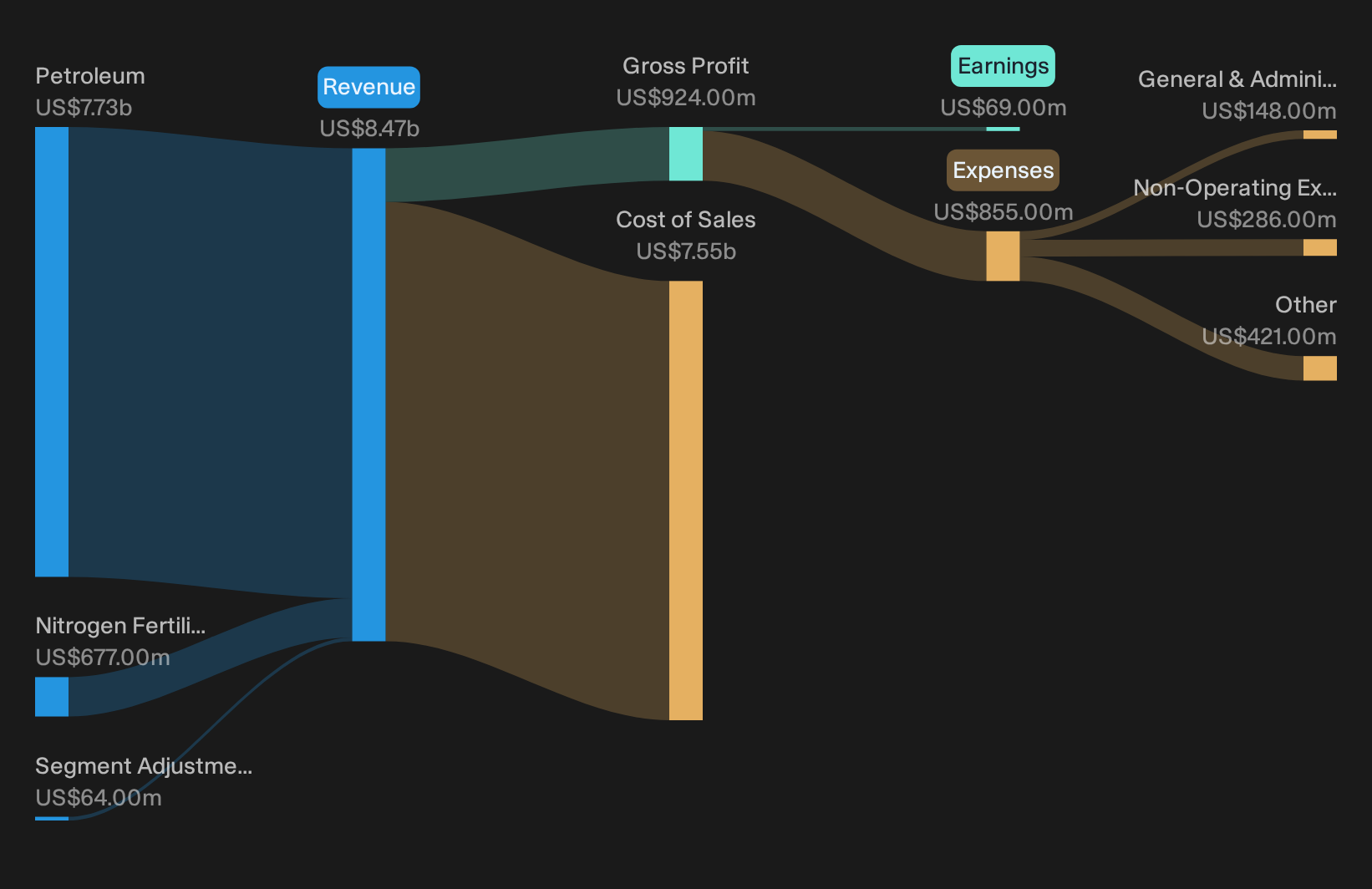
CVR Energy plugs straight into the diesel tightness theme through its Midwestern refineries and renewables arm, with most of its US$7.7b in 2025 segment revenue coming from Petroleum and about US$677 million from Nitrogen Fertilizer, all wrapped in a roughly US$5.3b market cap.
For CVR Energy, the diesel story is not abstract. It runs through refinery gates, into truck tanks and farm fields, tying investor outcomes directly to how refined fuel and fertilizer markets respond to supply shocks and policy change.
"The acceleration of global energy transition policies, including stricter decarbonization efforts and rising electric vehicle adoption, is likely to structurally erode demand for gasoline and diesel fuels in the coming decade, undermining CVR Energy's core refining business and placing persistent pressure on long-term revenue growth and crack spreads."
What really moves the dial for CVR Energy now is how one unresolved piece of the refined fuel balance ends up feeding through to diesel margins.
That unresolved piece is where CVR Energy gets interesting for forward-looking investors, and the full narrative for CVR Energy shows how crack spreads, renewables and fertilizer exposure could be quietly reshaping the story.
Seeking Alternatives Before Momentum Flies
Fresh ideas move first. By the time every headline chases the same breakout, the ideal entry often slips away. Scan these under the radar for now themes and act now.
- Spot resilient performers early and track the 30 resilient stocks with low risk scores that aim to hold up when volatility bites and capital gets more selective.
- Review the 17 top copper producer stocks that are linked to structural demand in critical materials and may be relevant if long term infrastructure and electrification trends continue.
- Target income while it lasts and assess the 7 dividend fortresses that may keep cash flows steady even when sentiment drops elsewhere.
This article by Simply Wall St is general in nature. We provide commentary based on historical data and analyst forecasts only using an unbiased methodology and our articles are not intended to be financial advice. It does not constitute a recommendation to buy or sell any stock, and does not take account of your objectives, or your financial situation. We aim to bring you long-term focused analysis driven by fundamental data. Note that our analysis may not factor in the latest price-sensitive company announcements or qualitative material. Simply Wall St has no position in any stocks mentioned.
Have feedback on this article? Concerned about the content? Get in touch with us directly. Alternatively, email editorial-team@simplywallst.com