
- PRICING
- LIVE QUOTES
- LEARN
- HELP


EN
Carvana (CVNA) Could Be 21% Undervalued On Its Logistics Expansion
Carvana (CVNA) just expanded same-day delivery to the greater Minneapolis area and is adding inspection and reconditioning capacity in Charlotte. This gives investors fresh data points on the company’s logistics ambitions and service reach.
Recent Carvana news has landed against a cooler tape, with the share price at US$65.40 and the stock down over the past week, month and year to date. A 1-year total shareholder return decline contrasts sharply with a very large 3-year total shareholder return, which points to earlier, much stronger momentum now easing back.
Capitalize on Carvana's logistics push by scanning a curated 16 high quality undiscovered gems that could be quietly building similar operational advantages in the background.Carvana is pouring money into logistics while the share price cools, which raises a simple question. Are you seeing a business catching up to its valuation, or sentiment that ran too far ahead of it now resetting?
Most Popular Narrative: 21% Undervalued
Carvana’s most followed narrative pegs fair value at $82.98, above the last close of $65.40. This frames the current pullback against a longer term earnings and cash generation story built on logistics scale and financing reach.
The buildout of inspection and reconditioning capacity on ADESA sites, including new capabilities at locations in California and Charlotte that add inventory pools and support faster local delivery, can lift throughput and help revenue and unit economics.
See why 56 investors see Carvana as 21% undervalued.
Result: Fair Value of $82.98 (UNDERVALUED)
Still, Carvana’s narrative can be knocked off course if gross profit per unit remains under pressure, or if inventory growth continues to lag sales momentum.
Find out about the key risks to this Carvana narrative.
Another View: Carvana Through The P/E Lens
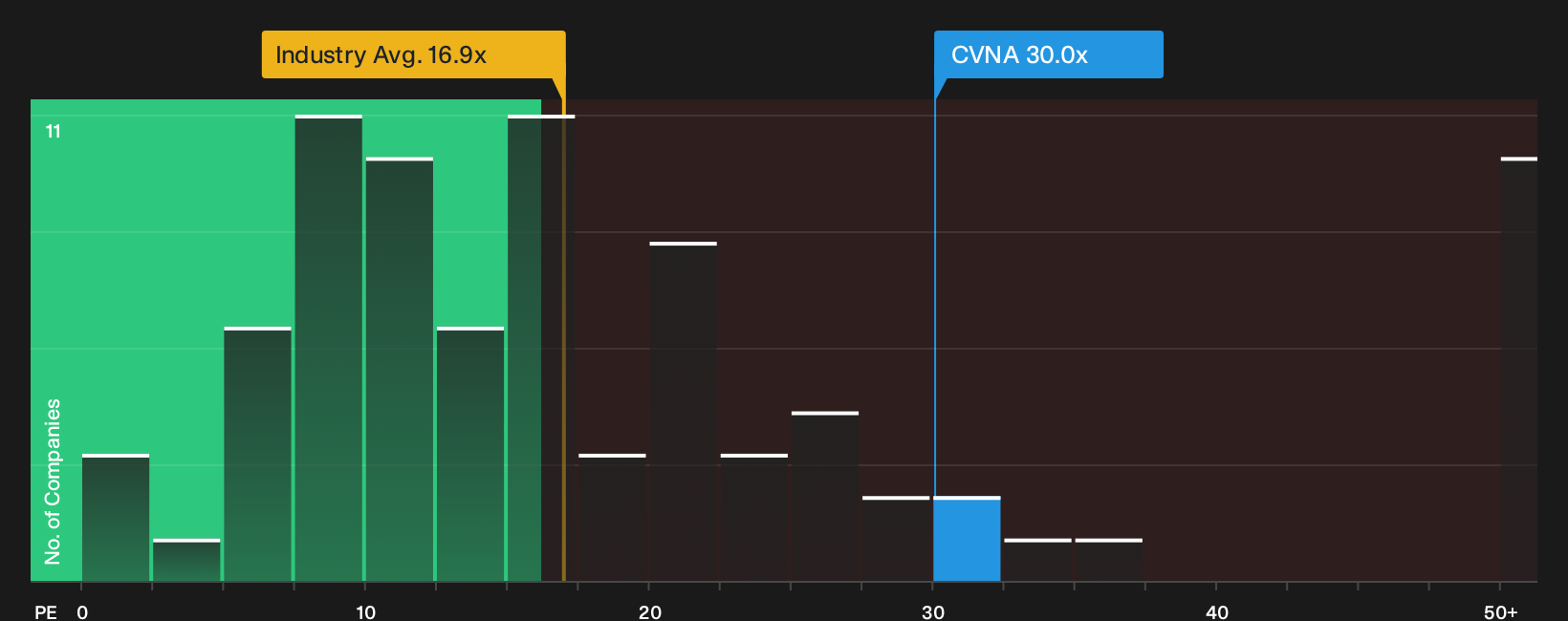
The fair value story around Carvana leans on earnings power and balance sheet progress. A simple P/E check paints a tougher picture. The stock trades at about 30x earnings, compared with 18.9x for peers and a fair ratio estimate of 25.9x. That richer multiple lifts valuation risk if profit delivery or sentiment cools again. How comfortable are you paying a premium multiple when the fair ratio points lower?
To pressure test that premium, it helps to see what the numbers imply in practice, both against peers and against the fair ratio the market could move toward over time, then decide whether that gap feels like a margin of safety or a margin of risk for you as an investor. See what the numbers say about this price — find out in our valuation breakdown.
Next Steps
Sentiment on Carvana is split, with sharp gains in the rear-view mirror and fresher worries and hopes now colliding in real time. Act quickly by looking through the key data points, weighing both the concerns and the upside, then grounding your stance in the 2 key rewards and 1 important warning sign.
Looking for more Carvana sized ideas?
If you only stop at Carvana, you risk missing other stocks quietly lining up attractive risk reward profiles that could better match your goals.
- Target resilient balance sheets and steady fundamentals by scanning a curated list of solid balance sheet and fundamentals (23 results) that can help you stress test your ideas against financial strength.
- Zero in on potential mispricing by reviewing a focused 29 high quality undervalued stocks that filters for quality businesses trading below their assessed worth.
- Stack potential income alongside capital appreciation by checking a hand picked 7 dividend fortresses that screens for higher yielding companies with robust profiles.
This article by Simply Wall St is general in nature. We provide commentary based on historical data and analyst forecasts only using an unbiased methodology and our articles are not intended to be financial advice. It does not constitute a recommendation to buy or sell any stock, and does not take account of your objectives, or your financial situation. We aim to bring you long-term focused analysis driven by fundamental data. Note that our analysis may not factor in the latest price-sensitive company announcements or qualitative material. Simply Wall St has no position in any stocks mentioned.
Have feedback on this article? Concerned about the content? Get in touch with us directly. Alternatively, email editorial-team@simplywallst.com