
- PRICING
- LIVE QUOTES
- LEARN
- HELP


EN
What DHL (XTRA:DHL)'s New Cargo Routes Means For Shareholders
- DHL has recently expanded its operating footprint with a new weekly Boeing 767 freighter link between Bahrain and Johannesburg, alongside a global buildout of battery logistics capabilities that ties together DHL Supply Chain, DHL Global Forwarding, and DHL Express.
- The push into battery logistics and electrified mobility supply chains positions DHL closer to regulated, high-complexity cargo where service quality, compliance capabilities, and network reliability can matter more than price alone.
- We will now see how DHL's expansion of Bahrain to Johannesburg capacity and its battery logistics strategy could reshape the existing investment narrative.
Scan how DHL’s latest battery and trade corridor moves compare with other logistics and supply chain stocks that could be building similar momentum through a curated list of 40 power grid technology and infrastructure stocks.
DHL Investment Narrative Recap
To own DHL, you need to believe the group can turn a complex mix of Express, freight, eCommerce, and contract logistics into steady, compounding earnings even as trade rules and customer behavior keep shifting. The big swing factor in the near term is Express, where regulatory changes around de minimis and softer global flows keep volume visibility low.
The latest Bahrain to Johannesburg capacity and battery logistics buildout looks helpful for diversification, but it does not remove those near term volume and margin risks. Pressure from weaker B2C Express volumes and any further trade or tariff disruption still looks like the key threat to the current operating story.
The most relevant recent piece of news for DHL here is the new direct weekly Boeing 767 freighter service between Bahrain and Johannesburg. It directly speaks to the catalyst analysts have focused on, which is more diversified, higher value cross border traffic across APAC, the Middle East, Africa, and emerging eCommerce lanes.
This extra capacity into Sub Saharan Africa ties into that thesis by pushing more weight through DHL Express hubs and potentially supporting higher margin, time definite services for healthcare, technology, and industrial shippers. Execution risk sits in filling those planes profitably while Express B2C volumes remain under pressure and regulatory costs move higher.
DHL Earnings and Valuation Checkpoints
DHL's narrative projects €94.6b revenue and €4.6b earnings by 2029. This is based on 3.4% yearly revenue growth and an earnings increase of about €0.9b from €3.7b today.
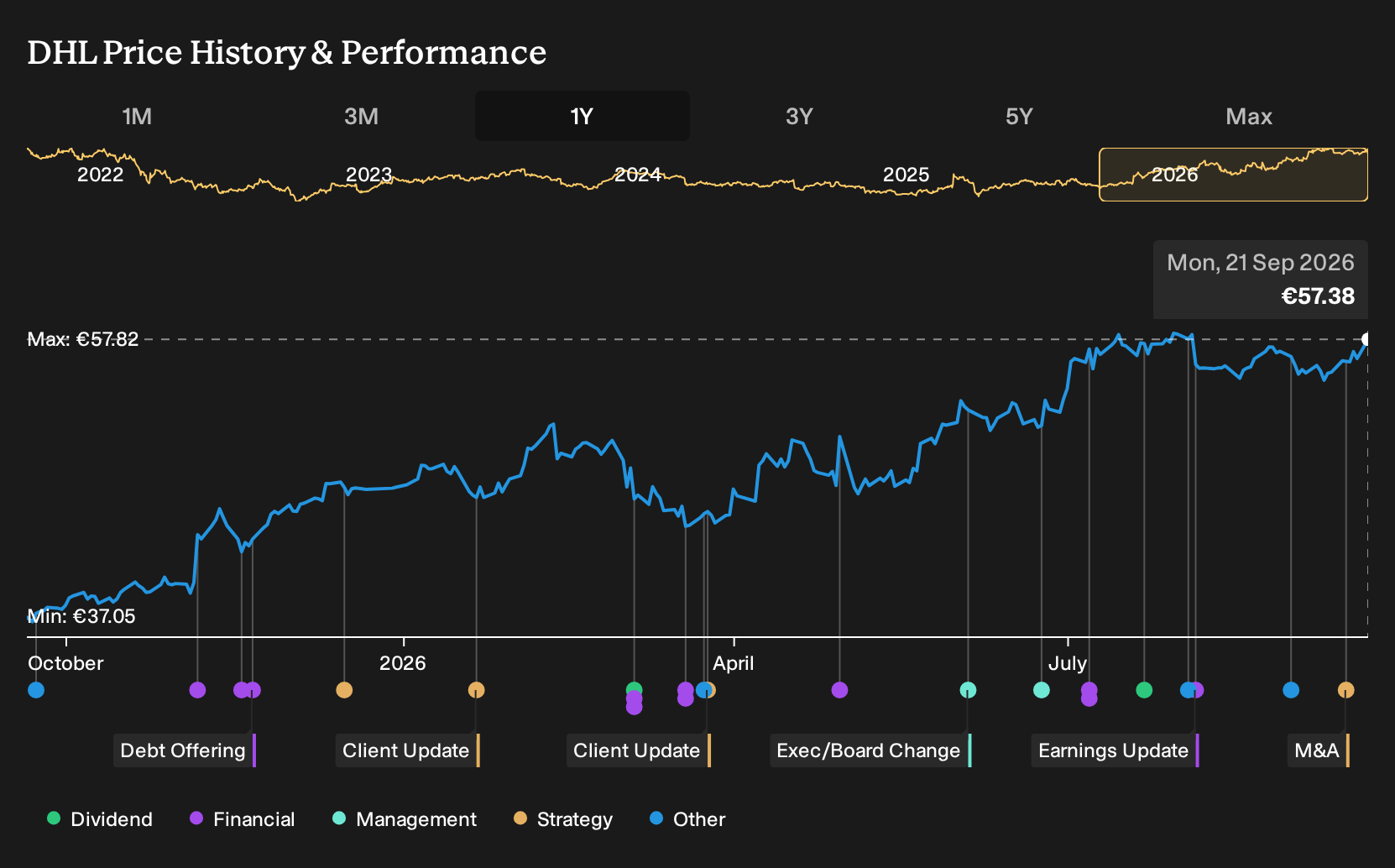
Uncover why DHL's fair value indicates a 5% potential downside to its current price, which leaves little room for error.
Exploring Other Perspectives
One alternative lens on DHL focuses on the risk that new Bahrain to Johannesburg lift and battery logistics capacity might struggle to offset weaker global shipping flows. The most cautious analysts were pencilling in revenue of about €90.5b and earnings near €4.1b by 2029, before this route was announced. That is a far more pessimistic story than the consensus, so use it as a reminder that views differ widely, and fresh news like this flight and logistics buildout can still reshape those narratives.
Explore 6 other DHL fair value estimates, including one that suggests as much as 23% downside from the current price.
The Verdict Is Yours
Disagree with existing narratives? Extraordinary investment returns rarely come from following the herd, so trust your own analysis and judgment.
- A great starting point for your DHL research is our analysis highlighting 4 key rewards that could impact your investment decision.
- See our latest analysis for DHL. The report includes a comprehensive fundamental analysis summarized in a single visual, the Snowflake, making it easier to review DHL's overall financial position at a glance.
Looking For More Investment Ideas Beyond DHL?
If DHL's evolving story around trade corridors and battery logistics has sharpened your thinking, it can help to compare it with other businesses that fit very different checklists on quality, value, and resilience.
- For investors hunting for companies that trade below what their fundamentals might justify, scan a curated set of value opportunities through the 178 high quality undervalued stocks.
- If predictable balance sheets matter most to you, concentrate on financially resilient operators using the list of solid balance sheet and fundamentals (198 results).
- Those looking for potential income ideas can zero in on higher yielding opportunities screened through the 161 dividend fortresses.
This article by Simply Wall St is general in nature. We provide commentary based on historical data and analyst forecasts only using an unbiased methodology and our articles are not intended to be financial advice. It does not constitute a recommendation to buy or sell any stock, and does not take account of your objectives, or your financial situation. We aim to bring you long-term focused analysis driven by fundamental data. Note that our analysis may not factor in the latest price-sensitive company announcements or qualitative material. Simply Wall St has no position in any stocks mentioned.
Have feedback on this article? Concerned about the content? Get in touch with us directly. Alternatively, email editorial-team@simplywallst.com