
- PRICING
- LIVE QUOTES
- LEARN
- HELP


EN
Exxon Could Return to the Venezuelan Field It Was Forced Out of in 2007. Here's What Changed.
Key Points
The company's Venezuela assets were seized twice.
Political risks abound, but there could also be major rewards from such a venture.
What's old is new again. At least, that seems to suddenly be the case for ExxonMobil Holdings (NYSE: XOM).
Exxon first went into Venezuela in the 1940s. But over the years, the oil major had its assets in the country expropriated by that nation's government, not once, but twice. The South American nation nationalized the entire oil industry in 1976 under President Carlos Andrés Pérez. After being invited back in the 1990s, ExxonMobil made major new investments in the country, only to have those new assets taken by Hugo Chavez's regime in 2007.
Missed AI’s "Act 1"? Act 2 Could Be 15x Bigger. Most investors think they missed the AI boat because they didn't buy Nvidia in 2005. But according to our analysts, we’re only at the end of "Act 1"—the R&D phase. "Act 2" is the global rollout. Continue »
So, ExxonMobil's history in Venezuela, which has the largest proven crude oil reserves of any country on the planet, has been a bit checkered, to say the least.
But now, with the new regime friendly to the U.S., ExxonMobil appears to be on the cusp of returning to Venezuela, with potential operations in the exact oil fields it once worked.
The third time is, apparently, the charm
The Wall Street Journal, Bloomberg, and other media outlets are reporting that ExxonMobil is in negotiations with Petróleos de Venezuela -- the state-owned oil and gas company known as PDVSA -- to invest in several developed and undeveloped oil fields.
The fields currently being mentioned are in Venezuela's Orinoco Belt, the massive region in southern Venezuela that holds the world's largest deposits of extra-heavy petroleum. They include Petromonagas and Petrovictoria. ExxonMobil had operations in both before Chavez nationalized them and sent the Texas-based company packing.
The deal -- should it become finalized -- carries both major risks and potential rewards for ExxonMobil.
The first and biggest risk, in my opinion, is the current regime's stability. To make operations in Venezuela profitable, ExxonMobil would have to commit significant long-term capital to rebuilding them. Right now, the Venezuelan government, led by Acting President Delcy Rodriguez, is on good terms with the Trump administration. In fact, she is said to be working with Secretary of State Marco Rubio to run the country.
But Trump is in office for just two more years. And it's impossible to know whether the next American president will want to maintain the same relationship, or whether the Venezuelans will allow it. Another nationalization of foreign oil assets cannot be ruled out. Expropriation is a political risk for any company looking to invest in unstable nations (that's why the World Bank offers political risk insurance to incentivize investments into emerging market economies).
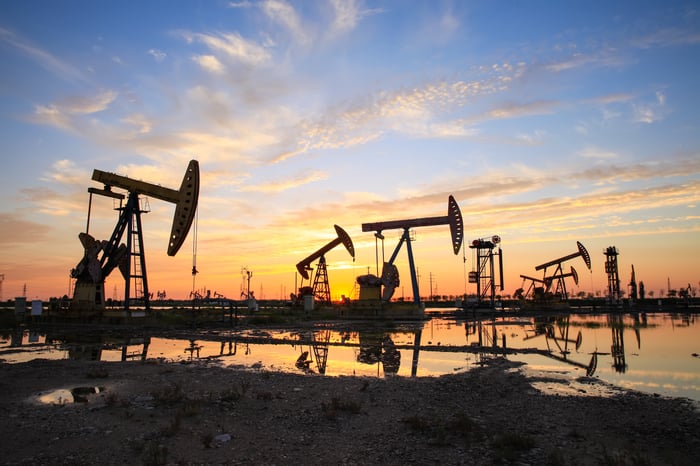
Image source: Getty Images.
And Venezuela's oil infrastructure has been decimated by decades of neglect. In fact, in January, ExxonMobil's CEO called Venezuela "uninvestable."
Chevron (NYSE: CVX) already has a huge head start in Venezuela, having remained in the country and working with the Chavez and Maduro regimes.
But the potential rewards could be significant for ExxonMobil, too. Venezuela's proven reserves are massive, and ExxonMobil has the experience and capacity to refine the heavy crude lying underground there.
It's a very dicey idea for ExxonMobil to return to Venezuela in any significant way. Investors will have to carefully weigh the pros and cons of such a major venture.
Matthew Benjamin has no position in any of the stocks mentioned. The Motley Fool has positions in and recommends Chevron. The Motley Fool has a disclosure policy.