
- PRICING
- LIVE QUOTES
- LEARN
- HELP


EN
3 U.S. Media Stocks Investors May Revisit as Political News Drives Attention
Political conflict between the White House and major outlets like MS NOW and CNN has pushed media and entertainment stocks into the spotlight again. When press freedom, legal risk and audience trust are all questioned at once, pricing can move faster than the story itself. This article unpacks how that news shock touches three large U.S. media stocks, and shows where investors might see both pressure and potential opportunity.
The three stocks discussed below are a small sample of what political pressure is flagging in U.S. media and entertainment, while the full screen surfaced 17 more companies with equally detailed stories that this article does not cover. To go broader and identify your own high-conviction angles across the sector, head straight into the U.S. Media and Entertainment Stocks screener.
New York Times (NYT)
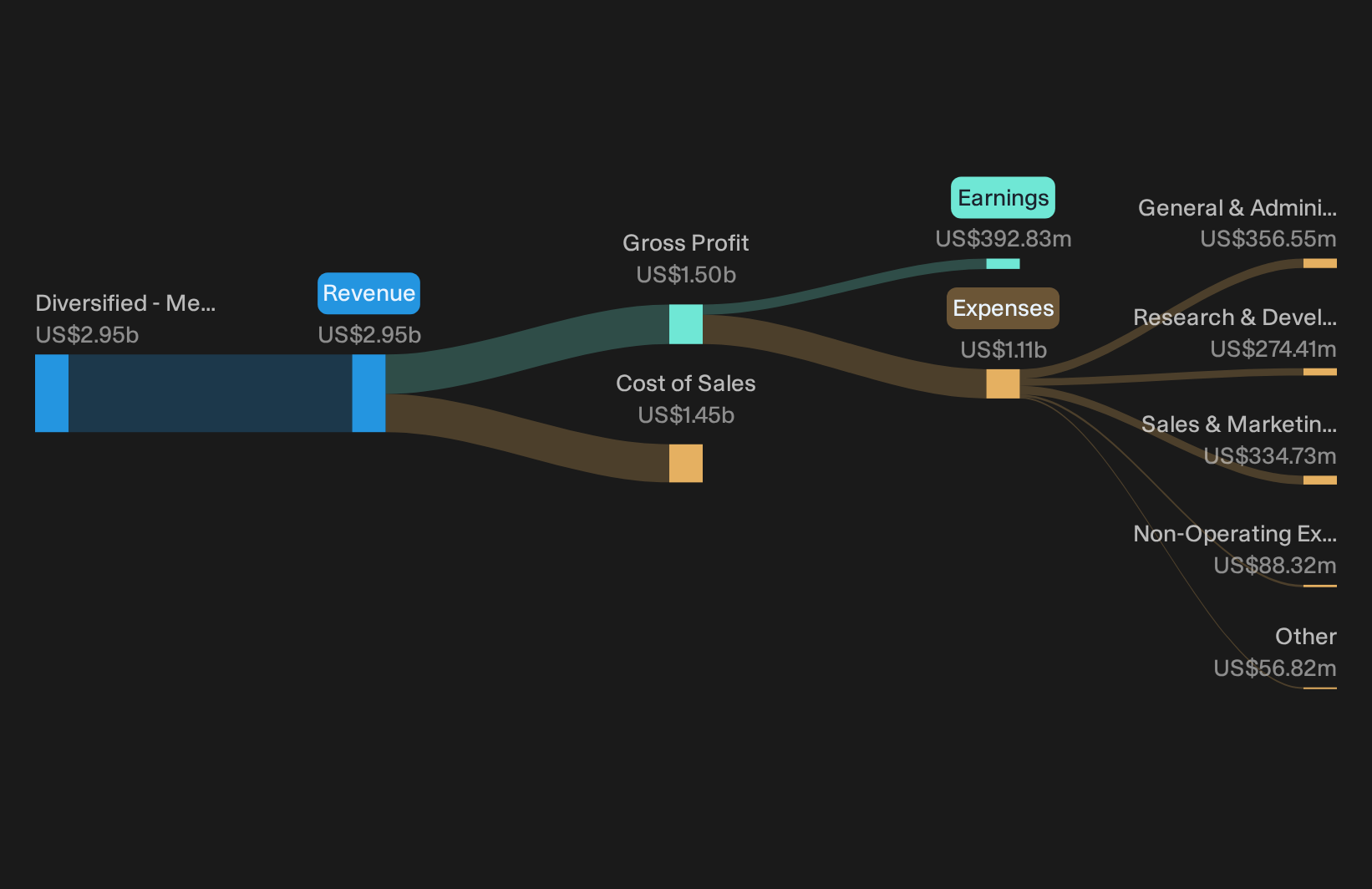
Overview: New York Times is a global news publisher that delivers politically focused journalism and lifestyle content across digital subscriptions, print, audio, games, and live events.
Operations: New York Times generates about US$3 billion in diversified media and entertainment revenue, almost entirely from its U.S. operations.
Market Cap: US$11.3 billion
Within this U.S. Media and Entertainment screener, New York Times is the pure-play political news reference point, which is exactly why fresh conflict between the White House and major outlets brings its subscription engine back into focus.
"Robust growth in digital subscriptions driven by an expanding portfolio of bundled offerings (news, Cooking, Games, The Athletic) and a focus on direct consumer relationships positions the company to capture more recurring revenue, strengthen ARPU, and reduce churn. This directly supports long-term revenue and margin expansion."
What happens to New York Times' margin story if a single pressure point on pricing power or subscriber churn moves in the wrong direction?
That margin risk cuts both ways, so it is worth reading the full narrative for New York Times to see how pricing power, churn and bundled demand could still be accelerating.
Warner Bros. Discovery (WBD)
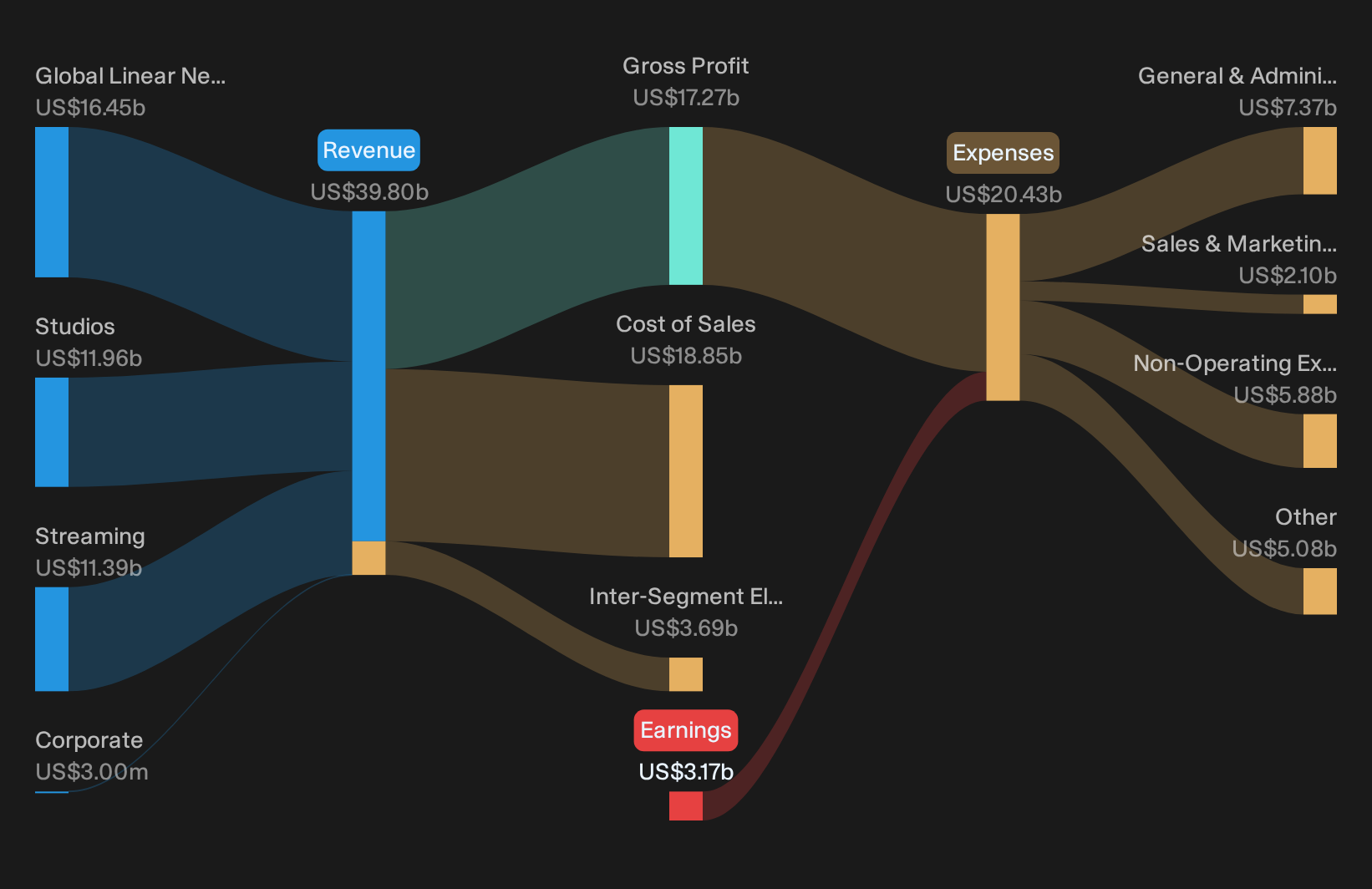
Overview: Warner Bros. Discovery is a global media group spanning streaming, film production, TV networks, news, sports, gaming, and consumer products.
Operations: Warner Bros. Discovery generates about US$16.4b from Global Linear Networks, US$12b from Studios and US$11.4b from Streaming, before eliminations.
Market Cap: US$69.8b
For the U.S. Media and Entertainment screener, Warner Bros. Discovery brings a mix of cable news, sports, and streaming that can react quickly when political conflict pulls more viewers back to live coverage and branded platforms.
"DOJ review, by itself, posed quite a few risks: extended closing timelines, increased the probability of litigation, and the prospect of structural remedies or behavioral conditions and forced divestitures that dilute projected synergies."
What could matter most for Warner Bros. Discovery now is how a single unresolved constraint ultimately feeds through to audience reach and pricing power.
That unresolved constraint is only part of the story, and the full narrative for Warner Bros. Discovery shows where Warner Bros. Discovery could still be accelerating beyond headline risk.
USA TODAY (TDAY)
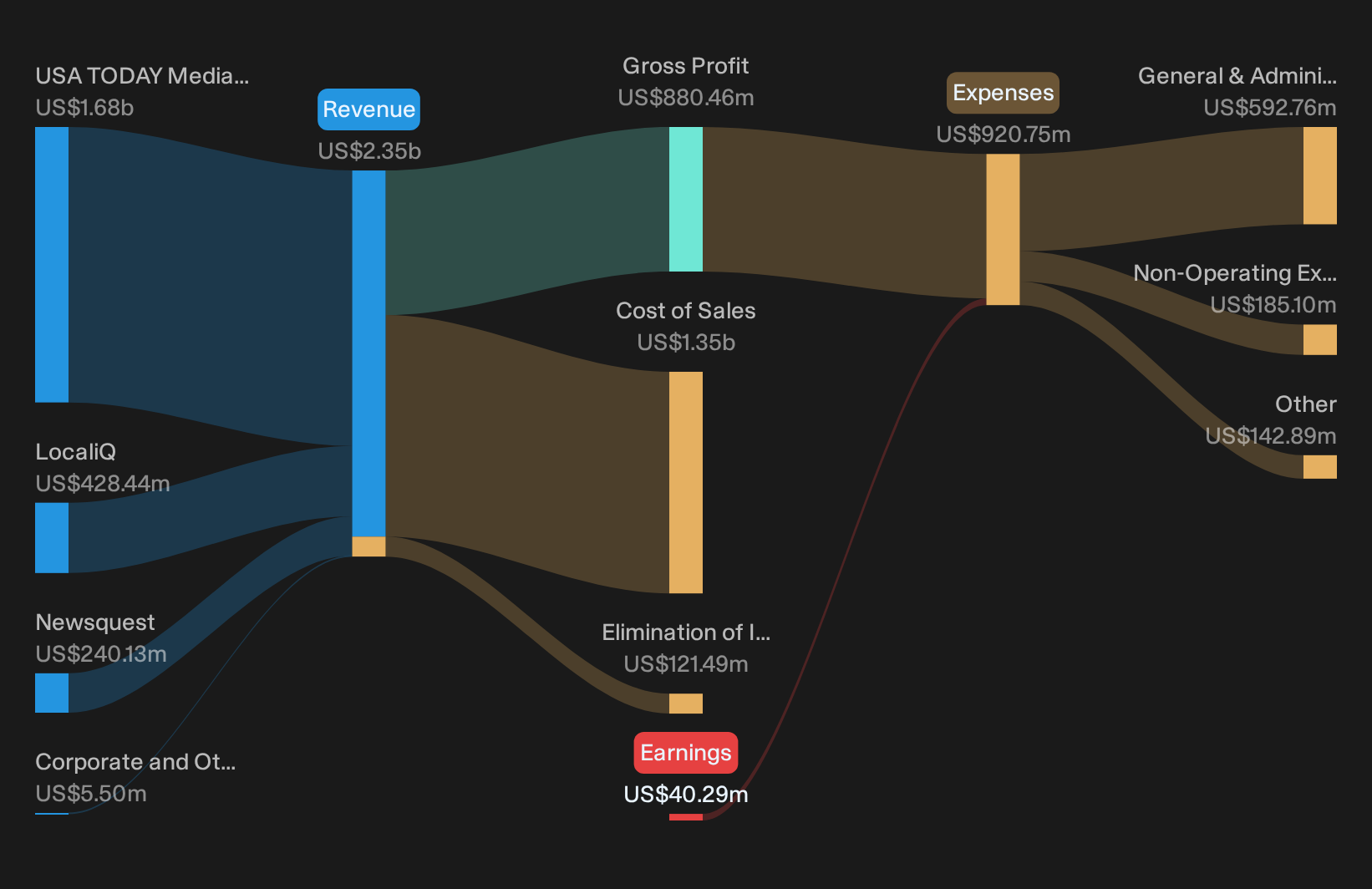
Overview: USA TODAY Co., Inc. runs a nationwide news and local publishing network, plus digital marketing platforms tied closely to political news consumption.
Operations: USA TODAY generates about US$1.7b from USA TODAY Media, US$428 million from LocaliQ and US$240 million from Newsquest.
Market Cap: US$921 million
USA TODAY sits squarely in the screener theme as a cross-country news and digital media group. Any spike in political engagement and advertising interest can quickly ripple through its high-traffic platforms.
"Rapid expansion of high engagement digital products such as sports hubs, USA TODAY Pets and the PLAY games platform is deepening user time spent and monetization opportunities, supporting sustained digital advertising growth and higher digital-only subscription revenue."
The real swing factor is how a single shift in digital monetization efficiency shapes the earnings path investors are currently evaluating.
That swing factor is exactly why reading the full narrative for USA TODAY can help you see where USA TODAY’s digital engine could be accelerating or quietly stalling next.
Curious About Alternatives You Might Be Missing
Fresh ideas move first. Stocks gaining quiet momentum can be flying under the radar for now, and pricing can shift before the crowd reacts, so consider acting before conditions change.
- Target reliable income while others chase headlines by scanning a curated 6 dividend fortresses designed to highlight payout strength before yields start dropping.
- Pursue companies with strong footing by running the list of solid balance sheet and fundamentals (23 results) to identify sturdier balance sheets before that resilience is fully reflected in the price.
- Track early AI momentum by reviewing a focused set of 38 profitable AI stocks that aren't just burning cash to see which businesses already support the story with real earnings.
This article by Simply Wall St is general in nature. We provide commentary based on historical data and analyst forecasts only using an unbiased methodology and our articles are not intended to be financial advice. It does not constitute a recommendation to buy or sell any stock, and does not take account of your objectives, or your financial situation. We aim to bring you long-term focused analysis driven by fundamental data. Note that our analysis may not factor in the latest price-sensitive company announcements or qualitative material. Simply Wall St has no position in any stocks mentioned.
Have feedback on this article? Concerned about the content? Get in touch with us directly. Alternatively, email editorial-team@simplywallst.com