
- PRICING
- LIVE QUOTES
- LEARN
- HELP


EN
Buyback Plan Might Change The Case For Investing In FTAI Aviation Stock (FTAI)
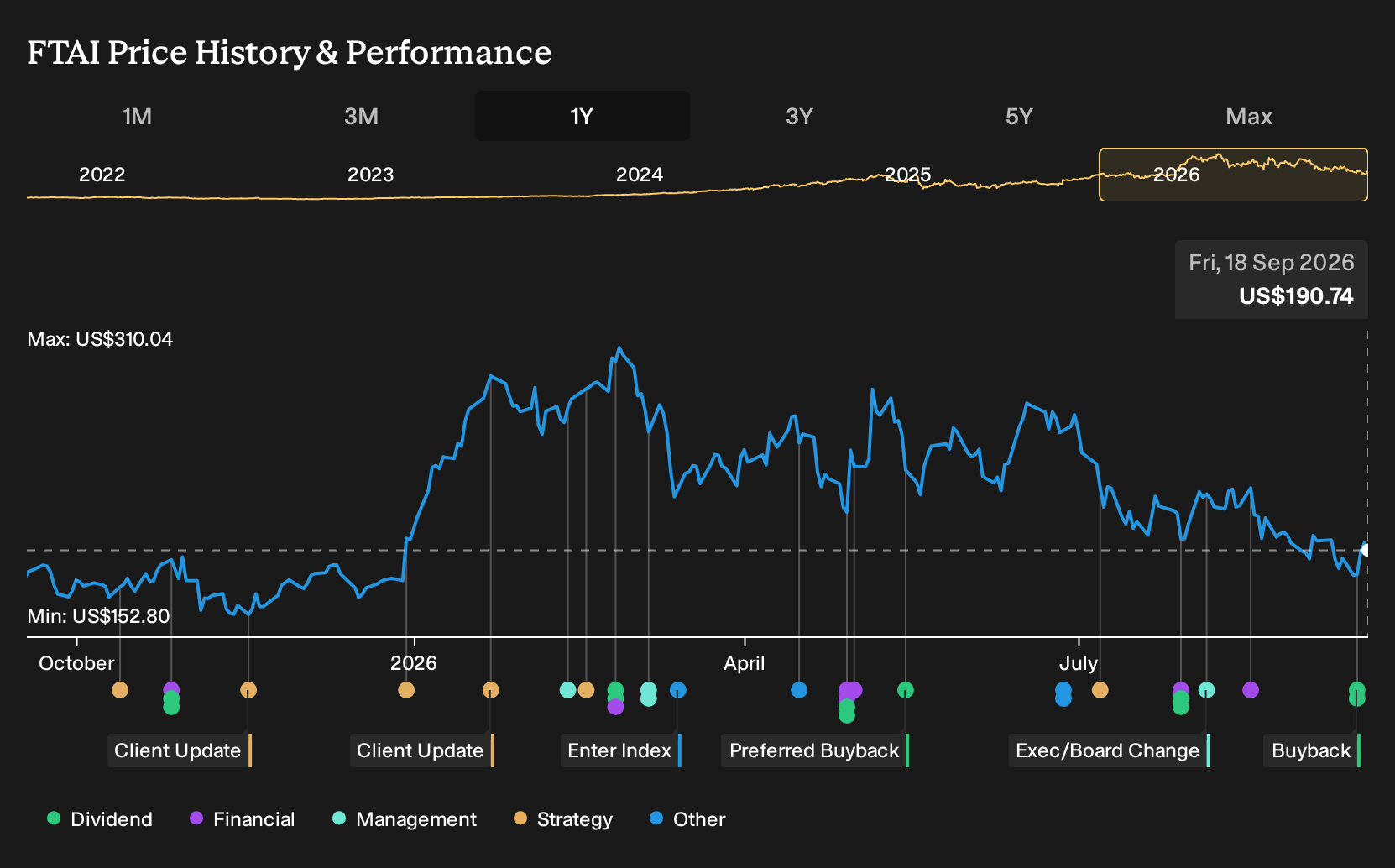
- FTAI Aviation announced a share repurchase program in mid September 2026, authorizing up to US$500 million of buybacks funded from existing cash and running through late 2029 or until completed.
- The decision to deploy balance sheet cash into buying back equity highlights management's current preference for returning capital over alternative uses such as new acquisitions or faster debt reduction.
- This article explores how FTAI Aviation's investment narrative around recurring engine services and capital efficiency is affected by this US$500 million buyback.
Scan how FTAI Aviation's US$500 million buyback compares with other companies returning cash to shareholders by reviewing the 6 dividend fortresses in today's market.
FTAI Aviation Investment Narrative Recap
To own FTAI Aviation today, you need to be comfortable with a business that leans heavily on recurring engine maintenance and leasing tied to aging 737NG and A320ceo fleets, while carrying meaningful debt and non cash earnings. The key near term swing factor is execution on engine shop throughput and MRE volumes. The new US$500 million buyback does not change that operational catalyst in a material way.
The bigger risk in the near term still sits with cash generation versus leverage. Debt is not well covered by operating cash flow, and net margins have eased from last year. If demand for mid life engines or SCI partner activity softens, the combination of higher repurchases and balance sheet obligations could tighten financial flexibility during a downturn.
The most relevant announcement is the Board authorizing the US$500 million repurchase plan on 15 September 2026. It directly relates to how FTAI Aviation allocates cash between SCI driven growth, vertical integration in Aerospace Products, and equity reduction. For investors, the key consideration is how this mix affects capacity to fund MRE expansion, new PMA work, and potential engine acquisitions.
Execution around this plan will be worth watching relative to existing risks. Debt relies entirely on higher risk funding sources, and operating cash flow coverage is limited. If engine shop visits, parts demand, or SCI fees fall below expectations while buybacks remain active, management may have less room to respond to supply chain issues, regulatory delays, or slower engine utilization.
What The Analyst Case Implies For FTAI Aviation
FTAI Aviation's narrative projects US$9.0b revenue and US$2.4b earnings by 2029. Analysts are assuming revenue growth of 42.3% per year, and this path would require earnings to rise by about US$1.9b from US$477.6m today.
Uncover why FTAI Aviation's fair value indicates a 93% potential upside to its current price, which could narrow quickly.
Exploring Other Perspectives
One optimistic twist in the alternate FTAI Aviation story is SCI becoming a cash engine of its own. The most bullish analysts were already pencilling in revenue near US$10b and earnings of US$2.8b by 2029 before this US$500m buyback appeared. That is far above consensus, and it shows how sharply views can diverge. You can weigh those more positive assumptions against this new capital return and decide whether the SCI growth angle still feels realistic to you.
Explore 4 other FTAI Aviation fair value estimates, including one that suggests as much as 184% potential upside from the current price.
Decide For Yourself
Don't just follow the ticker. Dig into the data and build a conviction that's truly your own.
- A great starting point for your FTAI Aviation research is our analysis highlighting 3 key rewards and 2 important warning signs that could impact your investment decision.
- See our latest analysis for FTAI Aviation. The report includes a comprehensive fundamental analysis summarized in a single visual, the Snowflake, making it easy to evaluate FTAI Aviation's overall financial health at a glance.
Looking For More Investment Ideas Beyond FTAI Aviation?
Once you have a view on FTAI Aviation, it often helps to line that thesis up against a few very different types of opportunities. The Simply Wall St Screener lets you scan for companies that match specific traits, from balance sheet strength to unloved outliers with room for sentiment to catch up.
- If capital preservation is high on your list, start with a focus on resilient businesses by checking the 30 resilient stocks with low risk scores that may better match your risk tolerance.
- For investors who care most about quality at a reasonable entry point, you can filter for stronger fundamentals and attractive pricing using the 33 high quality undervalued stocks to see what else fits your checklist.
- If you prefer to hunt for less crowded ideas, narrow in on under-followed opportunities through the 16 high quality undiscovered gems and compare their stories with FTAI Aviation.
This article by Simply Wall St is general in nature. We provide commentary based on historical data and analyst forecasts only using an unbiased methodology and our articles are not intended to be financial advice. It does not constitute a recommendation to buy or sell any stock, and does not take account of your objectives, or your financial situation. We aim to bring you long-term focused analysis driven by fundamental data. Note that our analysis may not factor in the latest price-sensitive company announcements or qualitative material. Simply Wall St has no position in any stocks mentioned.
Have feedback on this article? Concerned about the content? Get in touch with us directly. Alternatively, email editorial-team@simplywallst.com