
- PRICING
- LIVE QUOTES
- LEARN
- HELP


EN
3 European Utility Stocks Investors Are Watching As Energy Inflation Returns
German producer prices are heating up again, energy costs are back in the spotlight, and regulated electric utilities suddenly look less boring. When input prices move while central bank policy stays relatively measured, investors who ignore tariff based grids and power providers risk missing potential pockets of stability or pressure. This article walks through 3 European regulated electricity stocks exposed to this inflation story and explains how the same macro shock can hit each one differently.
The three stocks that follow are only a sample, and the full screen surfaced 8 more regulated European utilities with similarly detailed stories that are not covered here. If you want to identify and analyze the broader group of tariff based grid and generation companies that fit this idea, head straight to the European Regulated Electric Utilities and Grid Operators screener.
Terna (BIT:TRN)
Terna plugs directly into this screener’s theme as Italy’s main high voltage grid operator, earning mostly regulated income that can look appealing when energy driven inflation resurfaces and investors search for steadier, tariff based cash flows.
Terna runs Italy’s national transmission grid and related dispatching services, with about €3.3b from regulated activities and €905m from non regulated operations, giving it a sizeable regulated base for an approximately €18.7b stock market valuation.
"Ongoing and accelerating investments in grid modernization, digitalization, and resilience, including AI adoption and smart technologies, position Terna to pursue regulated asset base growth and higher efficiency in its operations."
What really moves the needle for Terna now is how one unresolved regulatory and funding pressure ultimately filters through to future returns.
That unresolved piece is what really shapes the risk reward. Read the full narrative for Terna to see how Terna’s grid spending, tariffs and inflation link up next.

Fortum Oyj (HLSE:FORTUM)
Fortum Oyj is the second Nordic utility in this screen, mixing regulated and long term contracted power with exposure to wholesale price swings that matter when energy driven inflation flares and investors look for steadier cash flows in a choppy market.
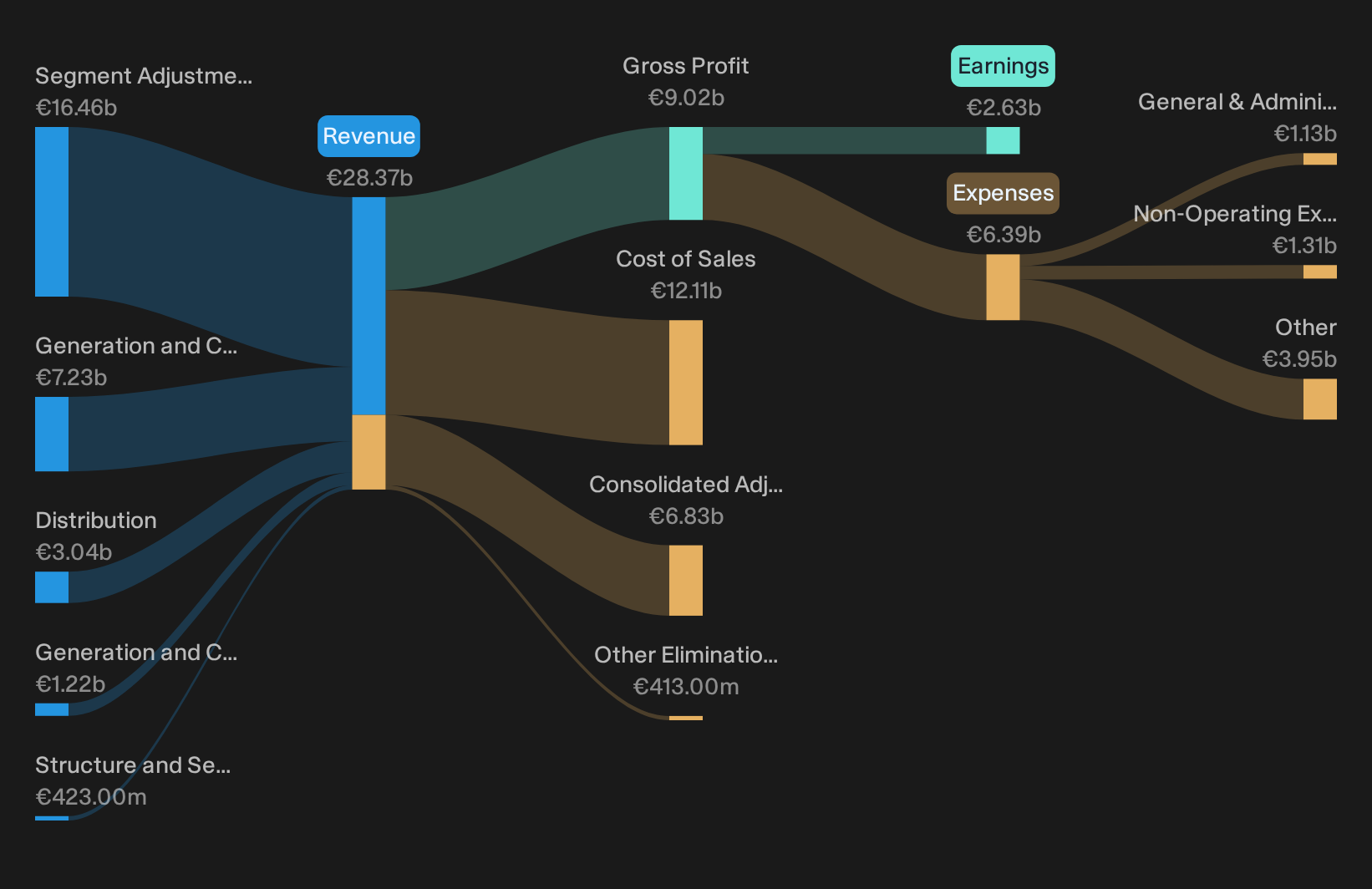
Fortum Oyj runs low carbon generation and retail energy services, with €3.5b from Generation and €3.5b from Consumer Solutions plus smaller Other Operations, and a roughly €22.0b market cap that places it firmly in the larger, regulated leaning end of this utilities group.
"Persistent variability in hydro inflows and unplanned nuclear outages highlight structural exposure to weather and asset availability risk."
This raises the question of what happens if that operational volatility collides with tighter regulation or contract terms that limit how much of future cost pressure can be reflected in prices.
If that collision worries you, read the full narrative for Fortum Oyj to see how Fortum Oyj could still turn volatility into an accelerating edge.

Endesa (BME:ELE)
Endesa plugs directly into the European Regulated Electric Utilities and Grid Operators theme as a large Iberian electricity provider, earning most of its income from distribution and generation activities across Spain and nearby markets, with a roughly €43.6b market value and billions in tariff linked revenue lines supporting that scale.
Endesa is one of the big European utilities where German producer price pressure and energy driven inflation intersect with regulated grids and long term contracts that can shape how costs are shared between consumers and shareholders.
"Grid capacity limits, regulatory obstacles, and demographic trends may restrict future revenue growth, despite optimistic demand forecasts and high current profitability."
What really matters next for Endesa is how one evolving policy decision around future grid investment terms reshapes the balance between pricing power and earnings risk.
That policy pivot could be the moment Endesa starts decoupling risk from reward. Read the full narrative for Endesa to see what markets may be missing.
Seeking Alternatives Before The Crowd
Fresh opportunities rarely wait. Breakout momentum, dropping risk scores, and under the radar ideas can get caught quickly once money starts flying toward them, so act now.
- Spot resilient companies before they are widely followed by screening for a list of solid balance sheet and fundamentals (197 results) that can handle shocks while others scramble.
- Ride potential upside in early stage miners by tracking the 36 elite gold producer stocks that could gain attention if metal prices surge while it still matters.
- Position ahead of demand shifts by scanning the 38 power grid technology and infrastructure stocks that may benefit as grids upgrade to handle new energy and data loads.
This article by Simply Wall St is general in nature. We provide commentary based on historical data and analyst forecasts only using an unbiased methodology and our articles are not intended to be financial advice. It does not constitute a recommendation to buy or sell any stock, and does not take account of your objectives, or your financial situation. We aim to bring you long-term focused analysis driven by fundamental data. Note that our analysis may not factor in the latest price-sensitive company announcements or qualitative material. Simply Wall St has no position in any stocks mentioned.
Have feedback on this article? Concerned about the content? Get in touch with us directly. Alternatively, email editorial-team@simplywallst.com