
- PRICING
- LIVE QUOTES
- LEARN
- HELP


EN
Have Wayfair Insiders Been Selling Stock?
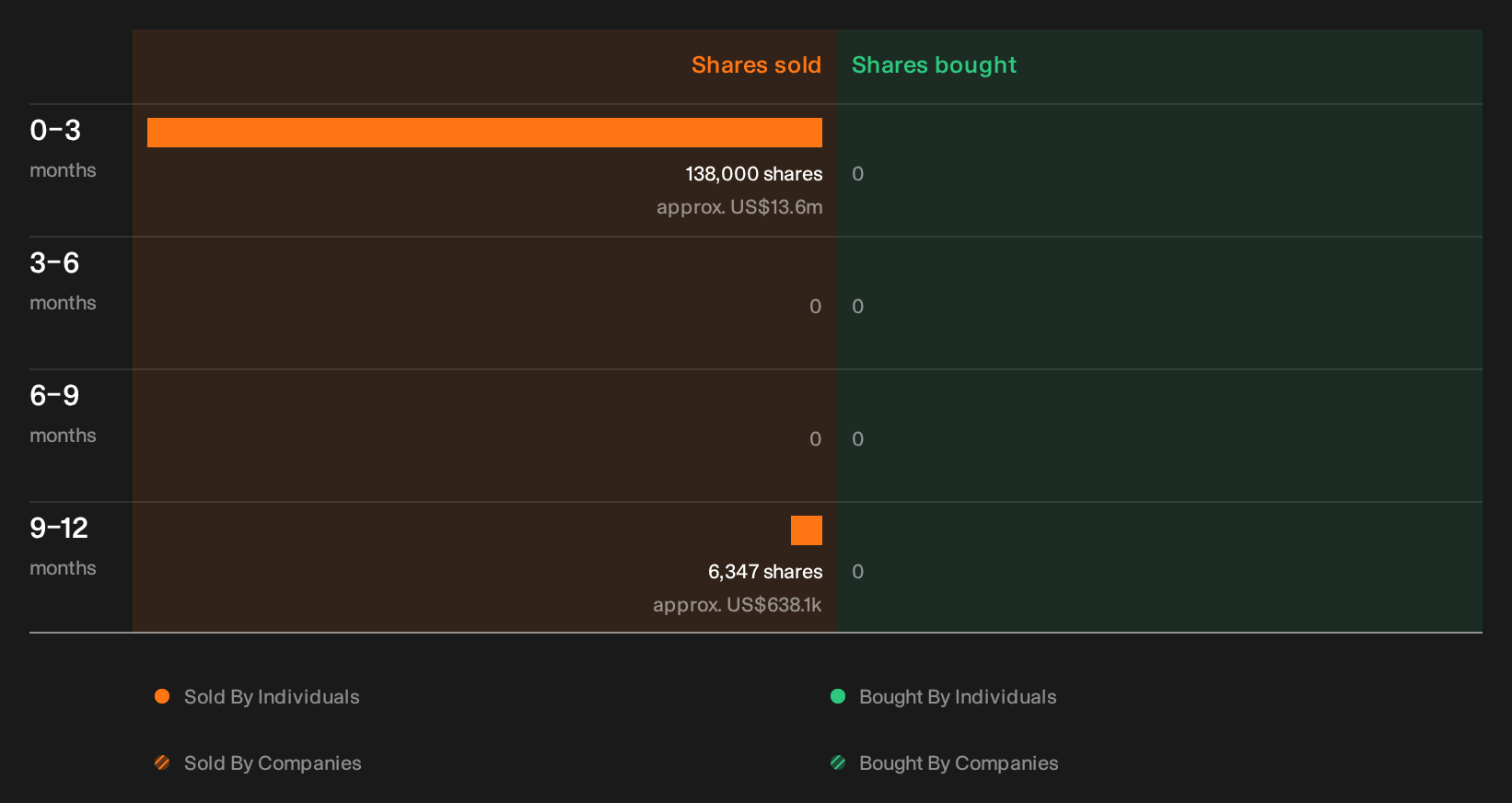
We wouldn't blame Wayfair Inc. (NYSE:W) shareholders if they were a little worried about the fact that Steven Conine, the Co-Founder & Co-Chairman recently netted about US$7.1m selling shares at an average price of US$103. That sale reduced their total holding by 19% which is hardly insignificant, but far from the worst we've seen.
The Last 12 Months Of Insider Transactions At Wayfair
In fact, the recent sale by Steven Conine was the biggest sale of Wayfair shares made by an insider individual in the last twelve months, according to our records. So what is clear is that an insider saw fit to sell at around the current price of US$103. While we don't usually like to see insider selling, it's more concerning if the sales take place at a lower price. We note that this sale took place at around the current price, so it isn't a major concern, though it's hardly a good sign.
Insiders in Wayfair didn't buy any shares in the last year. You can see a visual depiction of insider transactions (by companies and individuals) over the last 12 months, below. If you want to know exactly who sold, for how much, and when, simply click on the graph below!
See our latest analysis for Wayfair
For those who like to find hidden gems this free list of small cap companies with recent insider purchasing, could be just the ticket.
Insider Ownership Of Wayfair
Another way to test the alignment between the leaders of a company and other shareholders is to look at how many shares they own. I reckon it's a good sign if insiders own a significant number of shares in the company. It's great to see that Wayfair insiders own 17% of the company, worth about US$2.3b. This kind of significant ownership by insiders does generally increase the chance that the company is run in the interest of all shareholders.
What Might The Insider Transactions At Wayfair Tell Us?
Insiders sold stock recently, but they haven't been buying. And there weren't any purchases to give us comfort, over the last year. While insiders do own a lot of shares in the company (which is good), our analysis of their transactions doesn't make us feel confident about the company. So these insider transactions can help us build a thesis about the stock, but it's also worthwhile knowing the risks facing this company. Our analysis shows 3 warning signs for Wayfair (1 doesn't sit too well with us!) and we strongly recommend you look at them before investing.
But note: Wayfair may not be the best stock to buy. So take a peek at this free list of interesting companies with high ROE and low debt.
For the purposes of this article, insiders are those individuals who report their transactions to the relevant regulatory body. We currently account for open market transactions and private dispositions of direct interests only, but not derivative transactions or indirect interests.
Have feedback on this article? Concerned about the content? Get in touch with us directly. Alternatively, email editorial-team (at) simplywallst.com.
This article by Simply Wall St is general in nature. We provide commentary based on historical data and analyst forecasts only using an unbiased methodology and our articles are not intended to be financial advice. It does not constitute a recommendation to buy or sell any stock, and does not take account of your objectives, or your financial situation. We aim to bring you long-term focused analysis driven by fundamental data. Note that our analysis may not factor in the latest price-sensitive company announcements or qualitative material. Simply Wall St has no position in any stocks mentioned.