
- PRICING
- LIVE QUOTES
- LEARN
- HELP


EN
The most optimistic time for European stocks in eight years. Analysts predict a new high by the end of the year
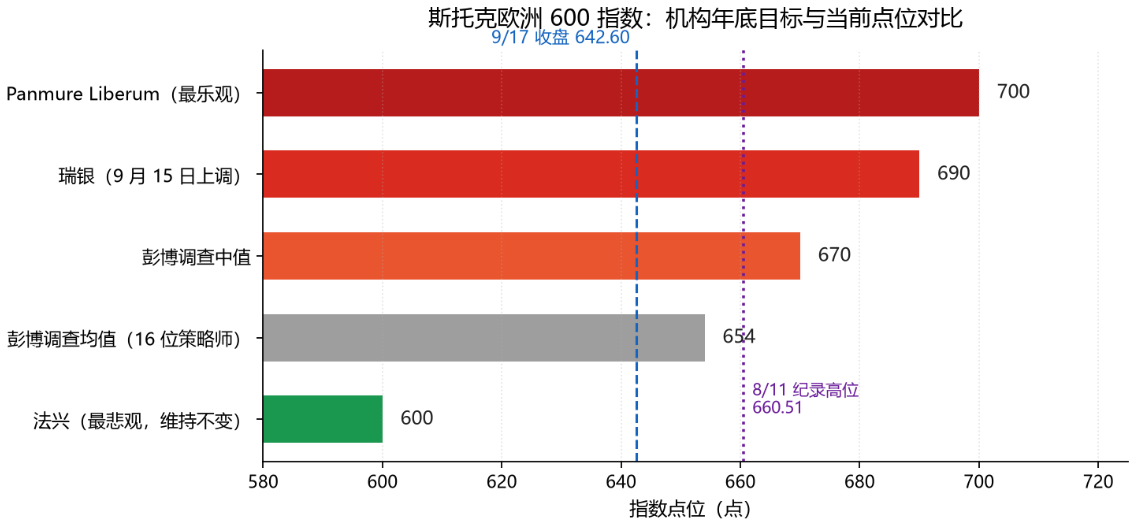
The Zhitong Finance App learned that the strategists gave the most optimistic September forecast for the European stock market since 2018. According to the survey, 16 strategists had a median year-end target of 670 points for the STOXX Europe 600 (STOXX Europe 600) — the most optimistic median since 2018. Strong corporate profit growth is helping the market absorb the double impact of high energy prices and rising bond yields.
The internal structure of this survey is also interesting. Panmure Liberum continues to hold the “biggest long” position, predicting that the benchmark index will rise 10% before the end of the year (about 700 points at the closing price on September 16); Deka Bank raised its target, and no institutions lowered it. The most pessimistic was Société Générale, which kept the 600-point forecast unchanged. It is worth noting that the survey mean was only 654 points, below the median - the low outliers are dragging the mean down, and the differences between long and empty are not small.
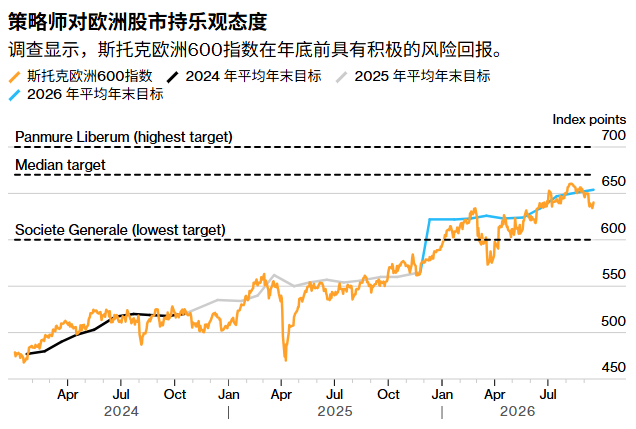
“Duncan Toms, a multi-asset strategist at HSBC, is in the determined camp, and his 670-point target has not wavered since January.” A fall in energy prices would be a welcome relief for European stocks, but there are other potential positive catalysts,” he said, citing the continued improvement in macroeconomic data and its positive implications. If this trend continues, compounded by another strong three-quarter reporting season, the region can perform well again by the end of the year.”
Headwinds: oil prices, bond markets, and the “turning eagle” central bank
In the past month, the European stock market has indeed been heavily weighed down. The unresolved war in Iran has boosted oil and gas prices. The Stoxx 600 index has dropped 2.7% from the August peak — according to Dow Jones market data, the index hit a record closing high of 660.51 points on August 11, and once fell to a three-month low of 634.17 points on September 15. The Strait of Hormuz is still essentially closed, and the escalation of the conflict continues to dampen sentiment.
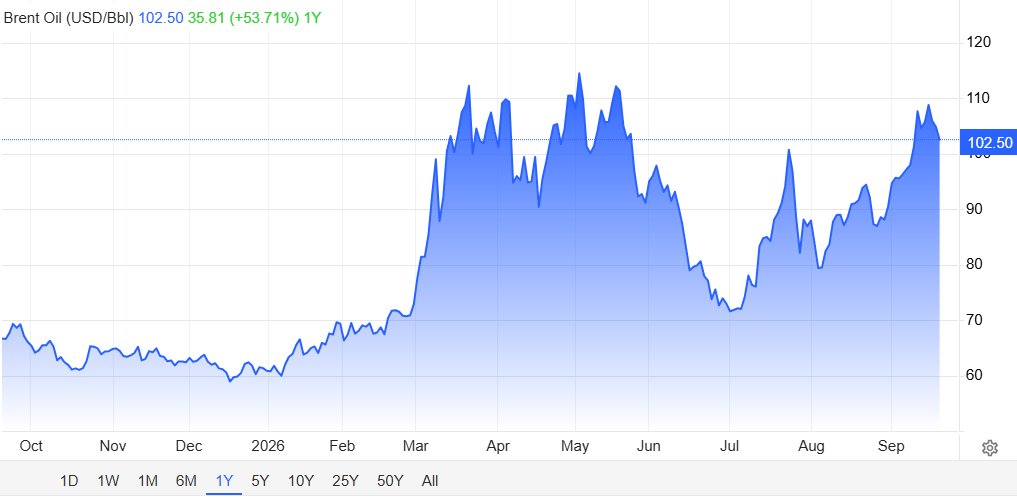
The interest rate side is also uneasy. Brent crude oil fell for two days after rising above $108 in the intraday session on September 15, but it still closed above $100 per barrel on September 17, and inflationary anxiety remained unresolved. The ECB raised interest rates by 25 basis points on September 10, and the position clearly changed after raising deposit interest rates to 2.50%. The swap market expects three more rate hikes until June next year; according to FXStreet statistics, the interest rate swap market has already set an additional contraction of about 88 basis points, and the peak of the contraction occurred in September 2027.
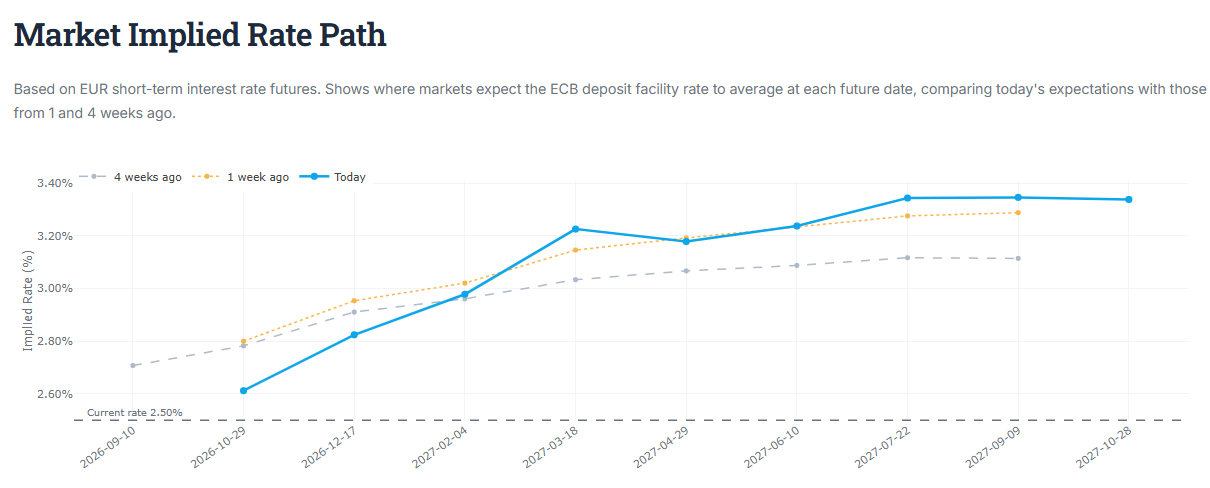
The Bank of England remained on hold for the sixth consecutive meeting on September 17 (remaining at 3.75%), but the market's pricing for the next year's rate hike is already full — expectations of raising interest rates four times by July next year have almost been fully priced. On the bond market side, the yield on German 10-year treasury bonds rose to 3.512% (according to Tencent Finance) on September 10, and fell back to 3.474% on September 17.
Roland Kaloyan, a strategist at Agence France, put the list of risks quite bluntly: “Other risks include the closing of crowded positions in AI transactions, the US midterm elections, another tense tariff situation, and low inventories of European gas. The combination of these factors may drive the stock risk premium to rise further.”
Across the Atlantic: Confidence is also waning
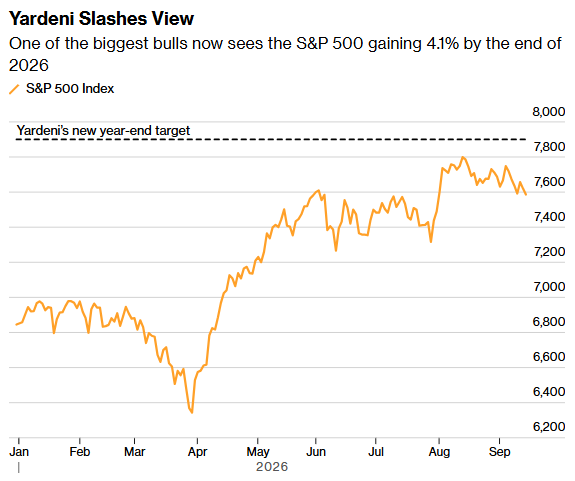
The temperature gap between the European and American strategic circles is widening. Wells Fargo and Yardeni Research both lowered their target for the S&P 500 at the end of the year this week: Yardeni's Ed Yardeni cut the target from 8,400 points to 7900 points on Tuesday, citing rising bond yields and the situation in the Middle East, and raising the probability of a recession over the next three to six months from 20% to 30%; Wells Fargo analyst Ohsung Kwon's team lowered it from 7950 points to 7700 points. The profit cycle is in the latter stages, and there is limited room for the index to rise. Bank of America raised slightly to 7,400 points, which is still Wall Street's lowest target. However, Scott Rubner of Citadel Securities stated on Thursday that he is “increasingly constructive” (more constructive) about stocks.
The financial signals are a bit more subtle. According to a fund manager survey released by Bank of America this week, the net ratio of the European stock market's rise in the next few months is expected to fall to 39%, down from the net 53% in August; however, the same group of respondents expected an average return of 6.3% of the region's stocks over the next 12 months, and 43% of investors believe that the European and US stock markets will perform roughly the same in the next year. The vast majority of investors listed the “increase in profit” as the most likely reason for the further rise in the European stock market — bullish sentiment has cooled down, but the reason for being bullish has not changed.
Motivation: Fastest profit growth in four years
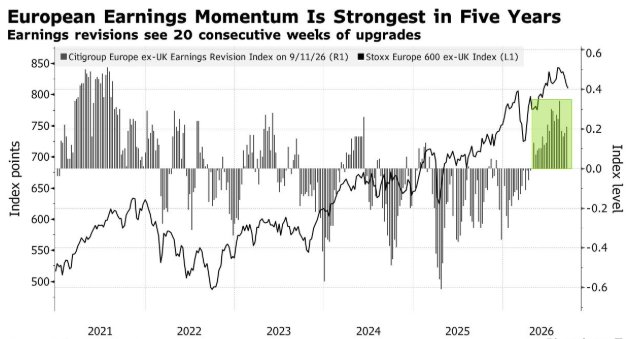
The real motivation for this optimism lies on the profit side. According to Carson Wealth Management, citing LSEG I/B/E/S data (as of September 3), profit for the second quarter of Stoke's 600 shares increased 23.9% year-on-year, and 11.8% in the first quarter, far exceeding single-digit growth in the previous two years; the market consensus forecast for profit growth for the full year 2026 has been revised all the way up from 9.4% at the beginning of the year to 16.2% on August 25. According to the data, Stoke 600's profit is expected to jump 15% in 2026, the highest in four years, and an additional 9.7% increase in 2027. The revised profit index for the region compiled by Citi has been in a positive range for 20 consecutive weeks, the longest continuous increase in five years.
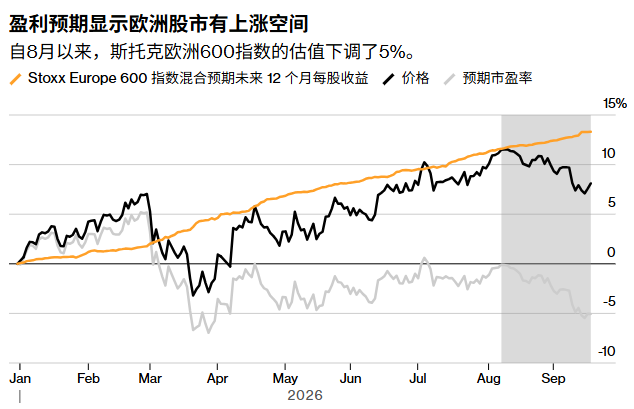
The upside also received more aggressive endorsements. UBS strategists Gerry Fowler and Sutanya Chedda raised the index's 2026 end target from 630 points to 690 points and the 2027 target to 760 points on September 15. The reason is that AI-related profit increases continue to spread, bank profit revisions are still positive, and the defensive sector is no longer dragging down the index, and the valuation is expected to rise 16 times. The two emphasized that this was not a “call to cheer” but a “call to reduce caution”.
The valuation gap is another card repeatedly quoted by the bulls: according to MSCI data (as of September 9 to 10), European stocks have a price-earnings ratio of about 14.7 times and a return on free cash flow of 5.5% over the next 12 months, while the US is 19.6 times and 2.9%, respectively.
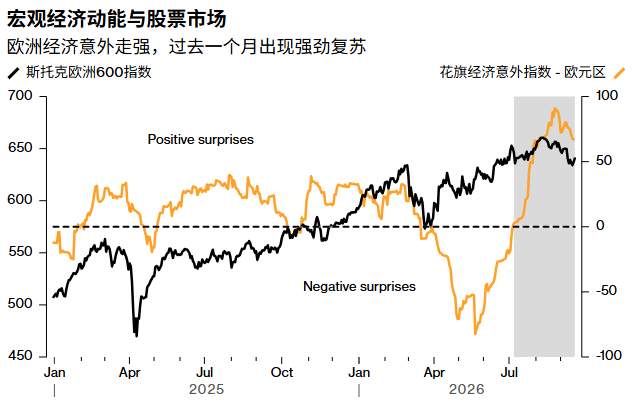
Macro-fiscal coordination is also improving. The final value of inflation in the Eurozone in August was revised down to 3.2% year on year; the regional and global macro background is still strong, the economic accident index is positive, manufacturing activity is expanding, and fiscal stimulus represented by Germany has begun to gain strength. UBS also suggested in the above report that credit and consumer resilience in Spain, Italy, and Portugal are clearly better than Germany, France, and the UK.
The immediate reaction of the market gave this optimism a footnote: on September 17, the Stoxx 600 closed up 0.86% to 642.60 points, the biggest one-day increase since July 2 (Dow Jones market data), mining stocks surged 2.1%, auto stocks rose 1.7%, and the British FTSE 100 index rose 1.19%, the biggest one-day increase in more than two months. There is a clear division of enthusiasm at the individual stock level — Spanish e-commerce Allegro surged 9.5% after raising its full-year guidance; German industrial service provider Bilfinger plummeted 21.4% due to the second time in the year's 2026 outlook, the biggest one-day decline since listing. Austria's Raiffeisen Bank International fell 6% due to Grizzly Research's disclosure of short positions.
“Based on steady earnings per share growth, our constructive view of the European stock market remains unchanged until mid-2027, while acknowledging that the risks posed by geopolitics and interest rates to cyclical improvements in macroeconomic and profit trends are rising,” concluded Beata Manthey, head of European equity strategy at Citibank. This is probably the current common denominator between long and short European stocks: the difference lies in risk, and the consensus is profit.