
- PRICING
- LIVE QUOTES
- LEARN
- HELP


EN
Higher for Longer Rates Are Repricing US Bank Stocks Worth Watching
Higher-for-longer interest rates have turned from a distant threat into a daily reality after the Fed’s latest 0.25% hike and Chair Kevin Warsh’s tough message on future borrowing costs. That shift is shaking valuations and creating fresh winners and losers. If you care about how your portfolio reacts when money stays expensive, this matters. This article unpacks that story and introduces 3 stocks exposed to this new rate regime.
The three stocks below are only a starter sample, as the full higher-for-longer screen surfaced 36 more U.S. banks and insurers with equally compelling rate-exposure stories that are not covered here.
If you want to go beyond this short list and actively focus on the ideas that best fit your own risk and income goals, head straight into the US Banks & Insurers Benefiting from Higher-for-Longer Interest Rates screener to identify, compare, and analyze the highest-conviction plays for your watchlist.
Metropolitan Bank Holding (MCB)
Metropolitan Bank Holding is a pure-play U.S. lender. Its earnings are closely tied to what happens when interest rates stay higher for longer, which makes how it prices loans and deposits central to its appeal in this screener.
Metropolitan Bank Holding generates its US$312 million in revenue entirely from banking activities in the United States and has a market value of about US$1.1b.
"The ongoing investment in a new technology stack, expected to be fully integrated by the end of Q1 next year, positions the bank to enhance digital services, support greater transaction volumes, and attract new fintech partnerships, driving growth in fee income and supporting stronger revenue growth."
What happens if one quiet pressure on its funding costs moves faster than expected will matter a lot for how that growth translates into margins.
That funding squeeze question is exactly what the full narrative for Metropolitan Bank Holding unpacks, including how Metropolitan Bank Holding’s tech overhaul could accelerate earnings power if deposits reprice faster than expected.

Bank First (BFC)
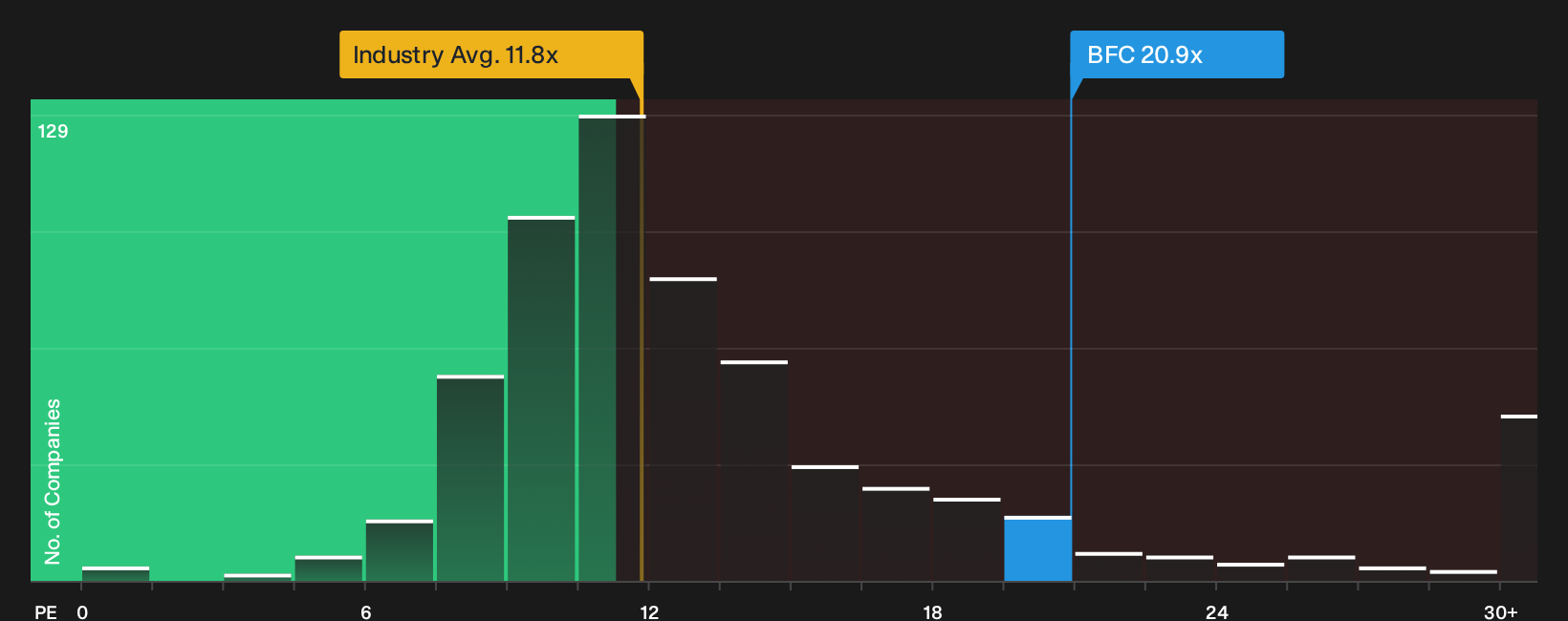
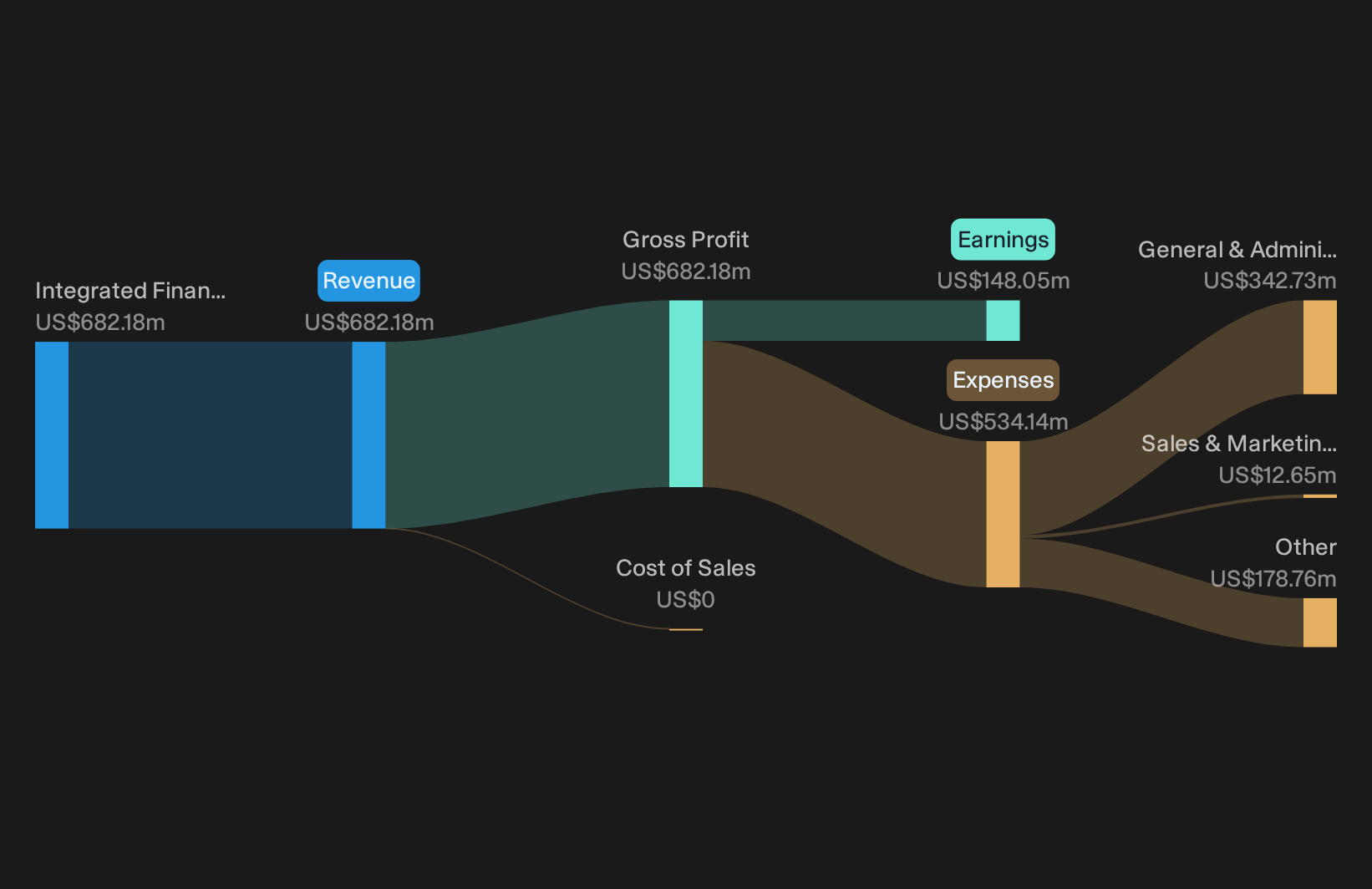
Bank First runs a traditional community banking franchise in Wisconsin, offering loans, deposits, and everyday financial services that tie earnings closely to interest rate levels, with all US$217 million of revenue from banking operations in the United States and a market value of about US$1.7b.
Bank First fits the higher for longer theme cleanly because it lives off classic interest income. Net interest income and earnings have been strong, the dividend adds income support, and management is returning capital through buybacks. A key question is what happens if investor expectations for this rich valuation collide with any cooling in that rate tailwind.
If that rate tailwind stalls or reverses, the 3 key rewards and 1 important warning sign could show whether Bank First’s richer pricing is masking hidden balance sheet pressure or an underappreciated upside.
Seacoast Banking Corporation of Florida (SBCF)
Seacoast Banking Corporation of Florida sits squarely in the higher for longer theme, with a Florida focused loan and deposit engine that leans heavily on net interest margins when the Fed keeps borrowing costs elevated.
"Seacoast continues to benefit from strong population and business growth in Florida, with robust loan pipelines driven by economic expansion and net migration, supporting expectations for sustained mid- to high single-digit organic loan growth and upward momentum in net interest income and total revenue."
What really moves the needle for Seacoast Banking Corporation of Florida is how one quiet funding cost pressure shapes the gap between loan yields and deposit pricing.
That funding gap is the quiet hinge. Read the full narrative for Seacoast Banking Corporation of Florida to see how Seacoast Banking Corporation of Florida could turn rising costs into accelerating earning power.
Seeking Fresh Alternatives Before They Fly
Fresh ideas often move first while the data is still under the radar for now. Do not let the next breakout theme get away before the crowd arrives; consider taking action early.
- Scan for resilient income engines that can keep paying when others pause by running the 6 dividend fortresses before yields start dropping.
- Track early movers riding the AI build out and spot infrastructure suppliers gaining momentum with the 89 AI infrastructure stocks while valuations still look reasonable.
- Target metals producers with real leverage to electrification and grid demand by reviewing the 16 top copper producer stocks before sector interest increases significantly.
This article by Simply Wall St is general in nature. We provide commentary based on historical data and analyst forecasts only using an unbiased methodology and our articles are not intended to be financial advice. It does not constitute a recommendation to buy or sell any stock, and does not take account of your objectives, or your financial situation. We aim to bring you long-term focused analysis driven by fundamental data. Note that our analysis may not factor in the latest price-sensitive company announcements or qualitative material. Simply Wall St has no position in any stocks mentioned.
Have feedback on this article? Concerned about the content? Get in touch with us directly. Alternatively, email editorial-team@simplywallst.com