
- PRICING
- LIVE QUOTES
- LEARN
- HELP


EN
How CEO Contract Extension Will Impact Mercury Systems (MRCY) Investors
- Mercury Systems recently extended Chairman and CEO Bill Ballhaus's employment contract by three years through August 15, 2030, and reaffirmed the financial guidance it issued on its August 2026 earnings call.
- The move ties leadership continuity directly to the current operating playbook. This signals that Mercury Systems aims to keep execution, backlog quality, and margin mix on the same trajectory that underpinned its recent operational and financial results.
- We will look at how Mercury Systems' investment narrative is influenced by management continuity through the extended Bill Ballhaus contract.
Scan how Mercury Systems' leadership story compares with other defense and aerospace players by reviewing our hand picked 11 resilient stocks with low risk scores that prioritize resilience and balance sheet strength.
Mercury Systems Investment Narrative Recap
To own Mercury Systems, you need to believe the defense electronics demand story and the shift toward secure, high performance embedded computing will keep feeding its backlog. The extension of Bill Ballhaus's contract and the reaffirmed guidance tie that belief directly to the current operating playbook. The key near term catalyst still sits in how efficiently newer, higher margin bookings convert into revenue.
The main risk remains execution. Modest near term revenue growth expectations, a sizable legacy backlog on older terms, and past use of accelerated deliveries all leave little room for missteps. The contract extension itself does not remove those pressures. It mainly keeps the same team accountable for working through them.
In this context, the reaffirmed financial guidance that accompanied the Mercury Systems CEO contract extension is the most relevant recent signal. Management effectively told investors that the operational and earnings path described on the August 2026 call still holds. That message matters if you are tracking whether process fixes and mix improvements are sticking.
For catalysts, guidance confirmation can help frame upcoming quarters. You can watch whether backlog quality, working capital, and the shift away from lower margin legacy contracts line up with what was previously outlined. Any deviation from those markers, rather than the length of the CEO contract itself, is likely to matter more for how the Mercury Systems story evolves from here.
Mercury Systems' narrative projects US$1.3b revenue and US$110.2 million earnings by 2029. This assumes 10.1% yearly revenue growth and an earnings increase of about US$139.9 million from a loss of US$29.7 million today.
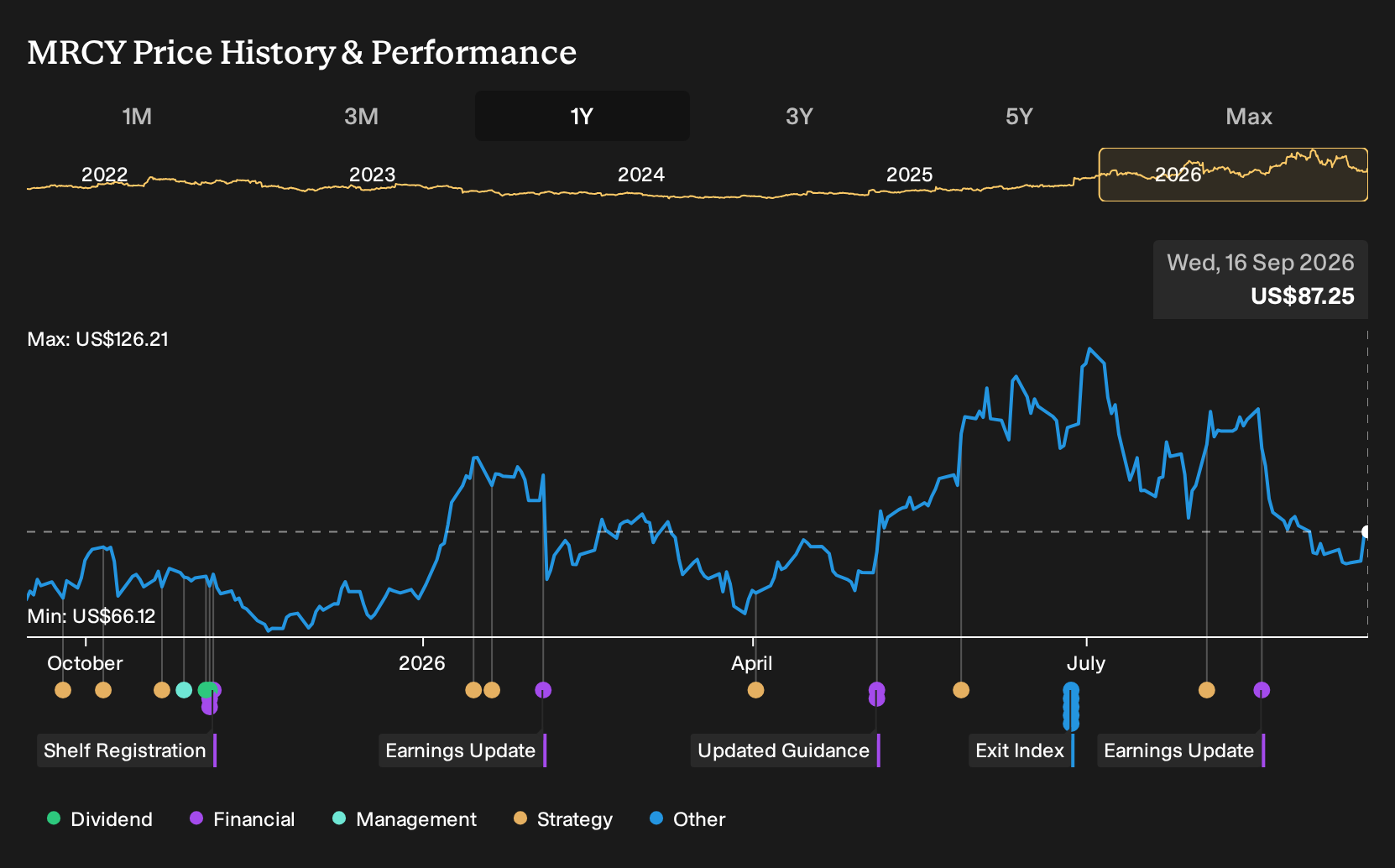
Uncover why Mercury Systems' fair value indicates a 34% potential upside to its current price, which could close faster than investors expect.
Exploring Other Perspectives
One bearish twist on Mercury Systems focuses on demand risk. The most cautious analysts worried that tighter defense budgets could cap revenue at about US$1.2b and earnings around US$75.3 million by 2029, well below consensus. Those views were set before the contract extension, so you may see those narratives shift as fresh data lands.
Explore 4 other Mercury Systems fair value estimates, including one that suggests as much as 48% downside from the current price!
The Verdict Is Yours
Disagree with existing narratives? Extraordinary investment returns rarely come from following the herd, so trust your own research and judgment.
- A great starting point for your Mercury Systems research is our analysis highlighting 2 key rewards and 1 important warning sign that could impact your investment decision.
- See our latest analysis for Mercury Systems. The report includes a comprehensive fundamental analysis summarized in a single visual, the Snowflake, making it easy to evaluate Mercury Systems' overall financial health at a glance.
Looking For More Investment Ideas Beyond Mercury Systems?
If the Mercury Systems story has sharpened your thinking on risk, returns, and leadership, it can help to broaden the watchlist and compare it with other businesses that fit different profiles.
The Simply Wall St Screener lets you scan the market through clear filters, so you can line up Mercury Systems against other potential opportunities that match your own risk tolerance and return goals.
- If you prefer companies that already look cheap on quality metrics and fundamentals and want a head start on idea generation, then review our curated 29 high quality undervalued stocks.
- If consistent income and balance sheet resilience matter most to you, consider stocks in the 6 dividend fortresses that aim to pair higher yields with more robust financial footing.
- For investors hunting for lesser known stories with solid underlying numbers, check out the 16 high quality undiscovered gems that might not yet be widely followed.
This article by Simply Wall St is general in nature. We provide commentary based on historical data and analyst forecasts only using an unbiased methodology and our articles are not intended to be financial advice. It does not constitute a recommendation to buy or sell any stock, and does not take account of your objectives, or your financial situation. We aim to bring you long-term focused analysis driven by fundamental data. Note that our analysis may not factor in the latest price-sensitive company announcements or qualitative material. Simply Wall St has no position in any stocks mentioned.
Have feedback on this article? Concerned about the content? Get in touch with us directly. Alternatively, email editorial-team@simplywallst.com