
- PRICING
- LIVE QUOTES
- LEARN
- HELP


EN
Learn Why The Bull Case For Yamato Holdings Stock Could Change Following Cargo Flights Ending
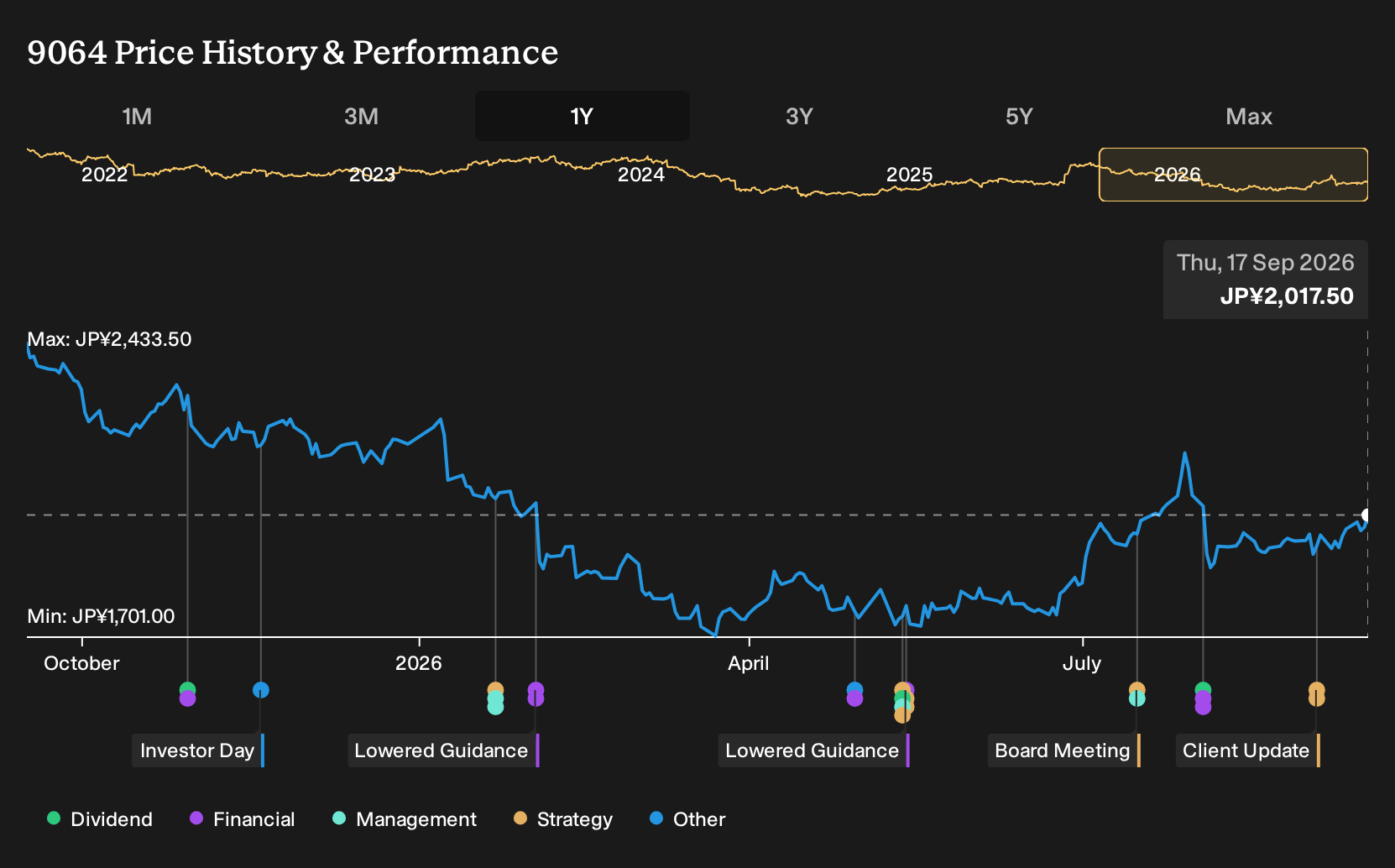
- Yamato Holdings resolved at its September 3, 2026 board meeting to end operations of its domestic dedicated cargo aircraft with Japan Airlines, continuing flights until around June 2027 while shifting customers to alternative transport such as passenger aircraft bellies.
- The move highlights how sharply widened cost gaps between truck and air freight, driven by yen depreciation and high fuel prices, are reshaping Yamato Holdings' logistics model and capital allocation decisions.
- This article examines how Yamato Holdings' investment narrative is affected by the decision to retire dedicated freighters and rely on passenger aircraft capacity.
What Is Yamato Holdings' Investment Narrative?
Owning Yamato Holdings means buying into a story about dense domestic networks, resilient parcel demand and the ability to squeeze more earnings out of an already massive ¥1.87b revenue base. The decision to wind down dedicated freighters fits that picture. Management is pulling back from a capital intensive, higher cost transport option that did not deliver the expected cost gap versus trucks, and leaning harder on existing truck routes, contract logistics and passenger aircraft belly capacity.
In the near term, the board expects only a minimal hit to the current fiscal year, so the bigger question is execution. Profitability is already thin, with a 0.7% margin compared with 2.4% last year, and a 2.28% dividend that is not well covered by earnings. Investors who focus on the forecast 28.3% earnings growth and the large gap to estimated cash flow value will be watching whether this pivot actually stabilises margins as one off gains fade and freight contracts reset.
That said, the more uncomfortable part of the Yamato Holdings story is the way all of this interacts with ...
There's only one way to know the right time to buy, sell or hold Yamato Holdings. Head to Simply Wall St's company report for the latest analysis of Yamato Holdings's Fair Value.
Exploring Other Perspectives
The Simply Wall St Community has only two fair value estimates for Yamato Holdings, ranging from ¥1,829 to ¥3,565 per share, which already shows how far apart views can be. These pre announcement numbers do not reflect the exit from domestic freighters, so fresh opinions could shift as the new logistics mix is implemented.
Explore another Yamato Holdings fair value estimate, including one that suggests up to 77% upside from the current price!
Reach Your Own Conclusion
Disagree with this assessment? Extraordinary investment returns rarely come from following the herd, so go with your instincts.
- A great starting point for your Yamato Holdings research is our analysis highlighting 2 key rewards and 3 important warning signs that could impact your investment decision.
- See our latest analysis for Yamato Holdings. The report includes a comprehensive fundamental analysis summarized in a single visual, the Snowflake, making it easy to evaluate Yamato Holdings' overall financial health at a glance.
Looking For More Ideas Beyond Yamato Holdings?
If the Yamato Holdings story has raised fresh questions about logistics exposure, balance sheet strength or payout resilience in your portfolio, it can help to line it up against other businesses facing very different trade offs.
- For investors who want potential upside with tighter risk controls, filter for companies that pass our resilience checks using the 12 resilient stocks with low risk scores.
- If dependable income is a priority, focus on payout strength and balance sheet support through the 14 dividend fortresses.
- To expand your watchlist with under followed opportunities that still have solid fundamentals, cast a wider net with the 74 high quality undiscovered gems.
This article by Simply Wall St is general in nature. We provide commentary based on historical data and analyst forecasts only using an unbiased methodology and our articles are not intended to be financial advice. It does not constitute a recommendation to buy or sell any stock, and does not take account of your objectives, or your financial situation. We aim to bring you long-term focused analysis driven by fundamental data. Note that our analysis may not factor in the latest price-sensitive company announcements or qualitative material. Simply Wall St has no position in any stocks mentioned.
Have feedback on this article? Concerned about the content? Get in touch with us directly. Alternatively, email editorial-team@simplywallst.com