
- PRICING
- LIVE QUOTES
- LEARN
- HELP


EN
Will Higher Earnings Estimates Change Devon Energy (DVN) Stock Narrative
- Devon Energy has recently drawn attention as analysts raised earnings estimates for the current quarter and fiscal year, alongside reported strength in revenue and a record of earnings surprises.
- The company also declared a US$0.32 per share dividend with an ex-dividend date that has now passed, supported by a low payout ratio that points to earnings coverage for its shareholder distributions.
- Now the focus shifts to how Devon Energy's improved earnings outlook and estimate revisions may reshape the broader investment narrative for the business.
Scan beyond Devon Energy and line up other income plays with earnings support using our curated list of 6 dividend fortresses.
Devon Energy Investment Narrative Recap
To own Devon Energy, you need to be comfortable with a pure play on U.S. shale output and the commodity cycle. The big operational swing factor over the next year remains how effectively Devon keeps production and costs in balance as shale wells decline and require steady reinvestment. Recent earnings estimate revisions and expectations for higher near term earnings and revenue point to operational momentum, but they do not change that core thesis.
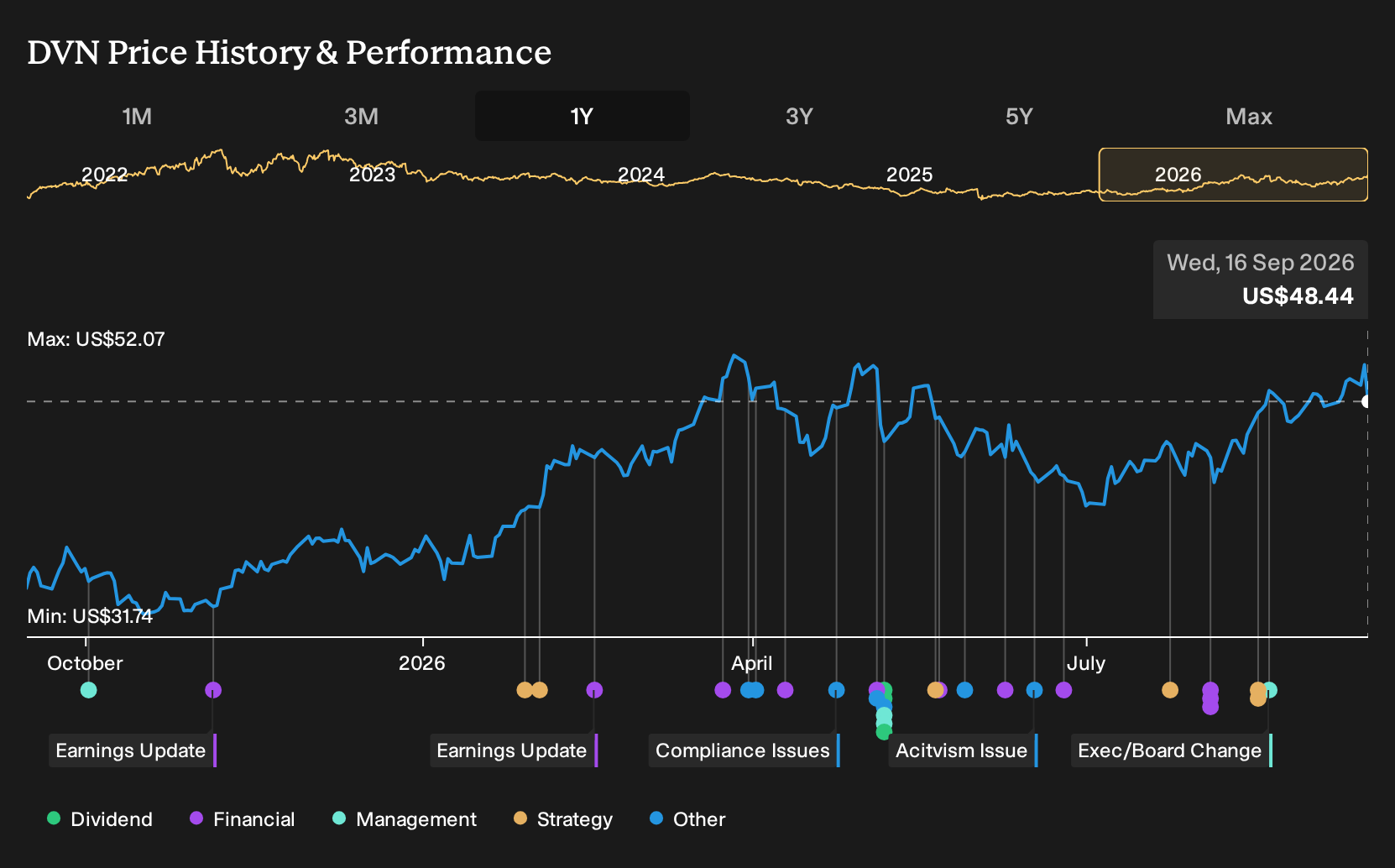
The biggest near term risk still sits with commodity pricing and regulatory pressure in key basins, which can quickly affect realized prices, margins, and drilling economics. Short term share price weakness, including the recent session where Devon Energy fell 5.63%, looks more like volatility around those expectations rather than a structural change in the business story.
The recent dividend announcement at US$0.32 per share is the clearest operational signal tied to this news cycle. Devon Energy has paid dividends since 1993 and currently reports a low dividend payout ratio of 0.23, which indicates earnings coverage for the current distribution even as free cash flow coverage is flagged as weaker.
For you as a shareholder, that payout interacts directly with the main catalysts and risks. Stronger earnings support the fixed dividend and any variable returns. At the same time, ongoing capital intensity in shale and exposure to oil and gas prices keep cash generation uncertain. Analyst expectations for earnings and revenue growth, plus a Zacks Rank of #3, sit in the background but do not replace the need to watch execution on costs, drilling performance, and regulatory developments in Devon Energy’s core basins.
Devon Energy is modeled to reach US$23.3b in revenue and US$4.8b in earnings by 2029, based on analyst assumptions of 13.2% yearly top line growth and an earnings increase of US$2.2b from US$2.6b today.
Uncover why Devon Energy's fair value indicates a 22% potential upside to its current price that could narrow quickly.
Exploring Other Perspectives
One alternate view focuses on long term demand risk for Devon Energy. Before this dividend news, the most pessimistic analysts were assuming revenue of about US$22.2b and earnings of US$5.3b by 2029, with shares outstanding rising 7% a year. That paints a stricter hurdle; use it to stress test your own expectations.
Explore 7 other Devon Energy fair value estimates, including one that suggests it could be worth just $49.60.
Decide For Yourself
Disagree with existing narratives? Extraordinary investment returns rarely come from following the herd, so trust your own analysis and insights.
- A great starting point for your Devon Energy research is our analysis highlighting 3 key rewards and 2 important warning signs that could impact your investment decision.
- See our latest analysis for Devon Energy. The report includes a comprehensive fundamental analysis summarized in a single visual, the Snowflake, making it easy to evaluate Devon Energy's overall financial health at a glance.
Looking For More Investment Ideas Beyond Devon Energy?
If the Devon Energy story has sharpened your thinking about earnings support and dividends, use that same lens across the wider market with the Simply Wall St Screener.
- If capital preservation comes first for you, start with a group of 11 resilient stocks with low risk scores that pair resilience with measured return potential.
- For investors hunting for mispriced opportunities backed by fundamentals, scan a curated set of 33 high quality undervalued stocks that may warrant a closer look.
- If balance sheet strength is your non-negotiable, focus on a list of solid balance sheet and fundamentals (22 results) to see which businesses carry less financial strain.
This article by Simply Wall St is general in nature. We provide commentary based on historical data and analyst forecasts only using an unbiased methodology and our articles are not intended to be financial advice. It does not constitute a recommendation to buy or sell any stock, and does not take account of your objectives, or your financial situation. We aim to bring you long-term focused analysis driven by fundamental data. Note that our analysis may not factor in the latest price-sensitive company announcements or qualitative material. Simply Wall St has no position in any stocks mentioned.
Have feedback on this article? Concerned about the content? Get in touch with us directly. Alternatively, email editorial-team@simplywallst.com