
- PRICING
- LIVE QUOTES
- LEARN
- HELP


EN
LCID Stock Surges as Lucid Unveils New European Robotaxi Partnership
Lucid (LCID) shares are pushing higher on Sept. 17 after the electric vehicle (EV) company announced a robotaxi partnership with European ride-hailing giant Bolt. Under the terms of this agreement, Bolt will deploy 25,000 autonomous robotaxis across Europe, using LCID’s upcoming mid-size vehicle platform.
Despite today’s rally, Lucid stock is down more than 60% versus the start of this year.
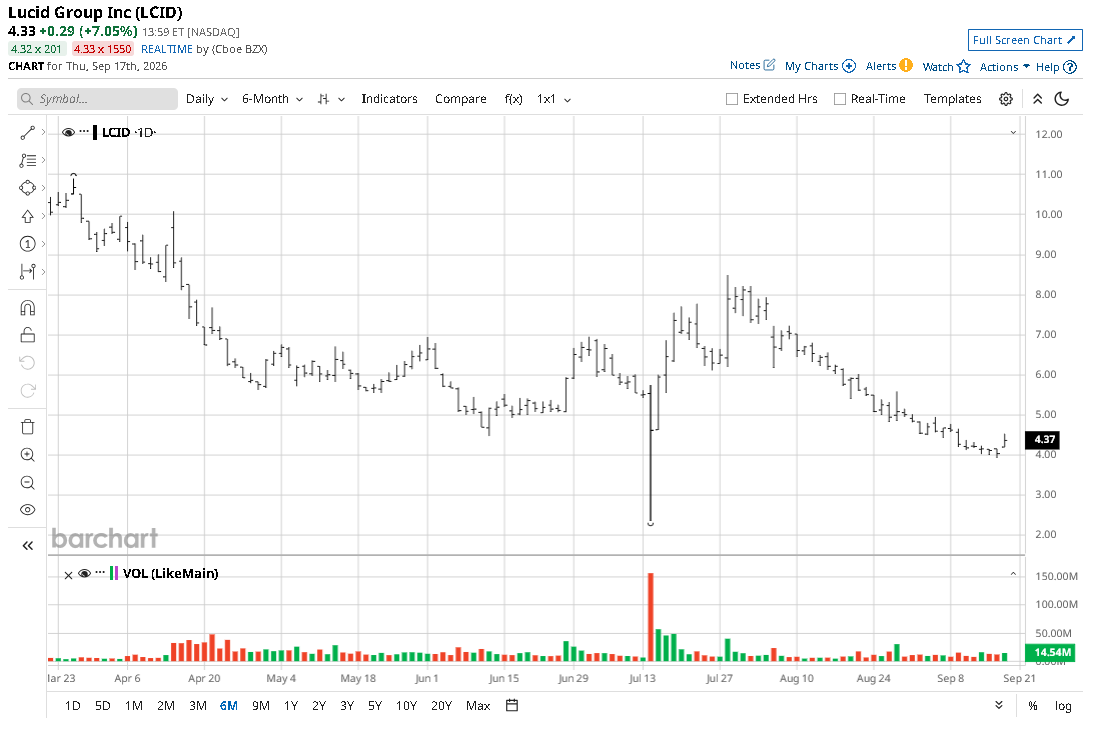
Significance of Bolt Deal for Lucid Stock
The multi-year agreement with Bolt marks a pivotal expansion of Lucid’s autonomous commercial strategy beyond North America.
By committing to integrate 25,000 Level 4 autonomous vehicles into Bolt’s extensive European ride-hailing network, LCID secures guaranteed high-volume demand for its lower-cost mid-size vehicle platform.
This partnership significantly improves Lucid’s long-term revenue visibility while validating the commercial scalability of its battery and software architecture.
Investors are bidding up LCID shares because the deal transforms the company from a niche luxury EV automaker into a central hardware provider for global autonomous mobility networks.
Is It Worth Buying LCID Shares Today?
While the Bolt partnership offers a legitimate long-term growth catalyst, investors should remain cautious before buying Lucid shares into today’s rally.
Why? Mostly because the EV firm continues to operate with negative gross margins and significant operational cash drain. In Q2, it generated $405 million in revenue on $3.30 a share of loss — both missing Street estimates.
It's also worth mentioning that Barchart currently holds an “88% SELL” average opinion on LCID, indicating technical momentum is not in its favor either.
In short, unless Lucid demonstrates clear progress toward unit profitability and production scalability, conservative investors may want to stay on the sidelines.
Wall Street Sees Further Upside in Lucid
Despite the aforementioned concerns, however, Wall Street analysts believe LCID stock’s year-to-date decline is rather overdone and warrants gaining some exposure to the EV maker.
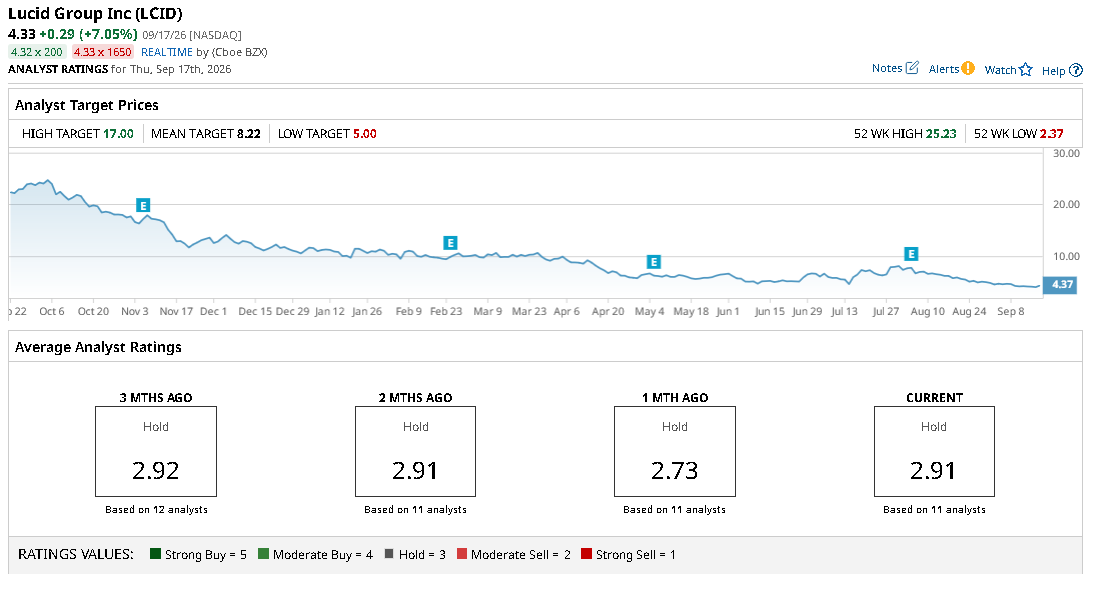
According to Barchart, while the consensus rating on Lucid sits at “Hold,” the mean price target of about $8.22 suggests its share price could nearly double from current levels over the next 12 months.
On the date of publication, Wajeeh Khan did not have (either directly or indirectly) positions in any of the securities mentioned in this article. All information and data in this article is solely for informational purposes. For more information please view the Barchart Disclosure Policy here.