
- PRICING
- LIVE QUOTES
- LEARN
- HELP


EN
Should Marketplace Expansion Require Action From Walmart (WMT) Investors?
- ADT Inc. previously announced that its ADT Blu DIY home security system is now sold on Walmart.com, alongside RocketSports-1 women’s activewear, broadening Walmart’s marketplace in connected home and value fitness categories.
- By leaning on third-party brands like ADT Blu, Walmart adds higher value assortments while shifting more economics toward fee-based marketplace and fulfillment income rather than owning every SKU itself.
- We will now explore how Walmart's investment narrative could be affected by this expansion of third party marketplace security offerings.
Walmart Investment Narrative Recap
To own Walmart, you need to believe the retail giant can keep shifting its mix toward higher margin fee streams while keeping core grocery and general merchandise traffic strong. In the short term, the key swing factor is how quickly marketplace, advertising and Walmart+ income can offset delivery, labor and logistics costs that continue to lean on margins.
The biggest risk remains execution on those expensive digital and international operations where e-commerce is still loss making and competition is intense. ADT Blu and other third party additions are directionally helpful for mix, but on their own they do not meaningfully change near term earnings risk around costs, tariffs and wage pressure.
The ADT Blu launch ties directly into Walmart’s Marketplace business. Management reports that this business has grown more than 50% in each of the first two quarters. That is important because marketplace orders feed into higher margin areas such as Walmart Fulfillment Services and Walmart Connect advertising, rather than relying solely on low margin physical retail.
The same update highlighted Walmart Connect margins above 70% and strong growth in e-commerce, with roughly 70% of U.S. home deliveries now same day or faster. For you as an investor, the operational question is whether Walmart can keep scaling these fee driven businesses fast enough to blunt rising wage, freight and international costs without sacrificing its price leadership.
Walmart's narrative projects US$838.5b revenue and US$29.6b earnings by 2029. This implies 4.5% yearly revenue growth and an earnings increase of about US$7.5b compared with current earnings of US$22.1b.
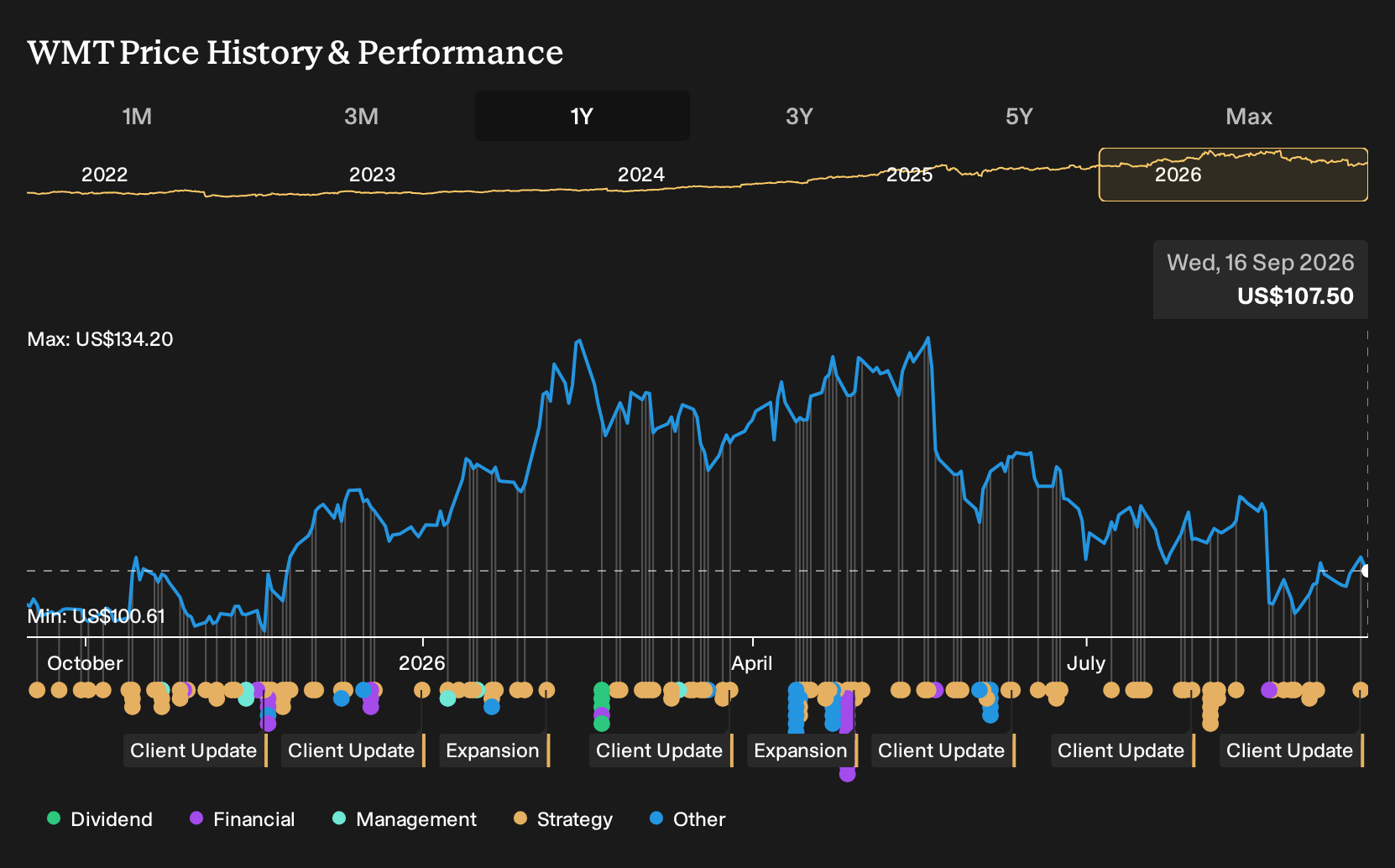
Uncover why Walmart's fair value indicates a 19% potential upside to its current price that could narrow quickly as fee income reshapes expectations.
Exploring Other Perspectives
The Simply Wall St Community supplies 16 different fair value views on Walmart, stretching from about US$66 to roughly US$155 per share. That spread reflects how widely opinions can diverge. Consider those alongside risks around loss making international e-commerce and ongoing wage and tariff pressure, then explore several alternative viewpoints before deciding how Walmart fits your portfolio.
Explore 15 other Walmart fair value estimates, including one that suggests as much as 39% downside from the current price.
Reach Your Own Conclusion
Don't just follow the ticker. Dig into the data and build a conviction that's truly your own.
- A great starting point for your Walmart research is our analysis highlighting 2 key rewards that could impact your investment decision.
- See our latest analysis for Walmart. The report includes a comprehensive fundamental analysis summarized in a single visual, the Snowflake, making it easy to evaluate Walmart's overall financial health at a glance.
Looking For More Investment Ideas Beyond Walmart?
Once you understand how Walmart mixes low margin essentials with fee income, it can help to scan for other businesses with different combinations of balance sheet strength, income streams and risk profiles. The Simply Wall St Screener is a quick way to surface candidates that fit the kind of portfolio role you want filled, then weigh them against what you already see in Walmart.
- If you want yield and staying power, focus on companies that combine robust cash generation with higher payouts by reviewing 6 dividend fortresses.
- For investors who care most about financial resilience, concentrate on businesses that pair low leverage with strong fundamentals using the list of solid balance sheet and fundamentals (22 results).
- If you are hunting for lesser known opportunities, zero in on underfollowed stocks with sound economics by scanning 16 high quality undiscovered gems.
This article by Simply Wall St is general in nature. We provide commentary based on historical data and analyst forecasts only using an unbiased methodology and our articles are not intended to be financial advice. It does not constitute a recommendation to buy or sell any stock, and does not take account of your objectives, or your financial situation. We aim to bring you long-term focused analysis driven by fundamental data. Note that our analysis may not factor in the latest price-sensitive company announcements or qualitative material. Simply Wall St has no position in any stocks mentioned.
Have feedback on this article? Concerned about the content? Get in touch with us directly. Alternatively, email editorial-team@simplywallst.com