
- PRICING
- LIVE QUOTES
- LEARN
- HELP


EN
3 UK Dividend Stocks Income Investors May Watch As Gilt Yields Ease
When the Bank of England presses pause on rate hikes and long-term gilt yields slip, income investors suddenly have a different set of choices to weigh. Lower borrowing costs can reshape how dependable dividend stocks are valued, which can reward those who prepare early and leave others chasing later. This article profiles 3 UK large-cap dividend stocks exposed to the latest BoE moves and explores how each might react.
The three stocks covered next are only a sample set, and the full screen surfaced 8 more large-cap dividend and income companies with equally compelling stories that are not included here. If you want to move past the highlights and get straight to the full data, head into the UK Large-Cap Dividend and Income Stocks Benefiting from Lower Long-Term Yields screener to identify, compare, and analyze the highest-conviction ideas for your watchlist.
Vodafone Group (LSE:VOD)
Vodafone Group is a key telecom player in the UK Large-Cap Dividend and Income Stocks Benefiting from Lower Long-Term Yields theme, offering a mix of recurring connectivity income and scale that can appeal when investors look beyond gilts for dependable cash returns.
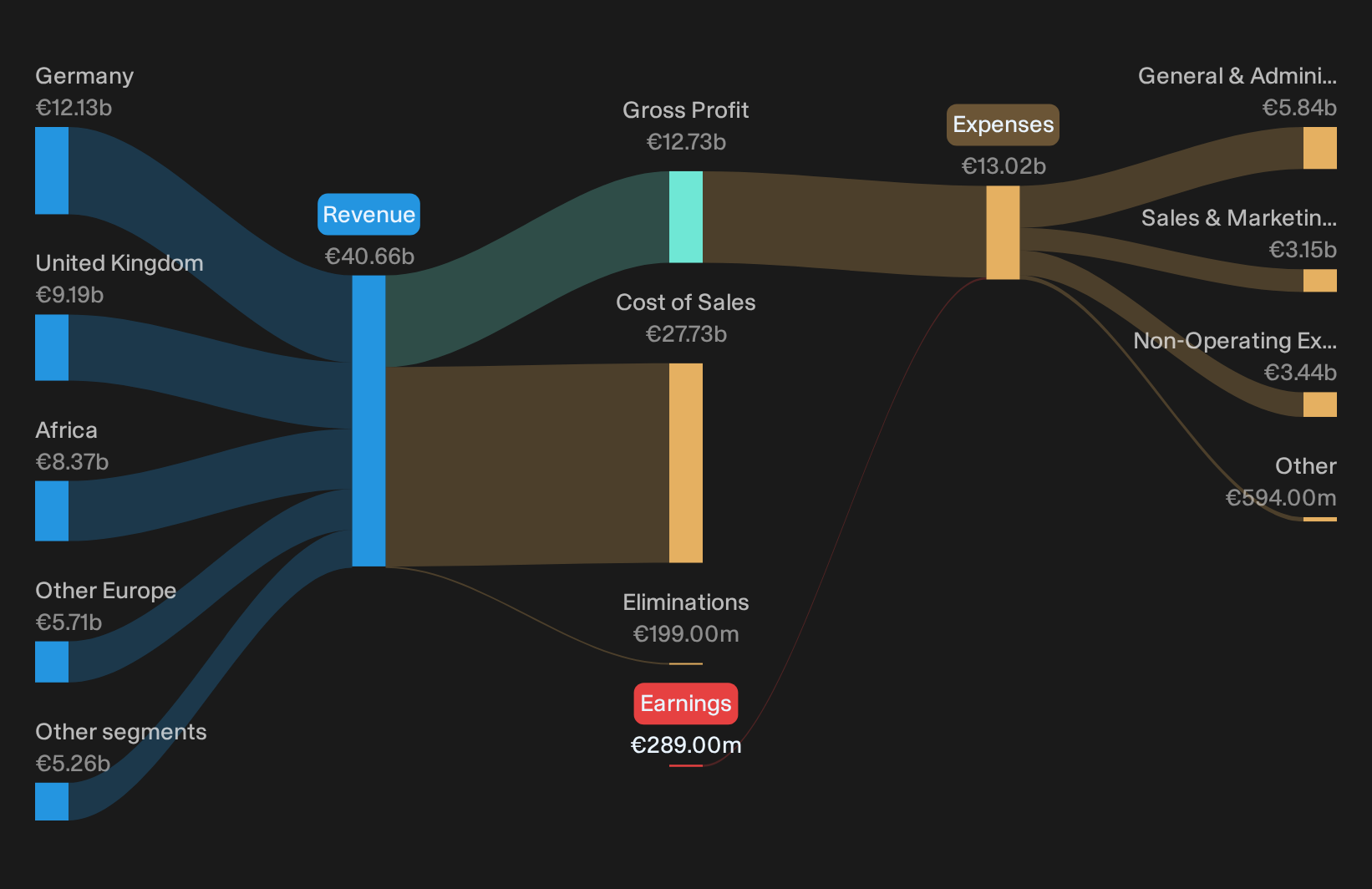
Vodafone Group runs mobile, fixed, cloud and IoT services across Europe, Turkey and Africa, earning about €12.1b from Germany, €9.2b from the UK, €8.4b from Africa, €5.7b from other European markets and €3.4b from Turkey, and is valued at roughly £30.3b.
"Growth in B2B service revenue, driven by digital services and cloud portfolio expansion, is anticipated to support overall revenue growth, with increasing services in higher-margin sectors likely contributing to improved net margins."
What happens to those margins if a single pressure point in its largest European market shifts faster or slower than income investors expect?
If that margin story is what you are watching, read the full narrative for Vodafone Group to see how Vodafone Group's income profile could be reshaped by changing pressure points.
Big Yellow Group (LSE:BYG)
Big Yellow Group is a £1.6b UK self storage operator that fits the theme as a long duration, income focused real asset, with around £209 million generated from self storage and related services across its largely freehold estate.
Income investors looking for exposure to UK real assets may find Big Yellow Group interesting, since its self storage rental stream can behave a bit like infrastructure income when long dated gilt yields ease. However, the appeal of that payout will hinge on how one funding cost pressure evolves.
That funding lever is exactly what could tilt investor sentiment, so check the Big Yellow Group financial health report to see how Big Yellow Group’s balance sheet and payout capacity currently stack up.

Telecom Plus (LSE:TEP)
Telecom Plus fits this screener neatly because it bundles essential home utilities into one recurring bill, giving income focused investors a pure play on UK household cash flows, with all of its £1.9b non regulated utility revenue generated domestically and a market value of about £644 million.
Telecom Plus is implementing AI and technology-driven efficiency improvements, which are expected to reduce administrative costs and improve operating margins, with a positive effect on net margins.
What really matters now is how one quiet shift in its payout priorities interacts with that efficiency push to shape future income resilience.
That quiet pivot is exactly where the Telecom Plus income story starts to accelerate, and the full narrative for Telecom Plus explains how payout ambition, risk, and household cash flows could be decoupling.

Seeking Fresh Alternatives Beyond Today?
Fresh watchlist ideas move fast, and the best entries often appear just before momentum really starts flying. Scan these under the radar picks before the crowd and act now.
- Spot cash rich operators before the rerating hits by scanning the list of solid balance sheet and fundamentals (11 results) that filters for durable earnings power and balance sheets built to handle real pressure.
- Ride structural demand shifts while they are still quietly building by tracking the curated 37 power grid technology and infrastructure stocks packed with businesses tied to long term infrastructure upgrades.
- Identify automation-focused businesses by reviewing the hand picked 38 robotics and automation stocks focused on real revenue and clear use cases.
This article by Simply Wall St is general in nature. We provide commentary based on historical data and analyst forecasts only using an unbiased methodology and our articles are not intended to be financial advice. It does not constitute a recommendation to buy or sell any stock, and does not take account of your objectives, or your financial situation. We aim to bring you long-term focused analysis driven by fundamental data. Note that our analysis may not factor in the latest price-sensitive company announcements or qualitative material. Simply Wall St has no position in any stocks mentioned.
Have feedback on this article? Concerned about the content? Get in touch with us directly. Alternatively, email editorial-team@simplywallst.com