
- PRICING
- LIVE QUOTES
- LEARN
- HELP


EN
RPC (RES) Share Slide Deepens, Is The 9% Undervaluation Enough?
RPC (RES) has drawn fresh attention after a six month share slide that lagged the broader market, putting its thin gross margins and weaker EBITDA profile under a brighter spotlight for investors.
Recent trading paints a mixed picture for RPC, with the share price down 3.24% over the last day and 9.12% over the past week, yet still showing an 8.14% year to date share price return and a 34.74% total shareholder return over twelve months. This suggests earlier optimism is now fading as investors reassess the risk around its profitability profile.Compare RPC's recent pullback and thin margins with a hand picked 33 high quality undervalued stocks that pair stronger balance sheets with more resilient profitability profiles.
Bulls point to RPC's recent 12 month shareholder gains and net income growth, while bears focus on thin margins and a sliding share price. Which side do current valuation signals lean toward next?
Most Popular Narrative: 9% Undervalued
RPC last closed at $5.98, which sits below the $6.54 narrative fair value and puts the focus firmly on whether its operating model can turn thin margins into something more durable.
The shift toward a more diversified service mix, boosted by value-added offerings and recent acquisitions (like Pintail in wireline), reduces revenue volatility and broadens exposure to growth geographies within North America. This supports improved top line stability and earnings growth versus historical cyclicality.
Continued investment in natural gas-powered pressure pumping equipment and other efficient, cleaner service lines directly addresses future demand for environmentally friendlier drilling solutions. This positions RPC to respond to long-term client preference for lower-emission and high-efficiency operations, which can support pricing and market share gains and lift net margins.
See why 6 investors see RPC as 9% undervalued.
Result: Fair Value of $6.54 (UNDERVALUED)
Still, the narrative can unravel quickly if pricing pressure in pressure pumping and wireline compresses already thin margins, or if higher capital spending drags on free cash flow.
Find out about the key risks to this RPC narrative.
Another View On RPC: Multiples Send A Different Signal
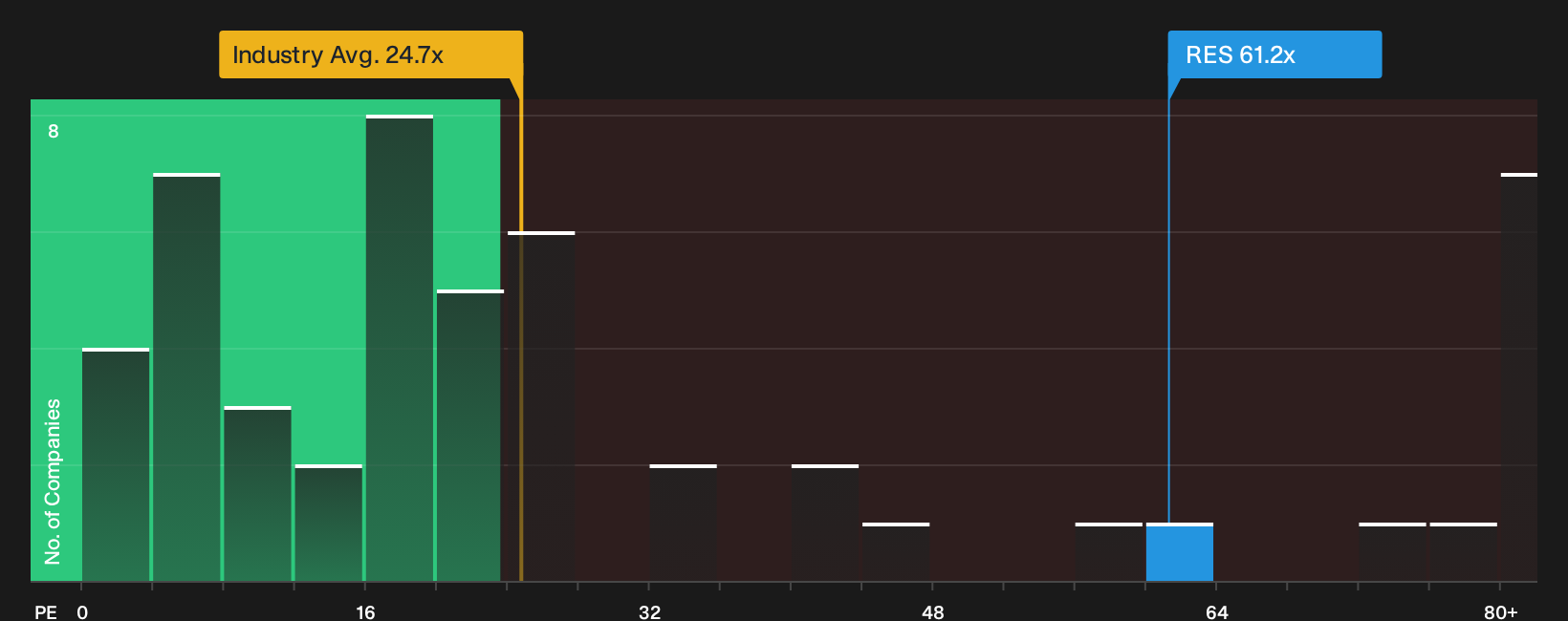
The story looks less straightforward once you move away from the SWS DCF model and focus on plain P/E math. RPC trades on a P/E of 61.2x, which is higher than the US Energy Services industry at 25.5x and also above its own fair ratio of 30.5x. That gap points to real valuation risk if earnings stumble again, so it raises the question of how much weight to give the richer multiple versus the cash flow upside case.
See what the numbers say about this price, find out in our valuation breakdown See what the numbers say about this price — find out in our valuation breakdown.
Next Steps
Mixed messages on RPC's outlook can be hard to read, so it helps to move fast, review the full data set yourself, and judge both sides of the story. To see how the trade off between its risks and potential upsides stacks up in a single place, start with these 2 key rewards and 3 important warning signs
Looking for more investment ideas beyond RPC?
RPC's story is only one angle. Give yourself options by lining up a few other ideas and comparing quality, valuation, and resilience side by side.
- Shift your watchlist toward potentially mispriced opportunities by scanning a curated 33 high quality undervalued stocks that pair quality fundamentals with cheaper valuations.
- Strengthen your income stream by reviewing a focused 6 dividend fortresses that filter for higher yields with an emphasis on durability.
- Reduce portfolio stress by building a shortlist from a 11 resilient stocks with low risk scores that screens for resilience when conditions get tougher.
This article by Simply Wall St is general in nature. We provide commentary based on historical data and analyst forecasts only using an unbiased methodology and our articles are not intended to be financial advice. It does not constitute a recommendation to buy or sell any stock, and does not take account of your objectives, or your financial situation. We aim to bring you long-term focused analysis driven by fundamental data. Note that our analysis may not factor in the latest price-sensitive company announcements or qualitative material. Simply Wall St has no position in any stocks mentioned.
Have feedback on this article? Concerned about the content? Get in touch with us directly. Alternatively, email editorial-team@simplywallst.com