
- PRICING
- LIVE QUOTES
- LEARN
- HELP


EN
How Is Warner Bros. Discovery's Stock Performance Compared to Other Entertainment Stocks
New York-based Warner Bros. Discovery, Inc. (WBD) operates as a media and entertainment company worldwide. Valued at a market cap of $70.5 billion, the company operates through three segments: Streaming, Studios, and Global Linear Networks, and offers streaming services, such as HBO Max and discovery+, and premium pay-TV services, including HBO and certain premium sports streaming products for mobile and connected TV devices.
Companies with a market cap of $10 billion or more are typically referred to as “large-cap stocks.” WBD fits squarely into that category, with its market cap exceeding this threshold and reflecting its substantial size and influence in the entertainment industry.
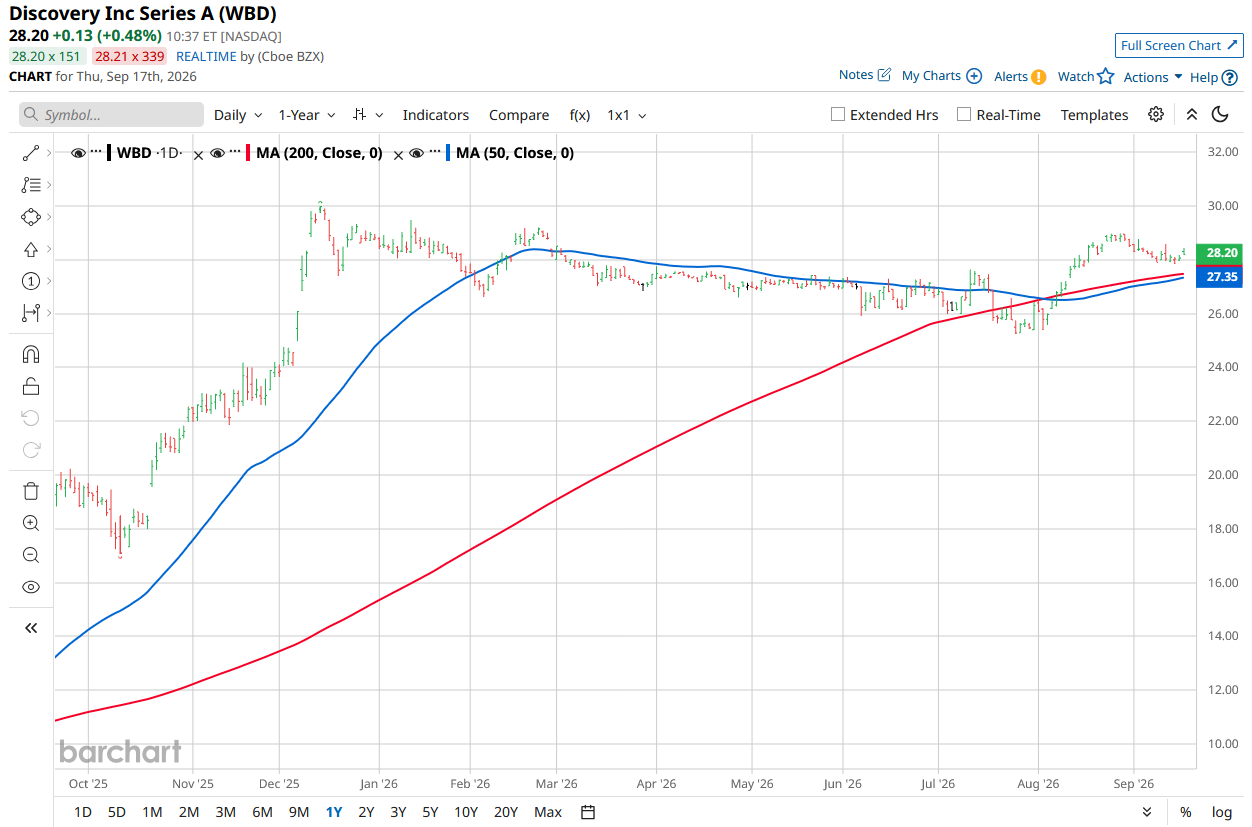
WBD stock has fallen 5.9% from its 52-week high of $30 reached on Dec. 12, 2025. Still, the stock has held up quite well in the near term, growing 7.6% over the past three months, compared to the Invesco Dynamic Leisure and Entertainment ETF (PEJ), which has dipped 3.7%.
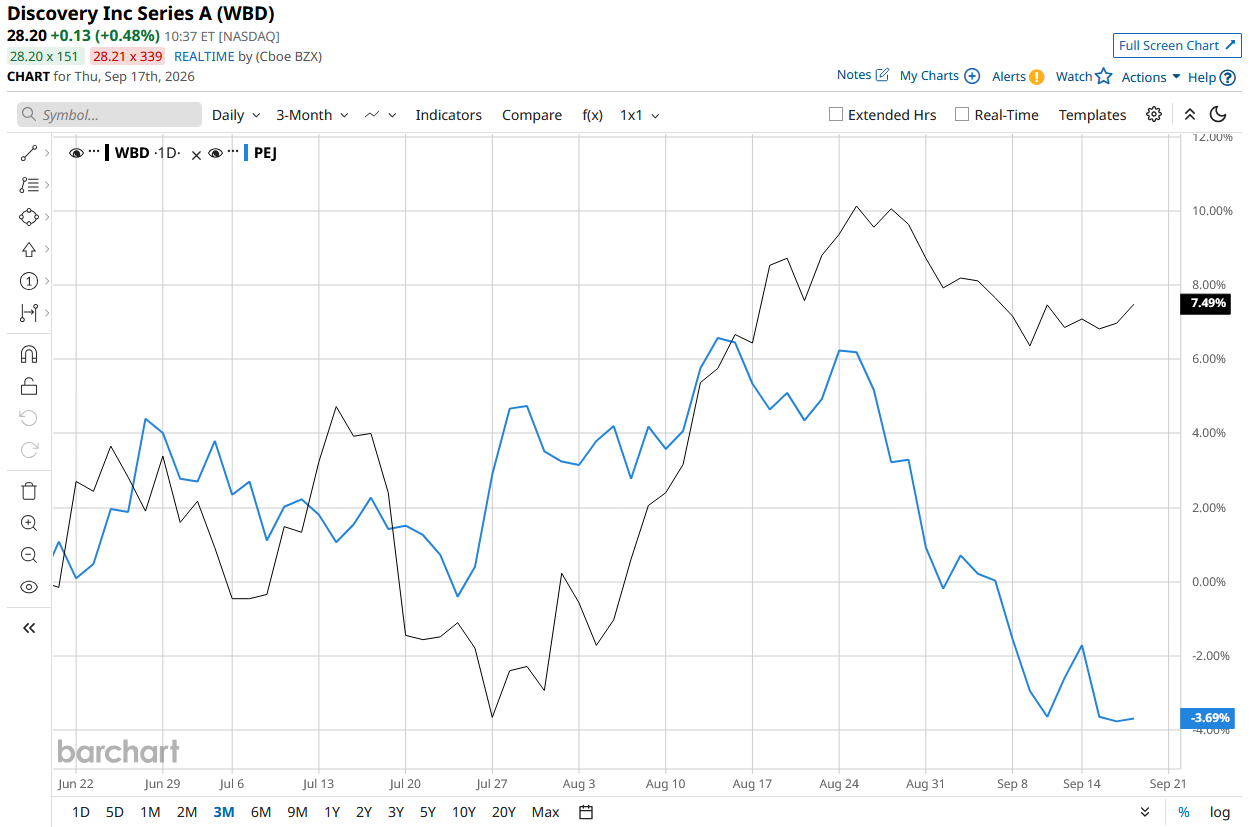
In the longer term, WBD has delivered a similar performance. The stock has grown 56.9% over the past 52 weeks, outperforming the 1.4% rise of PEJ over the same period. WBD has been trading above its 200-day and 50-day moving averages since August.
On Aug. 6, WBD stock rose 1.7% following the release of its mixed Q2 2026 earnings. The company’s revenue for the quarter rose 11.2% from the prior year’s quarter to $8.7 billion and failed to meet the Street’s forecasts. However, its adjusted EPS of 0.06 significantly beat the consensus estimates. Additionally, the company’s operating margin also experienced robust growth over the prior year’s quarter, indicating higher profitability.
When stacked against its rival, The Walt Disney Company (DIS) has declined 8% over the past year, underperforming WBD.
Wall Street has an uncertain view of the stock currently. Among the 13 analysts tracking WBD, the overall consensus stands at a “Hold.” Its mean price target of $29.17 suggests 3.4% upside potential from current price levels.
On the date of publication, Aritra Gangopadhyay did not have (either directly or indirectly) positions in any of the securities mentioned in this article. All information and data in this article is solely for informational purposes. For more information please view the Barchart Disclosure Policy here.