
- PRICING
- LIVE QUOTES
- LEARN
- HELP


EN
Cushman And Wakefield (CWK) Stock Looks Fully Priced Following Its 56% Run
Cushman & Wakefield has seen its share price pull back recently. This sits against a much stronger three year run and leaves investors asking whether the current US$12.54 level is still supported by its earnings power. With fresh headlines on office demand, data centers and leasing activity, the question is how much of that story is already reflected in the valuation.
- Over the past 3 years the stock has returned about 56.0%. That puts real weight on whether the underlying earnings profile can justify where the price has now settled.
- Recent commentary from Cushman & Wakefield on rising office demand in Asia Pacific and record legal sector leasing in the U.S. points to potential support for brokerage and advisory fee income. This matters for how durable investors expect its earnings base to be.
- The analysts covering Cushman & Wakefield have run their own numbers. See what analysts think Cushman & Wakefield's shares could be worth.
The issue now is whether Cushman & Wakefield's current share price is aligned with what its earnings suggest when judged against the Fair Ratio benchmark.
If you want a broader watchlist alongside Cushman & Wakefield while you assess how office and data center themes feed into its earnings, start with solid balance sheet and fundamentals stocks screener (22 results).
Has Cushman & Wakefield Run Too Far on Earnings?
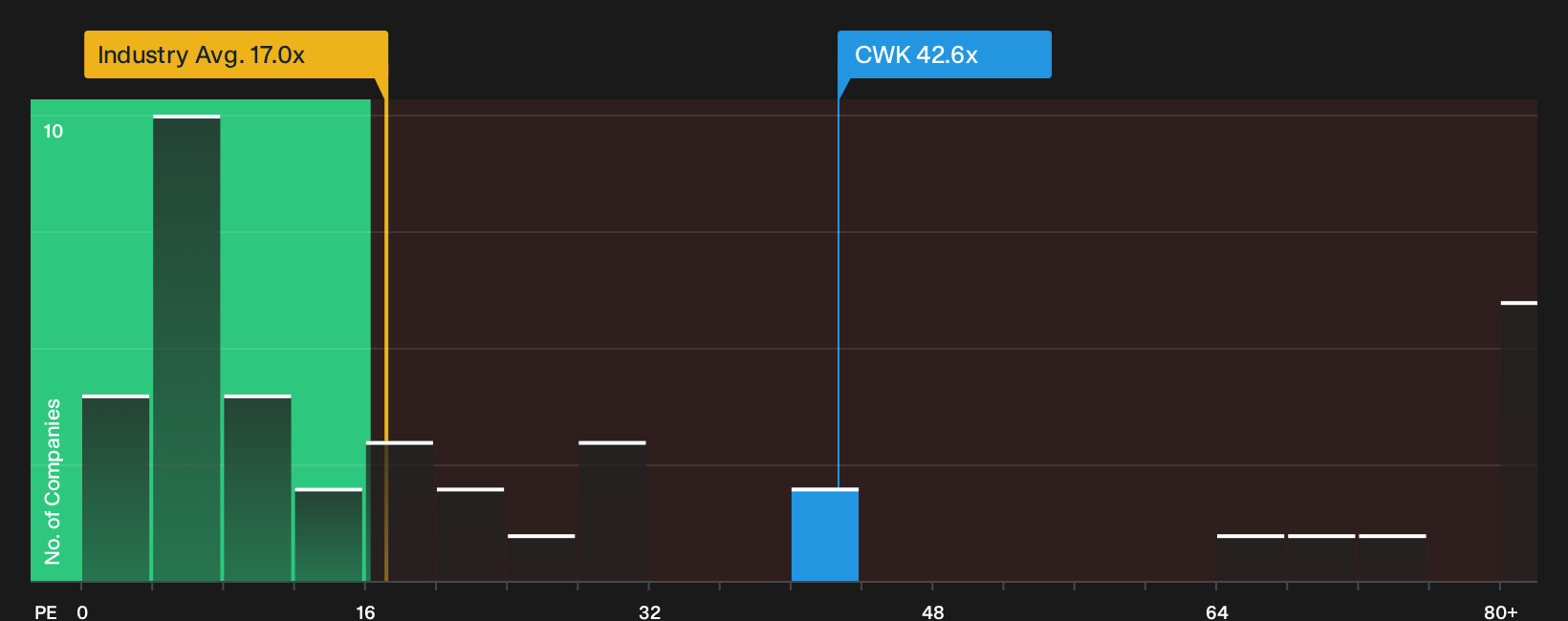
The P/E ratio fits Cushman & Wakefield because investors often anchor real estate service groups to their earnings power rather than the asset base on the balance sheet. On that yardstick, the stock trades at about 42.6x, which is well above the broader real estate industry average near 17.0x and still below the peer group on roughly 86.6x.
That puts Cushman & Wakefield on the expensive side against a Fair Ratio benchmark, suggesting the current earnings multiple already bakes in a relatively optimistic set of expectations. Recent commentary on stronger office demand in Asia Pacific and record U.S. legal sector leasing helps explain why investors might be willing to pay up for the shares, because those trends speak directly to the fee pool that supports earnings. The key question for you is whether that premium P/E still makes sense once you weigh the durability of brokerage and advisory income against the valuation gap flagged by the Fair Ratio model. Explore the numbers behind Cushman & Wakefield's P/E valuation.
The Cushman & Wakefield Narrative: What Would Justify Today's Price?
Simply Wall St Narratives pick up where Cushman & Wakefield's valuation puzzle leaves off by spelling out what paths for growth, margins and earnings would need to play out for the shares to be worth materially more or less than today. Each storyline is used as a thesis about the business that can be tracked over time rather than a one off snapshot, all housed on the Community page.
One of the top community narratives on Cushman & Wakefield: 16% undervalued
"The persistent shift toward remote and hybrid work arrangements is fundamentally reducing long-term demand for traditional office space, putting sustained pressure on Cushman & Wakefield's office leasing revenue streams…"
Discover why this Narrative puts Cushman & Wakefield at 16% undervalued.
One more Cushman & Wakefield signal worth checking before you move on
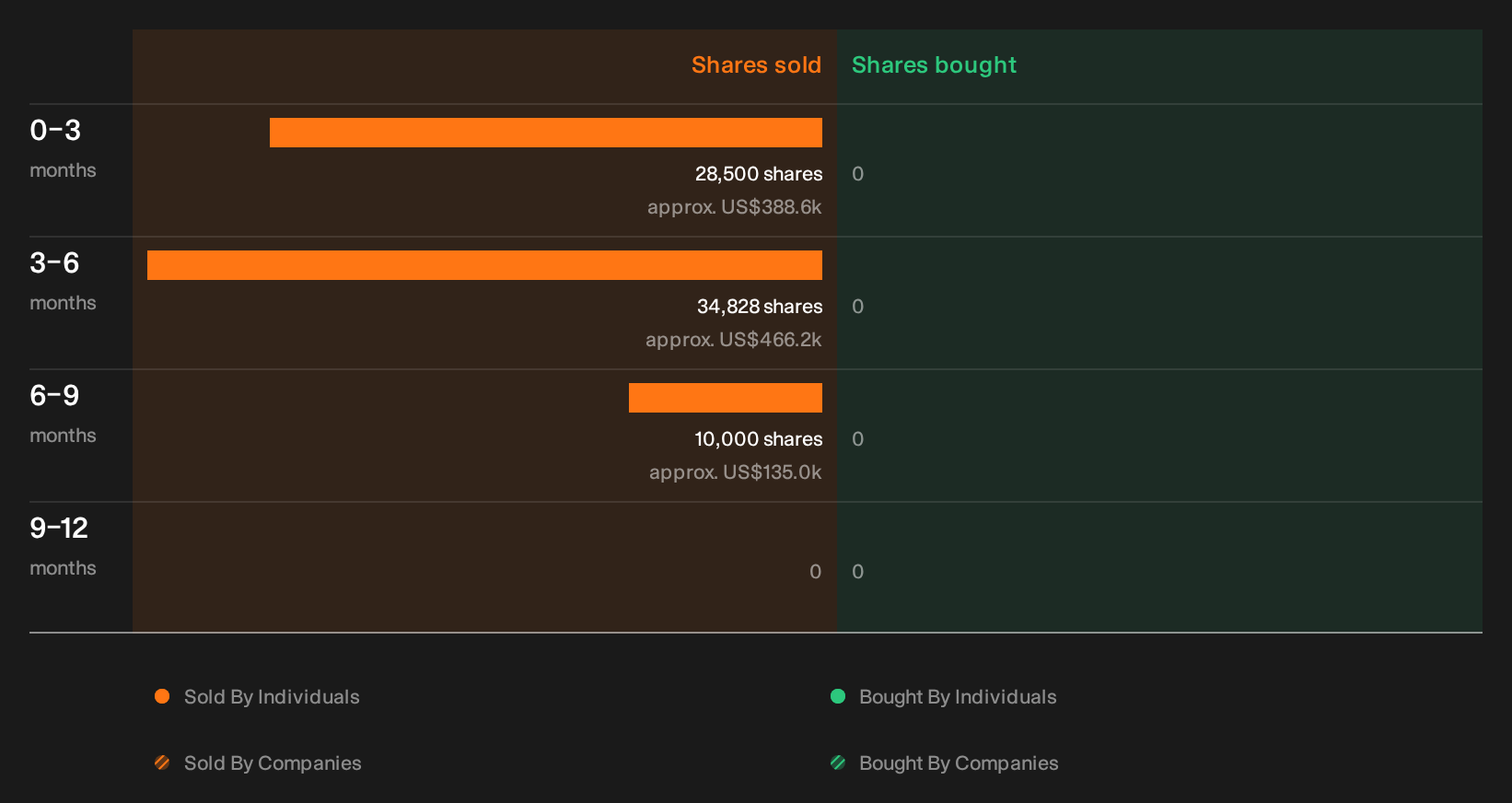
Price multiples tell one story, but insider trading activity can hint at how those closest to Cushman & Wakefield view the road ahead, and recent selling flagged by our checks is there for you to unpack. See the recent insider selling flagged for Cushman & Wakefield.
This article by Simply Wall St is general in nature. We provide commentary based on historical data and analyst forecasts only using an unbiased methodology and our articles are not intended to be financial advice. It does not constitute a recommendation to buy or sell any stock, and does not take account of your objectives, or your financial situation. We aim to bring you long-term focused analysis driven by fundamental data. Note that our analysis may not factor in the latest price-sensitive company announcements or qualitative material. Simply Wall St has no position in any stocks mentioned.
Have feedback on this article? Concerned about the content? Get in touch with us directly. Alternatively, email editorial-team@simplywallst.com