
- PRICING
- LIVE QUOTES
- LEARN
- HELP


EN
3 US Bank Stocks Retail Investors Are Checking As Rates Stay Higher
When the Federal Reserve lifts benchmark rates to 3.75% to 4% and signals more tightening ahead, the cost of money changes for everyone, from homeowners to the largest US bank stocks. That shift can reshape how investors view risk, income and price swings. This article unpacks that story and spotlights 3 US large-cap financial stocks exposed to this rate move, outlining where some investors may see opportunity or decide to stay cautious.
The three stocks highlighted below are only a small sample of what higher policy rates can mean for US large-cap bank stocks, with the full screen surfacing 45 more US-listed financial companies with equally compelling rate and income stories that are not covered here. To identify and analyze the rest of this universe at your own pace, head straight to the US Large-Cap Bank Stocks screener.
Citizens Financial Group (CFG)
Overview: Citizens Financial Group is a large U.S. bank that mainly earns money from lending and deposit services across consumer and commercial clients, making it closely linked to changing interest rates.
Operations: Citizens Financial Group generates about US$6.2b from Consumer Banking and US$2.6b from Commercial Banking, with roughly US$8.2b of revenue coming from U.S. customers.
Market Cap: US$29.6b
Citizens Financial Group matters in this higher rate cycle because its lending and deposit franchise sits right where net interest margins and everyday borrowing costs meet.
"The company's "Reimagining the Bank" initiative, which is focused on deploying advanced technologies such as AI and automation across customer service, operations, and risk management, is expected to unlock significant cost efficiencies and improve customer experience; these efforts are likely to drive down operating expenses, improve the efficiency ratio, and enhance net margins in the long term.
What happens to Citizens Financial Group’s profitability if one unseen pressure on funding costs and loan demand moves in the opposite direction.
If that pressure really bites, read the full narrative for Citizens Financial Group to see how Citizens Financial Group could still turn this rate backdrop into higher returns on its franchise.

Independent Bank (INDB)
Overview: Independent Bank is a regional commercial bank focused on lending and deposit services for individuals and small-to-medium businesses in the US rate-sensitive community banking space.
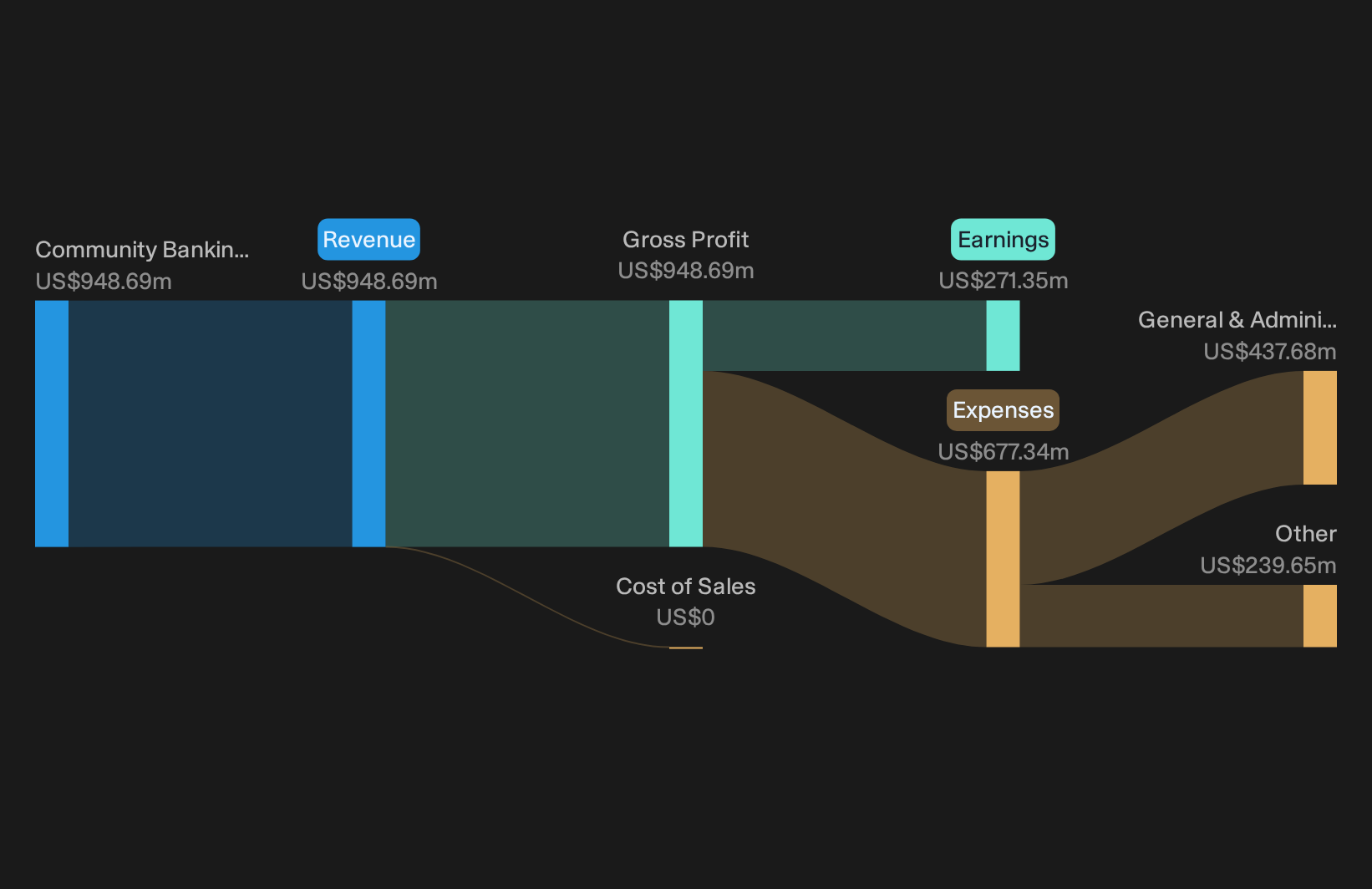
Operations: Independent Bank generates about US$948.7 million from Community Banking activities, with all of this revenue coming from customers in the United States.
Market Cap: US$4.0b
Independent Bank matters for this higher-rate screener because its community banking model leans heavily on loan spreads and deposit pricing, so policy moves quickly feed into what it earns on every dollar lent.
"Proactive reduction in commercial real estate (CRE) concentration and strategic shift toward C&I lending diversifies the loan portfolio, reducing earnings volatility and lowering the risk of outsized credit losses, bolstering earnings stability and lowering future credit costs."
What really shapes Independent Bank’s next leg of margin and earnings performance is how one unresolved funding and deposit competition pressure plays out.
If that funding battle is the real swing factor, read the full narrative for Independent Bank to see how Independent Bank’s margin story could accelerate beyond simple spread management.
First Merchants (FRME)
Overview: First Merchants is a US financial holding company whose bank earns most of its money from traditional loans and deposits in rate sensitive markets.
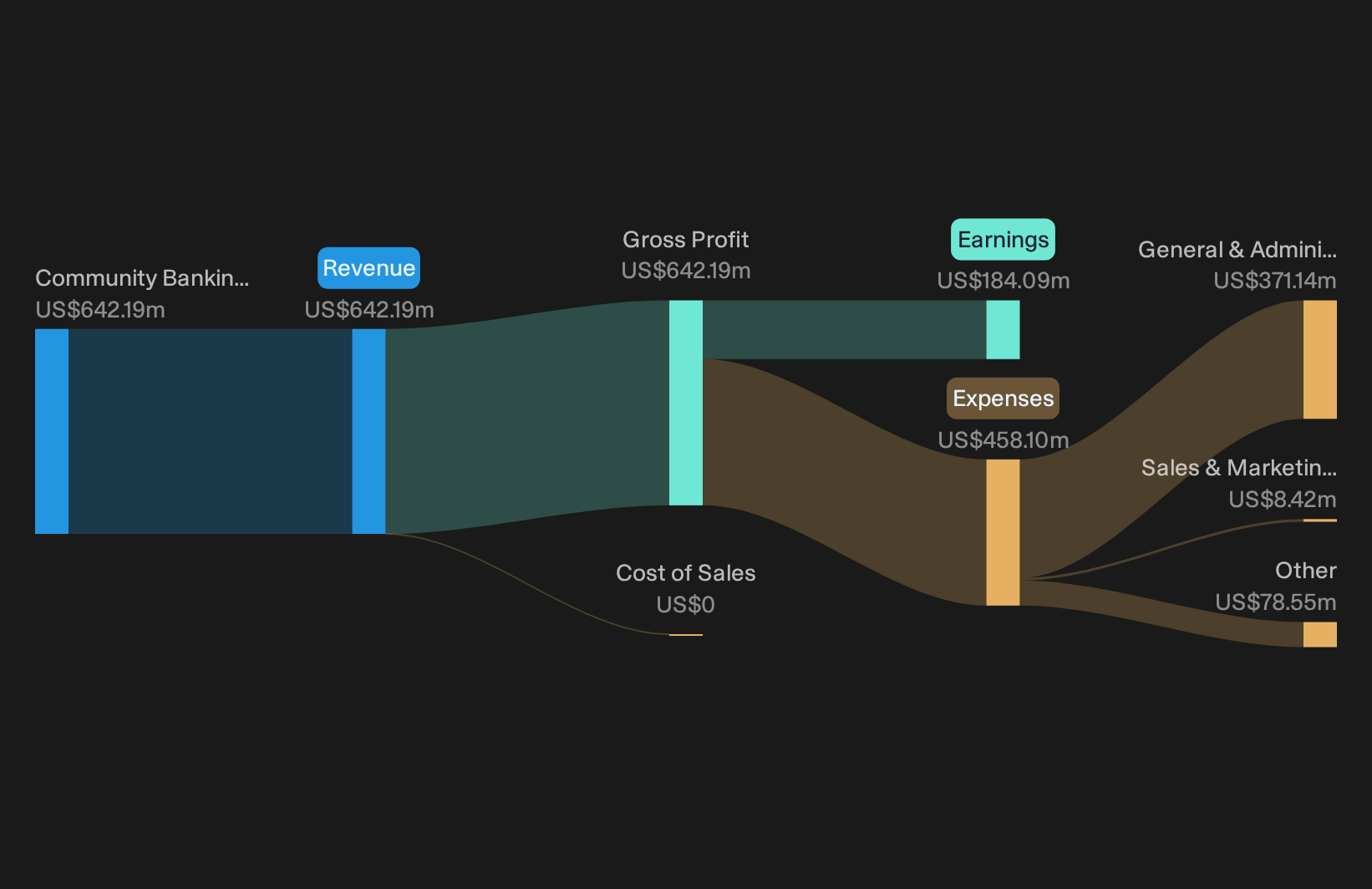
Operations: First Merchants generates about US$642 million from Community Banking activities, with all of this revenue coming from customers in the United States.
Market Cap: US$2.6b
First Merchants is closely aligned with the US Large-Cap Bank Stocks screener, with a balance sheet built around interest earning loans, deposits and a 3.6% dividend that is directly influenced by changes in Federal Reserve policy rates. The stock trades below one estimate of fair value, and recent net income softness means that any shift in the relationship between funding costs and loan yields could significantly affect margins.
Those funding and yield cross currents make the analysis report for First Merchants a sharp way to see whether First Merchants' income pressure is masking a cleaner earnings reset.
Seeking Alternatives Before Everyone Else?
Fresh ideas move fast. Breakout trends, new momentum and quietly flying under the radar stocks rarely stay ignored for long. Before prices get caught up, act now.
- Spot resilient cash generators early by scanning the list of solid balance sheet and fundamentals (22 results) while it still highlights businesses investors have not fully priced in yet.
- Hunt for strong income opportunities by reviewing the 6 dividend fortresses and see which high yield payers are still offering attractive entry points before momentum builds.
- Target overlooked growth stories by using the 16 high quality undiscovered gems and surface quality operators that remain under the radar for now.
This article by Simply Wall St is general in nature. We provide commentary based on historical data and analyst forecasts only using an unbiased methodology and our articles are not intended to be financial advice. It does not constitute a recommendation to buy or sell any stock, and does not take account of your objectives, or your financial situation. We aim to bring you long-term focused analysis driven by fundamental data. Note that our analysis may not factor in the latest price-sensitive company announcements or qualitative material. Simply Wall St has no position in any stocks mentioned.
Have feedback on this article? Concerned about the content? Get in touch with us directly. Alternatively, email editorial-team@simplywallst.com