
- PRICING
- LIVE QUOTES
- LEARN
- HELP


EN
Indo National Limited (NSE:NIPPOBATRY) Goes Ex-Dividend Soon
Regular readers will know that we love our dividends at Simply Wall St, which is why it's exciting to see Indo National Limited (NSE:NIPPOBATRY) is about to trade ex-dividend in the next 3 days. Typically, the ex-dividend date is two business days before the record date, which is the date on which a company determines the shareholders eligible to receive a dividend. The ex-dividend date is of consequence because whenever a stock is bought or sold, the trade can take two business days or more to settle. Meaning, you will need to purchase Indo National's shares before the 21st of September to receive the dividend, which will be paid on the 13th of October.
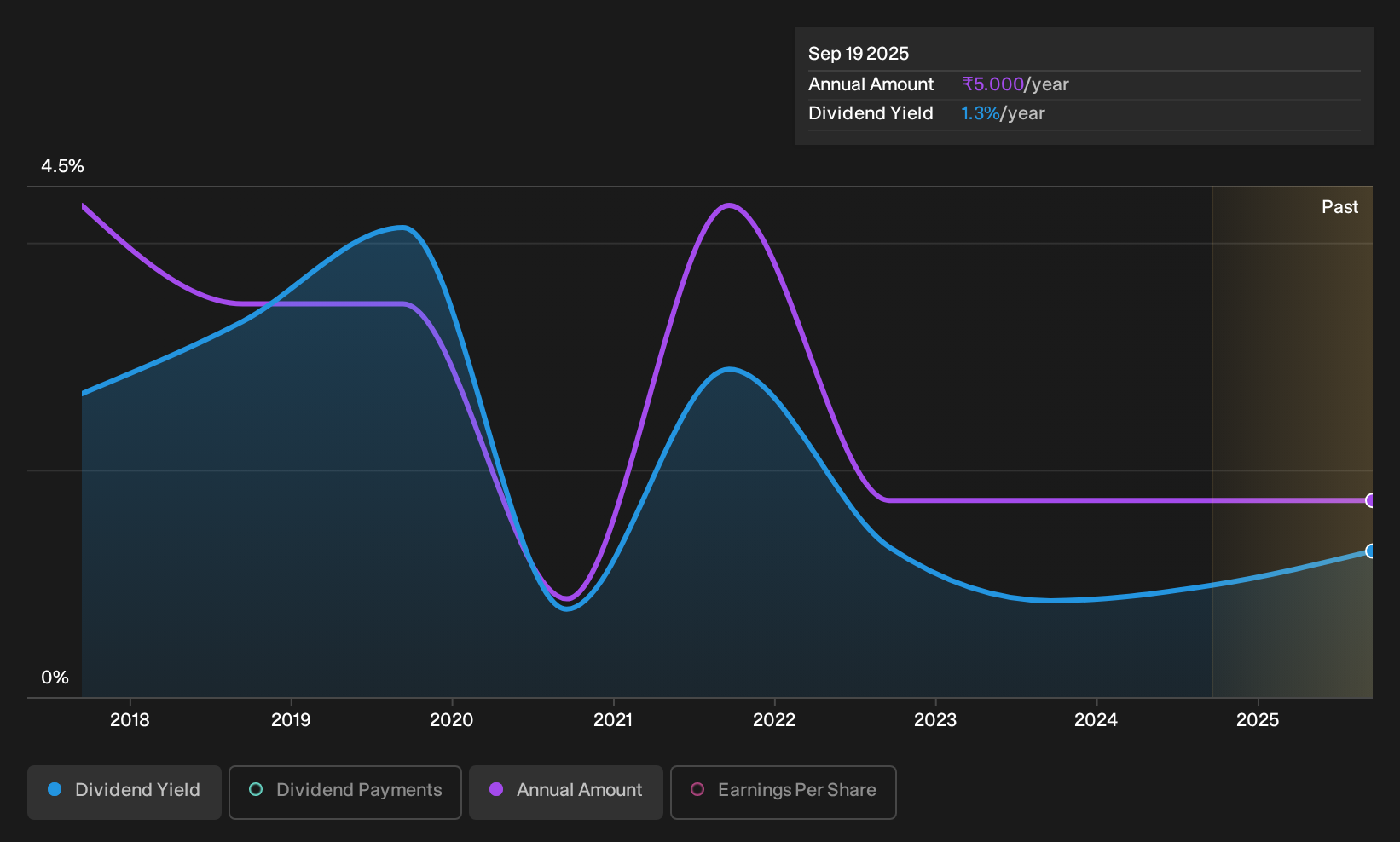
The company's next dividend payment will be ₹3.75 per share, and in the last 12 months, the company paid a total of ₹3.75 per share. Calculating the last year's worth of payments shows that Indo National has a trailing yield of 1.2% on the current share price of ₹323.55. We love seeing companies pay a dividend, but it's also important to be sure that laying the golden eggs isn't going to kill our golden goose! As a result, readers should always check whether Indo National has been able to grow its dividends, or if the dividend might be cut.
If a company pays out more in dividends than it earned, then the dividend might become unsustainable - hardly an ideal situation. Indo National's dividend is not well covered by earnings, as the company lost money last year. This is not a sustainable state of affairs, so it would be worth investigating if earnings are expected to recover. Given that the company reported a loss last year, we now need to see if it generated enough free cash flow to fund the dividend. If Indo National didn't generate enough cash to pay the dividend, then it must have either paid from cash in the bank or by borrowing money, neither of which is sustainable in the long term. Thankfully its dividend payments took up just 28% of the free cash flow it generated, which is a comfortable payout ratio.
See our latest analysis for Indo National
Click here to see how much of its profit Indo National paid out over the last 12 months.
Have Earnings And Dividends Been Growing?
Businesses with strong growth prospects usually make the best dividend payers, because it's easier to grow dividends when earnings per share are improving. If earnings fall far enough, the company could be forced to cut its dividend. Indo National was unprofitable last year, but at least the general trend suggests its earnings have been improving over the past five years. Even so, an unprofitable company whose business does not quickly recover is usually not a good candidate for dividend investors.
Another key way to measure a company's dividend prospects is by measuring its historical rate of dividend growth. Indo National has seen its dividend decline 11% per annum on average over the past 10 years, which is not great to see.
Remember, you can always get a snapshot of Indo National's financial health, by checking our visualisation of its financial health, here.
To Sum It Up
From a dividend perspective, should investors buy or avoid Indo National? First, it's not great to see the company paying a dividend despite being loss-making over the last year. On the plus side, the dividend was covered by free cash flow." It might be worth researching if the company is reinvesting in growth projects that could grow earnings and dividends in the future, but for now we're not all that optimistic on its dividend prospects.
With that being said, if dividends aren't your biggest concern with Indo National, you should know about the other risks facing this business. In terms of investment risks, we've identified 2 warning signs with Indo National and understanding them should be part of your investment process.
If you're in the market for strong dividend payers, we recommend checking our selection of top dividend stocks.
Have feedback on this article? Concerned about the content? Get in touch with us directly. Alternatively, email editorial-team (at) simplywallst.com.
This article by Simply Wall St is general in nature. We provide commentary based on historical data and analyst forecasts only using an unbiased methodology and our articles are not intended to be financial advice. It does not constitute a recommendation to buy or sell any stock, and does not take account of your objectives, or your financial situation. We aim to bring you long-term focused analysis driven by fundamental data. Note that our analysis may not factor in the latest price-sensitive company announcements or qualitative material. Simply Wall St has no position in any stocks mentioned.