
- PRICING
- LIVE QUOTES
- LEARN
- HELP


EN
3 Large Cap Dividend Stocks Income Investors Are Watching Closely
With markets fixated on a possible Fed move to 3.75–4%, investors are watching how higher borrowing costs and sticky inflation could reshape the winners and laggards in dividend-paying value stocks. Income investors do not just face rate risk; they face the risk of missing resilient payers that handle tighter conditions better than others. This article unpacks the setup and highlights 3 large-cap dividend stocks that appear most exposed to this rate story.
The three highlighted tickers below are only a first pass, and the full screen surfaced 24 more large cap dividend payers with equally compelling stories that are not covered here. If you want to identify and analyze income ideas tailored to your own risk tolerance, head straight into the US Large-Cap Dividend-Paying Value Stocks screener.
Consolidated Edison (ED)
Overview: Consolidated Edison is a regulated utility that delivers electricity, gas, and steam to customers across New York City and nearby regions.
Operations: Consolidated Edison generates about US$12.1b from CECONY electric, US$3.4b from CECONY gas, and US$1b from O&R electric, all in the United States.
Market Cap: US$38.9b
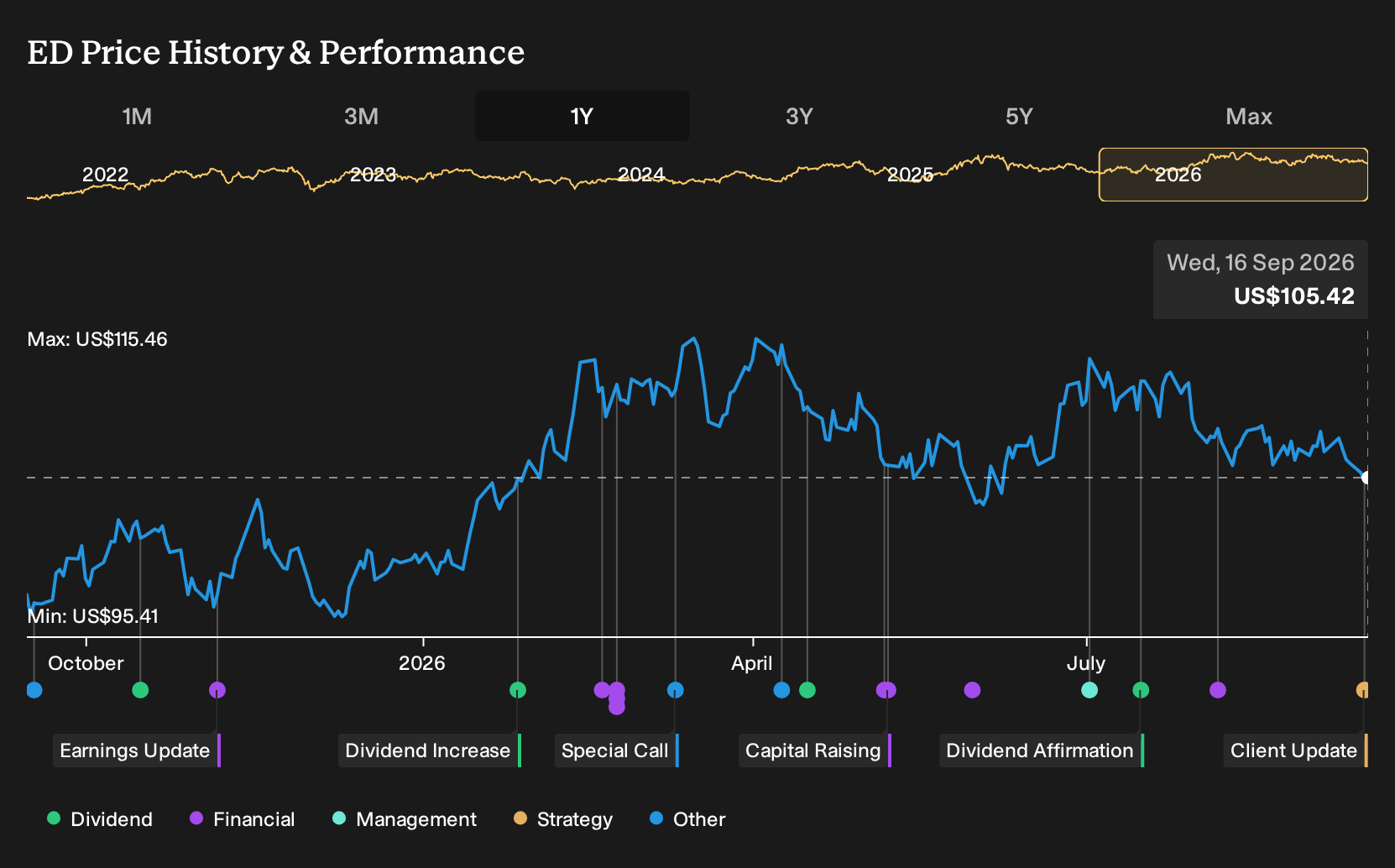
Consolidated Edison provides income seekers with large-cap, regulated utility exposure, a 3.37% dividend yield, steady US$4,069m quarterly revenue, and high quality earnings. These are underpinned by long term rate plans that can help smooth returns if Treasury yields stay volatile, depending on how one unseen pressure on its funding costs plays out.
That hidden funding squeeze is already in focus for analysts on Consolidated Edison, so tap into the 4 key rewards and 2 important warning signs (1 is major!) to see what might be getting mispriced.
Host Hotels & Resorts (HST)
Overview: Host Hotels & Resorts is an S&P 500 lodging REIT that owns large luxury and upper-upscale hotels, offering income-focused real estate exposure.
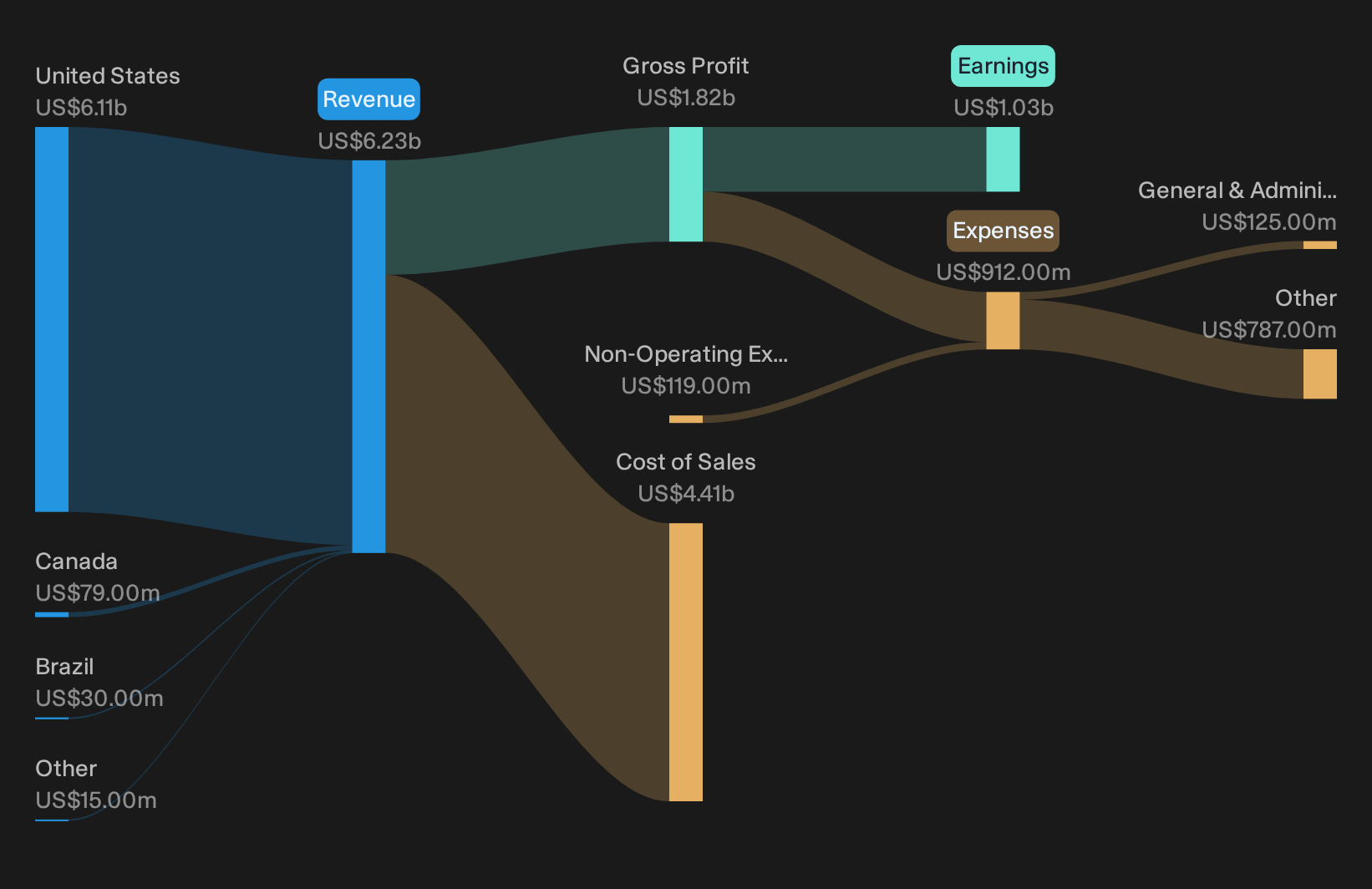
Operations: Host Hotels & Resorts generates about US$6.2b from hotel ownership, with roughly US$6.1b from the United States and the rest from Brazil and Canada.
Market Cap: US$15.4b
For the US Large-Cap Dividend-Paying Value Stocks screen, Host Hotels & Resorts brings a mix of tangible hotel real estate, a current dividend, and value-leaning metrics that tie an investor’s income stream to travel and lodging demand rather than utilities or pipelines.
"The ongoing rebound and expansion in leisure and experiential travel is driving outsized transient demand at Host's luxury and upper-upscale resorts, evidenced by double-digit RevPAR and F&B growth at destinations like Maui and Miami."
What matters next is how one persistent cost and funding pressure shapes margins, particularly as the rate backdrop and travel appetite keep shifting.
Those cost pressures are already reshaping the story. Read the full narrative for Host Hotels & Resorts to see how Host Hotels & Resorts could turn rate headwinds into accelerating cash returns.
VICI Properties (VICI)
Overview: VICI Properties owns large-scale gaming, hospitality and leisure real estate such as Caesars Palace and MGM Grand. It collects rent from long-term tenants.
Operations: VICI Properties generates about US$4.1b from real estate investment activities in the United States, its sole reported revenue source.
Market Cap: US$27.3b
VICI Properties brings real-asset backing and a visible dividend stream to this income-focused screen. This matters when rate expectations keep shifting and investors focus on cash flow they can actually see.
"Given the historical data presented, my assumption is that the company will be able to grow its revenues ~3.5-4.5% during Year 1 and ~3.5-5.5% each year from Year 2-5."
What really shapes the VICI Properties story now is how one unresolved funding and leverage balance affects the reliability of that payout profile.
That funding balance is the real hinge for VICI Properties, so move straight to the full narrative for VICI Properties to see how rate pressure could be masking future momentum.

Seeking Alternatives Before The Crowd?
Fresh ideas do not stay quiet for long. Breakout stories gain momentum fast, while stale picks get caught dropping. Scan these under-the-radar lists while it matters and act now.
- Spot cash generative opportunities early by reviewing the 33 high quality undervalued stocks, keeping quality businesses in focus before they start flying on wider market attention.
- Ride structural demand for critical materials by working through the 29 top copper producer stocks, curated for producers that could matter most when supply tightness bites.
- Target resilient cash flows by scanning the 11 resilient stocks with low risk scores, highlighting businesses built to handle shocks without wild swings in fundamentals.
This article by Simply Wall St is general in nature. We provide commentary based on historical data and analyst forecasts only using an unbiased methodology and our articles are not intended to be financial advice. It does not constitute a recommendation to buy or sell any stock, and does not take account of your objectives, or your financial situation. We aim to bring you long-term focused analysis driven by fundamental data. Note that our analysis may not factor in the latest price-sensitive company announcements or qualitative material. Simply Wall St has no position in any stocks mentioned.
Have feedback on this article? Concerned about the content? Get in touch with us directly. Alternatively, email editorial-team@simplywallst.com