
- PRICING
- LIVE QUOTES
- LEARN
- HELP


EN
3 Oil And Gas Stocks Worth Watching As Sanctions Put Supply Back In Focus
Oil is suddenly back at the center of Washington politics, with the Lindsey O. Graham Sanctioning Russia and Iran Act putting tariffs, sanctions and supply risks squarely in focus for global integrated producers. That mix of potential disruption and pricing power can reward prepared investors and punish those who ignore it. This article walks through three large integrated oil and gas stocks exposed to this news and explains why each might deserve a closer look.
The three integrated producers highlighted below are only a starting sample, and the full screen surfaced 36 more large oil and gas companies with equally compelling narratives that are not covered here. To identify and analyze those additional ideas in one place, head straight into the Global Integrated Oil & Gas Producers screener.
Guangzhou Development Group (SHSE:600098)
Guangzhou Development Group is a diversified integrated energy business spanning coal and gas power, new energy, storage, gas distribution and energy logistics, which fits the Global Integrated Oil & Gas Producers theme. The stock has a market value of about CN¥22.3b.
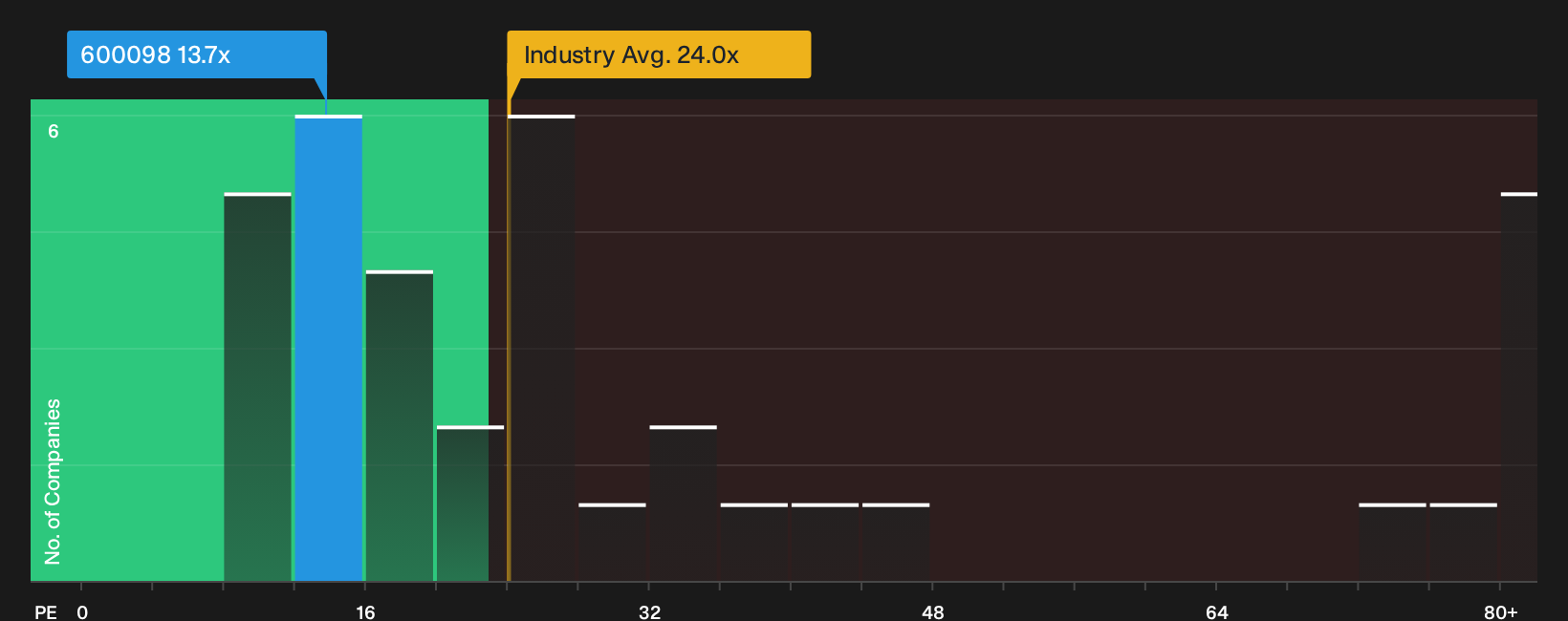
As one of the more diversified integrated energy players in China, Guangzhou Development Group provides exposure to power generation, gas infrastructure and new energy projects in a single ticker. The business screens as relatively inexpensive on a P/E of 13.7x versus the wider CN market and local oil and gas peers. This places more emphasis on how pricing and margins evolve through a full oil and gas cycle, depending on how one unseen pressure plays out.
That unseen pressure is exactly what makes the 2 key rewards and 3 important warning signs (1 is major!) so useful, because it shows where Guangzhou Development Group’s valuation story could sharply re-rate.
Kinder Morgan (KMI)
Kinder Morgan fits this integrated energy theme through its vast North American pipeline, storage and export network that helps move oil, gas and related products. Most revenue comes from natural gas pipelines that generated about US$11.7b out of roughly US$18b total and a market value near US$68.9b.
Kinder Morgan gives this screen a different angle, since it connects producers and end users rather than drilling itself, yet still depends on energy flows and pricing.
Anticipated growth in global natural gas demand, driven by rising populations in Asia and Africa and increased energy needs from urbanization, is expected to sustain or increase utilization of Kinder Morgan's core pipeline and LNG infrastructure. This underpins long-term revenue growth through higher throughput volumes and long-term contracts.
What happens if one key assumption about how those future gas flows are financed and contracted starts to shift even slightly?
That kind of contract shift is exactly where the full narrative for Kinder Morgan shows whether Kinder Morgan’s cash flows are quietly decoupling from headline oil moves or still tightly hitched.

Petronet LNG (NSEI:PETRONET)
Petronet LNG plugs directly into the Global Integrated Oil & Gas Producers theme as India’s key LNG import and regasification operator, earning about ₹371,729 million from LNG import and processing and carrying a roughly ₹423.2b market cap anchored in domestic gas demand.
Petronet LNG gives this screen pure-play access to the LNG side of the integrated energy story, tying your exposure to how India sources and converts seaborne gas into long-term supply for industry and power users.
The rollout of new capacity, including expansion at Dahej and the Gopalpur terminal, is intended to address rising demand for cleaner energy solutions amid India's industrialization and urbanization.
What happens to margins and cash generation if one assumption about how those new volumes are contracted and financed starts to shift.
If that financing risk sits on your mind, read the full narrative for Petronet LNG to see how Petronet LNG’s capacity buildout could accelerate or stall cash generation.

Seeking Fresh Alternatives Before They Fly
Market attention shifts fast. Fresh stock ideas can move from quiet to breakout territory before most investors even notice. Keep your curiosity working while it matters and get in early.
- Spot early momentum in under-the-radar growth stories by scanning the 618 high quality undiscovered gems that financial filters have already narrowed down to stronger balance sheets and cleaner fundamentals.
- Lock onto income ideas with staying power by using the 163 dividend fortresses that highlights high-yield payers with the financial muscle to support regular distributions.
- Track where AI cash generation is already real by filtering through the 76 profitable AI stocks that aren't just burning cash curated around businesses that pair revenue traction with disciplined spending.
This article by Simply Wall St is general in nature. We provide commentary based on historical data and analyst forecasts only using an unbiased methodology and our articles are not intended to be financial advice. It does not constitute a recommendation to buy or sell any stock, and does not take account of your objectives, or your financial situation. We aim to bring you long-term focused analysis driven by fundamental data. Note that our analysis may not factor in the latest price-sensitive company announcements or qualitative material. Simply Wall St has no position in any stocks mentioned.
Have feedback on this article? Concerned about the content? Get in touch with us directly. Alternatively, email editorial-team@simplywallst.com