
- PRICING
- LIVE QUOTES
- LEARN
- HELP


EN
The surge in chip shipments supports the basic market of foreign trade! Japan's exports achieved steady growth for 12 consecutive months
The Zhitong Finance App notes that Japan's export growth slowed slightly in August, but it is still at a high level. Among them, shipments of semiconductor and chip manufacturing equipment surged. According to data released by Japan's Ministry of Finance on Wednesday, exports increased 19.3% year-on-year in August, down from the 23.2% increase in July. This is the 12th consecutive month of export growth, while economists' previous median forecast was an increase of 18.4%.
Imports increased by 28%, and economists had previously expected a 26.3% increase. The unadjusted trade deficit widened to 1.1 trillion yen, and the revised deficit in July was 638.3 billion yen (US$4.1 billion), marking the fourth consecutive month of deficit.
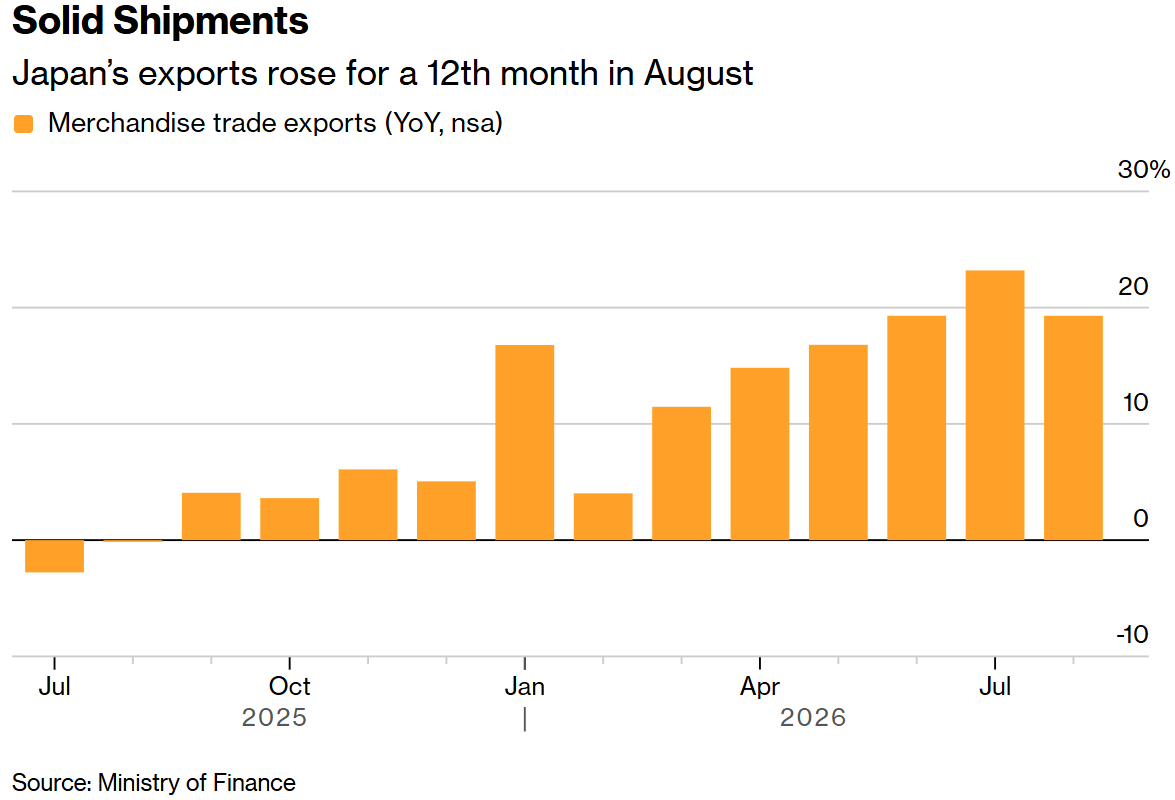
Japan's exports increased for the 12th consecutive month in August
Wednesday's report highlighted the impact of market trends on the trade balance. Oil prices remained relatively high in August. The average price of Brent crude oil was around 88 US dollars per barrel, while the yen continued to trade at a level close to 1 US dollar to 160 yen. Japan's crude oil imports increased by about 59%, while the volume increased slightly by 3.6%.
Atsushi Takeda, chief economist at the ITOCHU Research Institute, said, “High crude oil prices are driving up import costs, leading to a widening trade deficit.” “As crude oil prices now exceed $100 per barrel, I think this will continue to drive up the trade deficit, making it more and more difficult for Japan to recover its surplus.”
Last week, as attacks on the Strait of Hormuz increased, and both the US and Iran were planning to prolong this war, Brent crude oil rose above $100 per barrel. The yen has appreciated more than 3% against the US dollar since September, making it the best-performing Asian currency during the same period.
By destination, exports to the US increased by 24.9%, while exports to China and Europe increased by 20.6% and 11%, respectively.
Exports of electronic components such as semiconductors led to overall growth, with an increase of 52%. Among them, exports of these products to China have more than doubled, while exports of semiconductor manufacturing equipment to the US and the European Union have also increased by more than 100%. Automobile exports also grew, but at a slower rate than in previous months.
The amount of crude oil imported by Japan from the US increased by more than 1000% to 400 billion yen. The value of imports from the Middle East increased by only 3.7%, while imports from the region plummeted by about 31%. Against the backdrop of continued disruptions in shipping due to the war, Japan has been reducing its dependence on Middle Eastern oil and turning to the US to obtain stable supply.
President Trump's senior energy official is trying to counter speculations that the US may ban fuel exports before the midterm elections in order to depress domestic prices.
Home Secretary Doug Bergham said earlier this week, “If we think a ban on exports would actually lower prices, we would consider doing it, but that's not the case.”
According to data from the Ministry of Finance, the average exchange rate of the yen against the US dollar in August was 160.64, down 8.7% from a year ago. A weaker yen will drive up the cost of importing raw materials, and at the same time give exporters a competitive advantage overseas.
Although the yen has strengthened since then, it is still far below its 10-year average. The yen traded around 155.18 against the US dollar in the Tokyo market on Wednesday morning, compared to a 10-year average of 126.55.
Economists say the trade prospects are still bright, thanks in large part to the continued demand for cutting-edge technology.
Takeda said, “I believe demand for AI-related products will remain strong, so I expect exports to be supported.”