
- PRICING
- LIVE QUOTES
- LEARN
- HELP


EN
3 US Bank Stocks Worth Watching While Fed Rate Uncertainty Stays High
Fed rate hike talk, sticky inflation and long-term yields near two-decade highs have turned U.S. bank stocks into a live stress test for your portfolio. Rising borrowing costs and policy uncertainty can reshape which businesses feel pressure and which gain flexibility. This article walks through three large-cap U.S. bank stocks exposed to the latest Fed and inflation news so you can evaluate how the current setup might help or hurt.
The three U.S. bank stocks that follow are only a starting sample, and the full screen surfaced 27 more large-cap financial institutions with equally compelling narratives that are not covered below.
If you want to go deeper into this idea, head straight to the US Large-Cap Bank Stocks screener to identify, filter and analyze which banking plays best fit your conviction and risk profile.
Hancock Whitney (HWC)
Hancock Whitney sits near the center of this higher rate story, because its regional lending, deposits and wealth services all lean heavily on what the Fed does with borrowing costs.
"The acquisition of Sabal Trust Company is projected to close soon, with expectations to enhance noninterest income by 9% to 10% year-over-year, contributing to overall revenue growth."
What happens when one pressure point on funding costs shifts could have a sharp effect on how much of that income growth turns into margins.
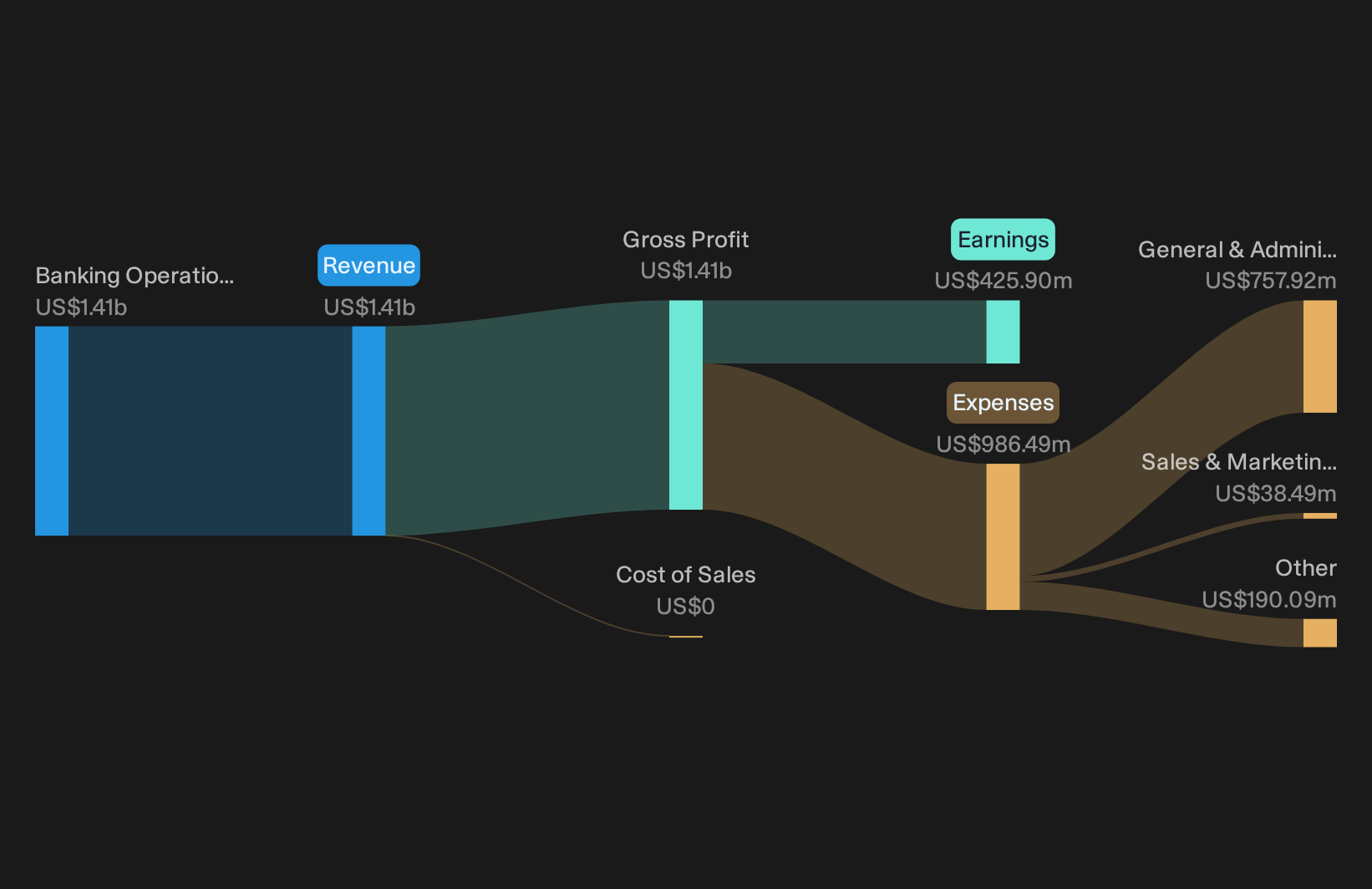
Hancock Whitney is a US$6.1b regional financial holding company offering loans, deposits and wealth products. Essentially all of its roughly US$1.4b in banking operations revenue comes from the United States, giving it a clear link to US rate policy.
That margin question is exactly what the full narrative for Hancock Whitney unpacks, showing how Hancock Whitney’s income mix, deposit pricing and credit risks could be quietly accelerating or masking future returns.
Credicorp (BAP)
Credicorp provides large-cap banking exposure from a different angle, offering a Latin American mix of lending, insurance, and pensions that connects to the screener theme while tending to react more to local central banks than to the U.S. Fed.
Credicorp is a roughly US$29.9b Lima-based financial group that earns most of its PEN18.1b business revenue from universal banking at Banco de Crédito del Perú, supported by microfinance at Mibanco, insurance and pensions, and investment management across Peru and neighboring markets.
"Expansion of digital financial services like Yape is unlocking new revenue streams through both increased transaction volumes and lending to previously underserved segments, driving growth in fee-based income and supporting ongoing top-line expansion."
What happens to Credicorp's earnings power if a single pressure point in its regional credit quality or funding costs shifts faster than expected?
If that pressure point matters to you, the full narrative for Credicorp outlines how Credicorp’s fee engines, credit risks and digital growth could be quietly accelerating the story.

WaFd (WAFD)
WaFd is a U.S. bank holding company in the large cap screener that earns about US$761 million from thrift and savings style banking, mostly through lending and deposit services, and has a market value of roughly US$2.5 billion.
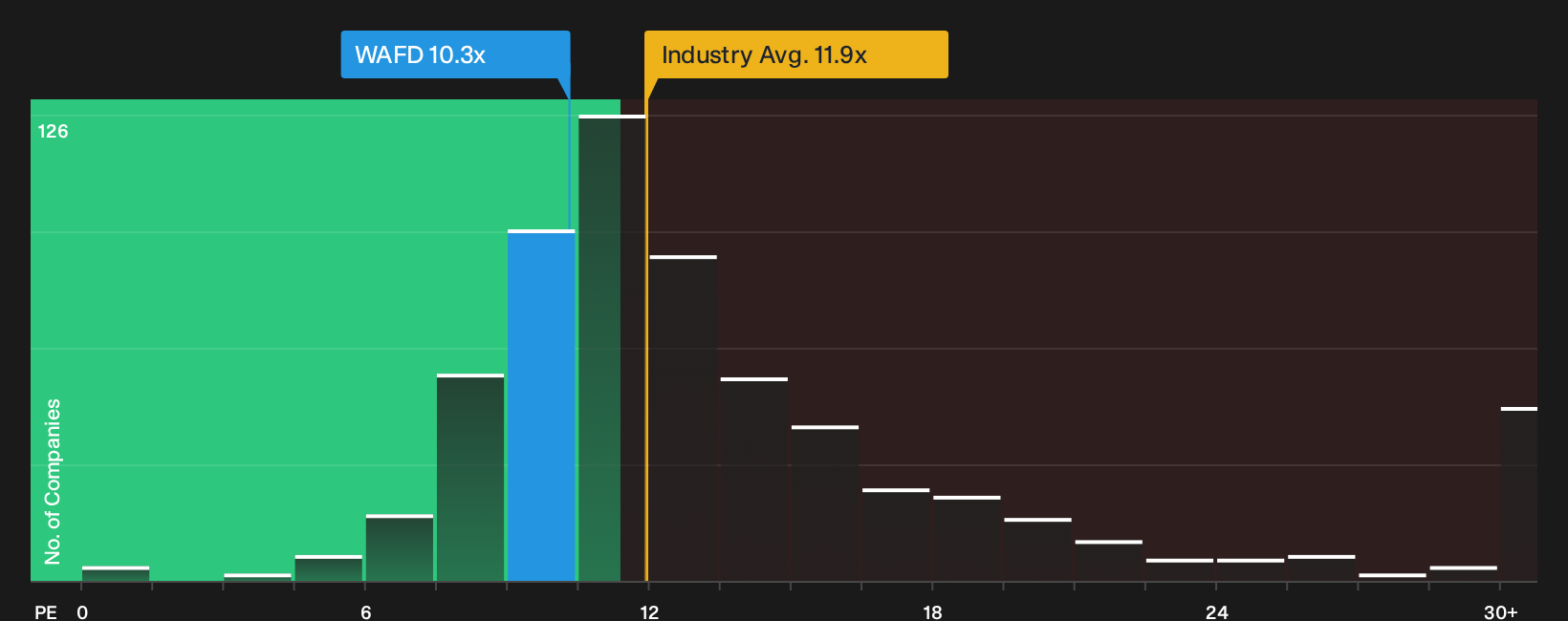
WaFd gives you pure U.S. rate exposure, with profit driven largely by net interest income and supported by a 3.27% dividend yield and a P/E of 10.1x that sits below both the banks sector and broader peers. That combination of income, valuation and earnings momentum could look very different if a single rate driven pressure point shifts.
That turning point is exactly where the analysis report for WaFd picks up, detailing how WaFd's current income mix could be masking both risk and upside.
Seeking Fresh Alternatives Beyond Bank Stocks?
Fresh ideas move first. Slow reactions often get caught chasing momentum while early entries ride potential breakouts under the radar for now. Scan the next wave and act now.
- Target potential cash rich opportunities before they start flying by scanning a curated 34 high quality undervalued stocks that still sit off most investors' radars.
- Hunt for diversification away from traditional lenders by reviewing a focused 19 cryptocurrency and blockchain stocks that tracks businesses tied to digital assets and blockchain infrastructure.
- Zero in on potential income anchors while yields stay elevated by running through a hand picked 6 dividend fortresses that screens for staying power and payout strength.
This article by Simply Wall St is general in nature. We provide commentary based on historical data and analyst forecasts only using an unbiased methodology and our articles are not intended to be financial advice. It does not constitute a recommendation to buy or sell any stock, and does not take account of your objectives, or your financial situation. We aim to bring you long-term focused analysis driven by fundamental data. Note that our analysis may not factor in the latest price-sensitive company announcements or qualitative material. Simply Wall St has no position in any stocks mentioned.
Have feedback on this article? Concerned about the content? Get in touch with us directly. Alternatively, email editorial-team@simplywallst.com