
- PRICING
- LIVE QUOTES
- LEARN
- HELP


EN
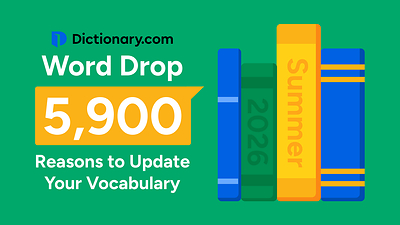
IYKYK: Dictionary.com's 2026 Summer Word Drop Captures the Language of Life Online
5,900 new words reveal how the internet, AI, health, science and culture are reshaping English
SAN MATEO, Calif., Sept. 15, 2026 /PRNewswire/ -- If you know, you know. And if you don't—that's the meaning of the acronym in the headline, and one of the 5,900 words added to Dictionary.com. This year's Summer Word Drop captures vocabulary emerging from the places people live, work, learn and connect today. Internet communities are creating new shorthand for how we interact online, AI is generating vocabulary for a technology that barely existed a decade ago and terms like overprompt are moving from niche technical conversations into the mainstream.
"Pay attention to the words people reach for and you'll learn a lot about what they're experiencing," said Steve Johnson, PhD, Director of Lexicography for the Dictionary Media Group at IXL Learning. "This summer's additions reveal a world grappling with new technology, talking more openly about mental health and climate change and borrowing freely from cultures around the globe."
The internet is changing more than how we talk
Life online has created new behaviors, social dynamics and ways of interacting. English is evolving to give them names.
- Engagement bait (noun): videos, text or images posted online, the purpose of which is to encourage comments, likes and similar reactions from the audience.
- Reply guy (noun): a man who responds to women's social media posts overly often and inappropriately.
- Face reveal (noun): the act, especially by an online content creator, gamer or the like, of posting a photograph of their own face for the first time.
Internet culture has also generated its own shorthand: abbreviations that started in specific forums and are now showing up everywhere, including, occasionally, in speech.
- IYKYK (abbreviation): if you know, you know (used with an allusion to a situation, incident, etc., understood only by those who have experienced or witnessed it).
- ELI5 (abbreviation): explain like I'm five (used to ask for a simple explanation of a complex topic or concept).
Science is talking
Biology, physics, medicine, earth science, chemistry, engineering, computing, mathematics and psychology all make appearances this summer—a sign that the boundary between specialized knowledge and everyday conversation is increasingly fluid.
- Bioprinter (noun): a specialized 3D printer used to produce material made of living cells.
- Longevity escape velocity (noun): a hypothetical situation in which advances in medical science mean that a person's remaining life expectancy increases at a rate that is faster than the passage of time.
As AI becomes part of everyday life, English is developing specific language to describe how these systems work and where they fall short.
- Context window (noun): the amount of text, measured in tokens, that a large language model can process or reference at a time in order to generate a response.
- Model collapse (noun): poor-quality output by a generative AI as a result of being trained on data that is itself generated by AI.
The language of the human mind
Other new entries give people language for experiences that once might have remained confined to therapy sessions or research papers.
- Love bomb (noun): a gushy display of affection, often for the purpose of manipulation.
- Trauma bond (noun): an emotional bond that an abuse victim feels toward the person who is abusive to them, particularly when periods of abuse alternate with periods of kindness or affection.
Good news for the planet (and the dictionary)
Climate vocabulary is shifting. Alongside the familiar language of crisis, new words are emerging to describe how people are responding to environmental challenges.
- Carbon-negative (adjective): having the net effect of absorbing or sequestering carbon from the atmosphere; having a carbon footprint less than zero.
- Agrivoltaics (noun): the practice of using the same piece of farmland both for agricultural purposes and to generate electricity through solar panels.
And then there's slang
Slang moves fast. Some terms disappear almost as quickly as they arrive; others stick around long enough to become part of the broader lexicon.
- Lost in the sauce (idiom): clueless, confused or in a fog; preoccupied or disoriented; inebriated.
- Goated (adjective): considered by many people to be the GOAT, the greatest of all time.
- Glow-up (noun): a positive transformation, generally in appearance but often also in confidence, social capital or ability.
- Kiki (noun): a gathering of close friends, especially to share the latest gossip.
So, how does a word make the dictionary? It starts with people. Dictionary.com's lexicographers track how language is actually being used, looking at search trends, written and spoken language, frequency, meaning and staying power to determine which terms have moved beyond a momentary trend.
Learn more about how words make the cut and explore the 2026 Summer Word Drop at https://www.dictionary.com/articles/summer-word-drop-2026-5900-reasons-to-update-your-vocabulary.
About Dictionary.com
Dictionary.com is the internet's leading language reference and learning destination: millions of people turn to us each day to better understand words—the very fabric of language, identity and ideas. We are committed to helping people express themselves, make connections and find opportunities through the power and joy of language. From authoritative definitions and grammar guidance to engaging editorial and multimedia experiences, Dictionary.com makes learning intuitive and relevant so you can put your ideas into words, and your words into action.
Press Contact
Joslyn Chesson
IXL Learning
press@ixl.com

 View original content to download multimedia:https://www.prnewswire.com/news-releases/iykyk-dictionarycoms-2026-summer-word-drop-captures-the-language-of-life-online-302878698.html
SOURCE IXL Learning
