
- PRICING
- LIVE QUOTES
- LEARN
- HELP


EN
The calm before the storm? The volatility of the pound is approaching a record low: the budget is approaching, Wells Fargo warns that hedging is seriously inadequate
The Zhitong Finance App learned that the British pound options market is experiencing an abnormal calm — and experienced traders know that this is often not good news. The one-month implied volatility of the pound against the euro is currently hovering near the record low set last week, and the two-month period is still close to the August low — even though the latter's pricing window increasingly covers the period when the UK government announces its fiscal plan. In other words, the market is not surprised on the surface, but a major catalyst is on the way.
Where does calm come from
This calm is largely reflected in the broader market context. Recent exchange rate fluctuations are dominated by the trend of the US dollar, oil prices, and global interest rates. The relative changes in the UK and the Eurozone have squeezed their weight in foreign exchange pricing to a secondary position.
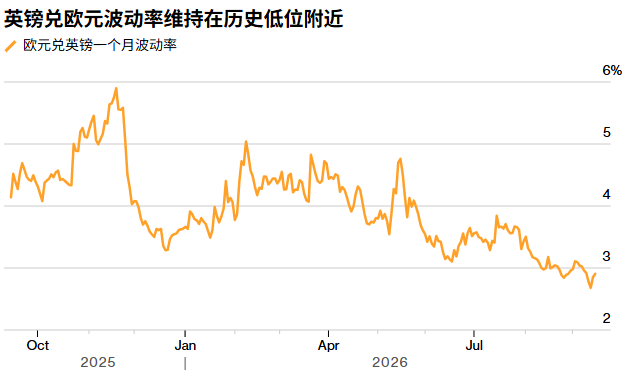
But that's just a temporary division of labor. The upcoming UK budget will provide a clear catalyst, and the divergence of policy expectations between the Bank of England and the European Central Bank may also regain dominance over the trend of the British pound.
On October 28 this year, Britain's new Chancellor of the Exchequer, John Healy, will unveil his first budget — the first complete fiscal plan since Andy Burnham took over as prime minister in July. The two-month pricing window with implied volatility happened to be “guarding the door” for this incident, yet the options market paid almost no premium for it.
Wells Fargo: Investors' hedging is far from enough
“At the current level of implied volatility, investors are likely to be far underhedging the budget.” Wells Fargo strategist Eric Nelson and Marcus Jennings wrote in a report.
The bank recommended buying the euro and selling the pound at the target level of 0.8650, and indicated that the current position is more neutral than before the announcement of the previous budget — which means that in the event of an accident in the budget, investors who lack hedging will be directly exposed to the impact.
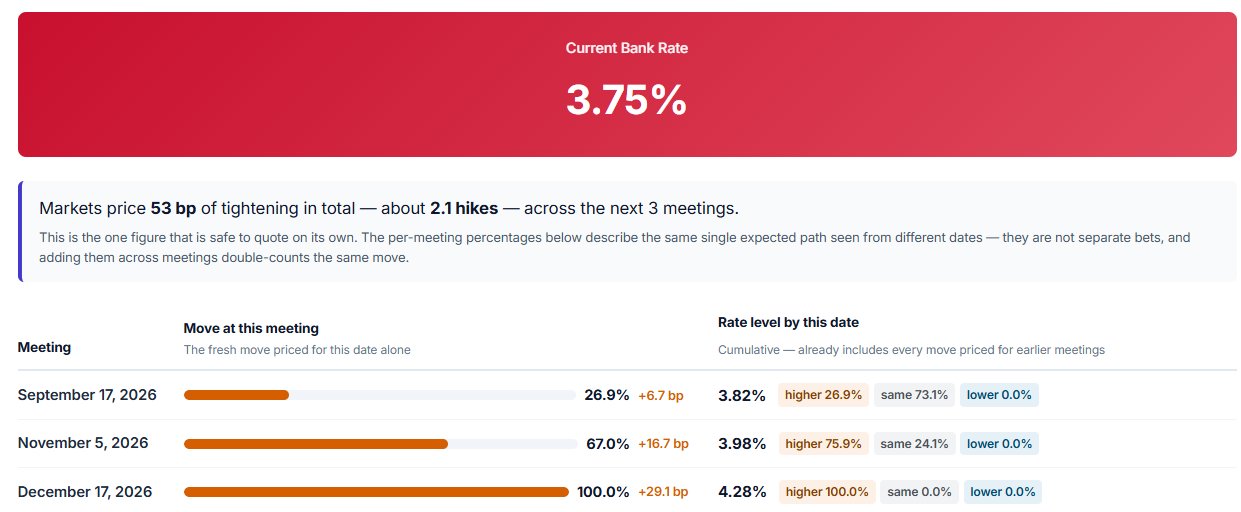
The two strategists also pointed out another layer of risk: the current low volatility environment supports carry trade (carry trade), and the high interest rate of the pound is the beneficiary of this strategy. The Bank of England's benchmark interest rate is currently 3.75%, 125 basis points higher than the ECB's 2.50% deposit rate — this spread is a direct return for investors holding the pound instead of the euro, and is also the engine for the strength of the pound this year. However, once the volatility returns from a low level and the arbitrage position based on “calm” is closed, it itself will become a source of selling pressure for the pound.
Asymmetric interest rate hike expectations: the pound's biggest weakness
According to Wells Fargo, monetary policy pricing is another potential source of asymmetric risk. The market is currently pricing the Bank of England more tightly than the ECB — making the pound particularly vulnerable when expectations prove too aggressive.
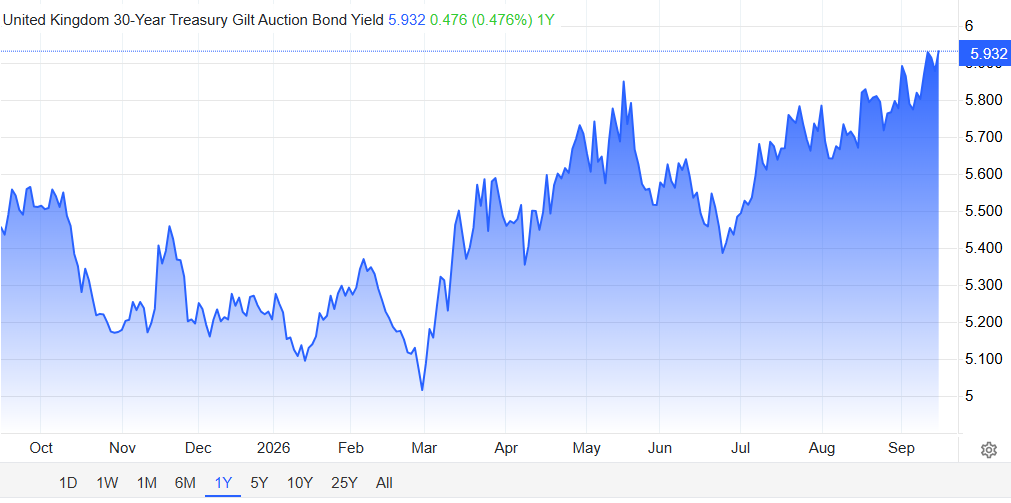
The British pound's situation also has a fiscal dimension. The yield on UK 30-year treasury bonds is currently around 5.9%, the highest since the 1990s. Fiscal sustainability is becoming a core issue for overseas investors when examining UK assets. As a result, the Bank of England plans to stop selling long-term treasury bonds and slow the pace of quantitative austerity in order to ease the pressure on the bond market. This means that the October 28 budget is not only a list of taxes and expenses, but also a test of fiscal credibility — if the new finance minister's plan fails to calm the market, treasury bonds and the pound may be under pressure at the same time, and the way volatility returns from a record low will not be gentle.
The latest pricing on the swap market shows that traders have fully taken into account the Bank of England's expectation of five cumulative interest rate hikes of 25 basis points by the end of 2027. At that time, the benchmark interest rate will rise to 5%; the pricing for the ECB is to raise interest rates four times over the next 12 months. Inflation concerns caused by soaring energy prices are the driving force behind this round of betting — after a key Saudi oil pipeline was attacked and closed, Brent crude oil rose above $109 per barrel on Monday, and British two-year treasury yields jumped 16 basis points to 4.97% on the same day.
But the data isn't entirely on the hawks' side. The UK CPI rose to 2.9% year on year in July, but the driving force was the energy price ceiling. The core CPI remained unchanged at 2.6%, and service sector inflation fell from 3.6% to 3.4%; after excluding dividends for three months, the wage growth rate was 3.5%, and the unemployment rate was 4.9%.
“While higher energy prices have pushed the risk in a more hawkish direction, the market is now pricing close to five additional rate hikes in the coming year — a level of austerity that is still difficult to reconcile with weak wage growth and weak employment indicators.” Jefferies economist Modupe Adegbenbou said. She expects the Bank of England's meeting this week and the whole of 2027 to remain on hold.
As a result, Thursday's interest rate decision became the first test point: if the Bank of England were to stand still or even lose its words, the aggressive rate hike path set by the market would begin to reverse, and the British pound's interest spread support would loosen; at the same time this week, the ECB just raised interest rates by 25 basis points on September 10, and the market is expected to continue — the spread between Britain and Europe is at the crossroads of fluctuations in both directions.
Euro call options are still in demand, but beliefs are waning
As of press release, EUR/GBP was reported at 0.8559. Previously, it weakened to 0.8611 on Monday, hitting a low of more than two months. Options pricing shows that traders still think there is room for the EUR/GBP to strengthen in the next two months, but their belief in going long is weaker than the average for the year.
On the one hand is a record low level of implied volatility, and on the other is the looming budget, divided central bank expectations, and crowded arbitrage positions — the calm in the market is more like closing one's eyes before the storm, rather than the storm actually over.