
- PRICING
- LIVE QUOTES
- LEARN
- HELP


EN
MediaTek preempted Qualcomm (QCOM.US) to release the first 2nm mobile phone chip Tianji 9600 Pro, greatly improving end-side AI performance
The Zhitong Finance App learned that MediaTek (MediaTek) released a new smartphone chip using TSM.US's most advanced manufacturing process on Tuesday, targeting the high-end mobile phone market — its semiconductor products enable more AI functions to run directly on the device side. The move is part of MediaTek's overall strategy to compete with US competitor Qualcomm (QCOM.US) for the high-end mobile phone market. In this market, more expensive devices and AI capabilities can bring better profit margins to chip makers.
First 2nm flagship, one week early
MediaTek said the Tianji 9600 Pro is its first mobile processor using TSMC's cutting-edge 2 nm process. The company also released the Tianji 9600M, which uses TSMC's 3-nanometer manufacturing process, for the wider flagship mobile phone market. The first smartphones with the two chips will be on the market soon, and they have previously been supplied to Chinese mobile phone manufacturers such as Xiaomi, OPPO, and vivo.
According to MediaTek's official press release, the Tianji 9600 Pro uses a 2+3+3 full-core CPU architecture (2 C2-Ultra super large cores with a frequency of 4.55GHz) and is equipped with a 34.5MB cache, which is the first to support LPDDR6 memory and UFS 5.0 flash; single-core performance is 17% higher than the previous generation, multi-core performance is 15% higher, and multi-core power consumption is reduced by 61% at peak performance.
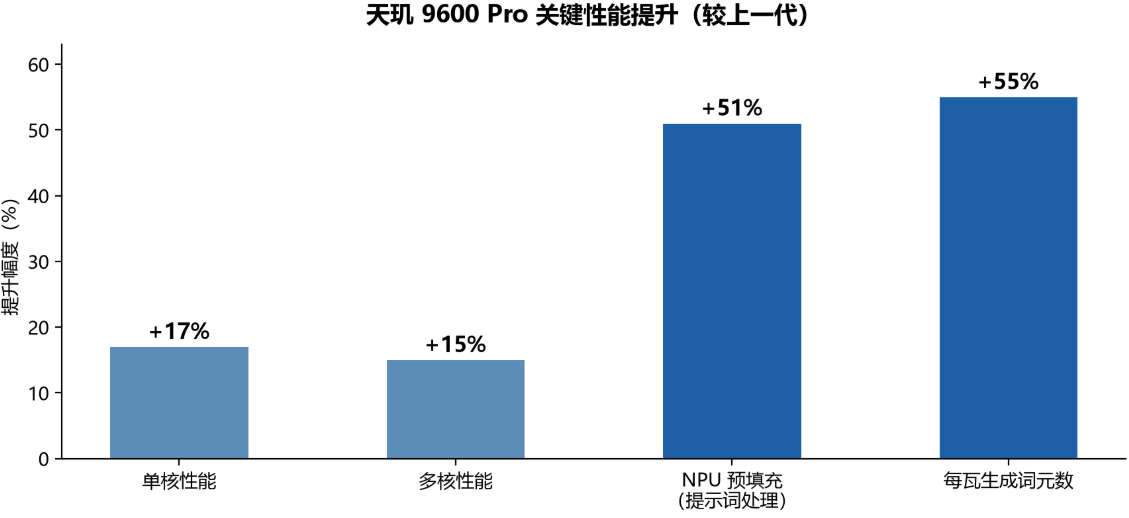
AI is the focus of this generation of chips: the 9600 Pro integrates dual NPU architecture. The “Ultra Performance NPU” can support end side operation of mixed expert (MoE) models with up to 30 billion parameters; the “Super Energy Efficient NPU” works with the sensor center to reduce permanent sensing power consumption by 40%.
The 9600 Pro includes a dedicated AI processor (NPU), which MediaTek says can handle more complex generative AI applications on the phone itself — the NPU is 51% better than the previous generation in processing user prompts (that is, the pre-populated part before the AI model starts generating responses).
The launch time was a carefully arranged card game. Qualcomm will hold the Snapdragon Summit next week (September 22-24) to release the Snapdragon 8 Elite Gen 6, which also uses TSMC's second-generation 2nm manufacturing process (N2P) — MediaTek is now ahead of Qualcomm's flagship chip for the second year in a row. According to the leaked score, the Geekbench 6 single-core score of the Tianji 9600 Pro is in the 4100-4300 division, which is close to the level of Apple's self-developed chip (not officially confirmed). According to news from the supply chain, the vivo X500 series (released in late September) and the OPPO Find X10 series will be the first to be equipped with Dimensity 9600 series chips.
Share ambition amidst a wave of price increases
Price is the other side of this race. Xu Jingquan, senior deputy general manager of MediaTek, said that the company is cooperating with mobile phone manufacturers to try to limit the impact of rising component costs on consumers — the AI boom is putting pressure on the supply chain. But at the same time, he sees an opportunity: as advanced hardware and new AI features make higher pricing more common, “as the overall market moves towards a higher price range, I believe we still have room to increase our share in the flagship segment.”
The background is the continued rise in the price of flagship phones: Apple's new folding screen iPhone released last week, with the highest storage version retailing at $3,199 in the US. According to previous reports, MediaTek has indicated that it will “strategically adjust pricing and production capacity” to maintain profit margins — analysts warn that as wafer complexity and memory prices both rise, the price of flagship chips will rise significantly. MediaTek's ambition comes from: its market capitalization surpassed Qualcomm earlier this year.
TSMC's “all-you-can-eat” moment
Regardless of who wins this round, MediaTek or Qualcomm, the winners in the manufacturing process have already been determined. TSMC's 2nm process (N2) was mass-produced simultaneously in Hsinchu and Kaohsiung in the fourth quarter of 2025, with yield exceeding 80%, far exceeding industry expectations; the second-generation 2nm N2P process was mass-produced in the second half of this year, reducing power consumption by 5%-10% or improving performance by 5%-10% compared to N2. According to industry data, the 2nm process improves performance by about 10%-15% compared to 3nm under the same power consumption, and reduces power consumption by about 25%-30% under the same performance.
Production capacity is scarce
At the end of 2025, TSMC's 2nm monthly production capacity is only about 15,000 to 20,000 pieces, and is expected to expand to 80,000-100,000 pieces by the end of 2026; in order to meet demand, TSMC plans to jointly build 10 2nm plants in Taiwan, China and the US. Apple has reportedly locked in more than half of its initial 2nm production capacity — this is one of the realistic considerations for Qualcomm and MediaTek to switch to N2P. Morgan Stanley predicts that in 2026, the TSMC N2 process will occupy 90%-95% of the 2nm node market share.
Apple's A20 Pro uses the first-generation N2 process, while the Dimensity 9600 Pro jumps directly to the N2P — some third-party analysts believe that it has surpassed the N2 Apple chip of the same period in terms of performance.
MediaTek's bigger game: from mobile to data center
In addition to mobile phone chips, MediaTek's AI layout is accelerating. One of the world's largest smartphone chip design companies has expanded its AI business to data centers and custom chip products — technology companies are investing billions of dollars in AI infrastructure. It is the first AI accelerator designed by a major US cloud service provider and is expected to enter mass production in the fourth quarter of this year.
The capital-level action is also remarkable: MediaTek raised $3.9 billion through a convertible bond offering last month, Nvidia invested $3.5 billion to participate in the subscription, and Google parent company Alphabet — its long-time partner in AI infrastructure — also participated in the launch. On August 31, Nvidia and MediaTek also jointly announced the deepening of a long-term partnership to build an AI computing platform from edge to cloud.
A week ago, ASML just confirmed that orders for lithography equipment will be full until 2027, and Bernstein is still debating the sustainability of AI spending. MediaTek's 2nm chip has provided another touchable footnote to the “AI hardware arms race” — at least on TSMC's production line, no one plans to put the brakes on.