
- PRICING
- LIVE QUOTES
- LEARN
- HELP


EN
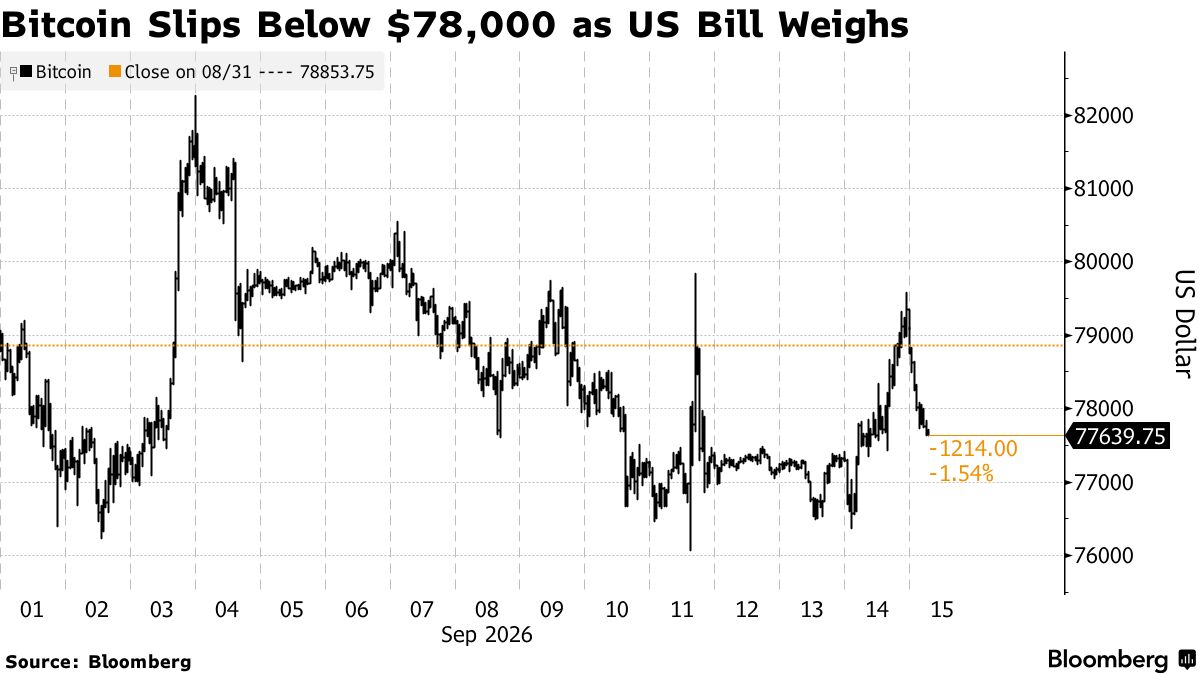
The prospects for the “Clarity Act” are uncertain and expectations of interest rate hikes are heating up, Bitcoin falls below $78,000
The Zhitong Finance App learned that cryptocurrencies declined during the Asian trading session on Tuesday because market optimism about the progress of a key US regulatory bill subsided this week, while the prospect of rising interest rates put pressure on risky assets. Bitcoin, the largest cryptocurrency, once approached $80,000 during the US trading session, but fell back to around $77,600 at 12:30 Singapore time, a decrease of 1.9%; the second-largest cryptocurrency, Ether, fell 2.8%.
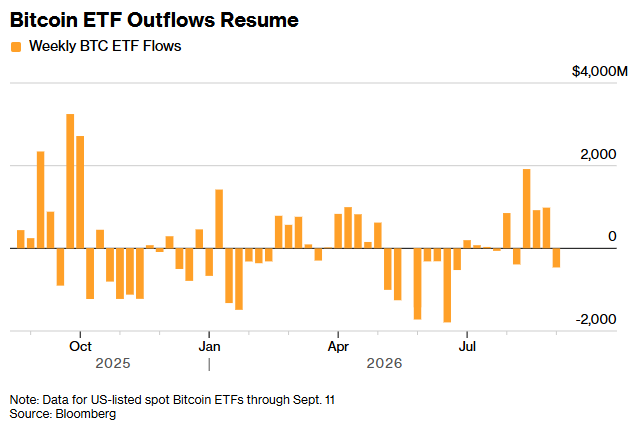
It is worth mentioning that in the past three weeks, Bitcoin has broken through $80,000 several times and has not stabilized, and buying demand has weakened recently. The US-listed Bitcoin exchange-traded fund (ETF) recorded a net outflow of over US$460 million last week, ending three consecutive weeks of massive inflows, while Strategy (MSTR.US), one of the biggest corporate buyers of the cryptocurrency, has not made any purchases in the past two weeks.
The cryptocurrency market was higher during Monday's US trading session. According to data from the prediction market Polymarket, the probability that the “Digital Asset Market Clarity Act” (CLARITY Act for short) will be passed this year has once risen to more than 30%.
However, as the Democratic Party raised objections to the Republican Party's latest proposal, this probability fell back to 18% in early Asian trading. US Senator Mark Warner told reporters at the US Capitol that a group of Democratic negotiators will issue a counterproposal to the Republicans before tomorrow's key procedural vote on the CLARITY Act.
The CLARITY Act aims to more clearly delineate the regulatory boundaries between the US Securities and Exchange Commission (SEC) and the Commodity Futures Trading Commission (CFTC), and establish federal rules for exchanges, token issuers, and decentralized finance platforms. Increased regulatory certainty is expected to attract institutional capital and benefit Coinbase (COIN.US) and other trading, escrow, and blockchain infrastructure providers.
This comprehensive crypto regulation bill has been on hold for a year amid a partisan dispute. The CLARITY Act requires 60 votes in the Senate to remove this procedural hurdle and move forward, and the Republican Party has 53 seats. This means that a number of Democrats will need to vote across party lines to move forward, and then enter the final approval process.
Senate Majority Leader John Tune told reporters earlier on Monday that progress has been made in recent days, but he doesn't know if the number of votes needed to push the bill is sufficient. If a procedural vote fails, it will prolong uncertainty and could cause short-term fluctuations in the cryptocurrency market.
Citing predictive market odds, BTC Markets analyst Rachelle Lucas said, “The probability that the CLARITY Act will be signed in 2026 is still above 70% in May, dropped to more than ten percentage points in August, and rose to around 30% on Monday. This is a market with no stable interpretation.” However, she added, “The counterproposal is in line with an ongoing negotiation, not an already broken one.”
Damian Law, chief investment officer at Ericsenz Capital, said traders hope to cash out part of the proceeds before voting on the CLARITY Act. “Although the market doesn't price this bill much, if it fails to pass, it is likely that there will be a slight decline.”
The biggest sticking point in the passage of the CLARITY Act has always been the moral provision. Democrats don't think these provisions are enough to stop US President Trump from continuing to profit from the crypto business — Trump reported last year that he received $1.4 billion in revenue from related businesses. But other topics, including banks' concerns that crypto stablecoins might take away their deposits, have also been the subject of large-scale lobbying.
Republican senators unveiled the bill's final draft, which includes changes to some of the most controversial points. The new version will give the Minister of Finance the power to intervene when deposit outflows “damage” community banks. It also added moral restrictions on presidents and other elected officials who hold cryptocurrencies. The new moral rules will force the president to divest virtual assets or place important holdings in blind trusts, or face financial penalties. It also empowers state attorneys general to play a role in enforcing ethical rules.
Furthermore, for some industry observers, the Federal Reserve's interest rate decision meeting is probably the event that will have the biggest impact on the digital asset market this week. Exchange data shows that the probability that the Federal Reserve will raise interest rates by 25 basis points on Wednesday is currently higher than 90% in the market.