
- PRICING
- LIVE QUOTES
- LEARN
- HELP


EN
NVO Stock Alert: What to Know as Novo Nordisk Rebrands to 'Novo'
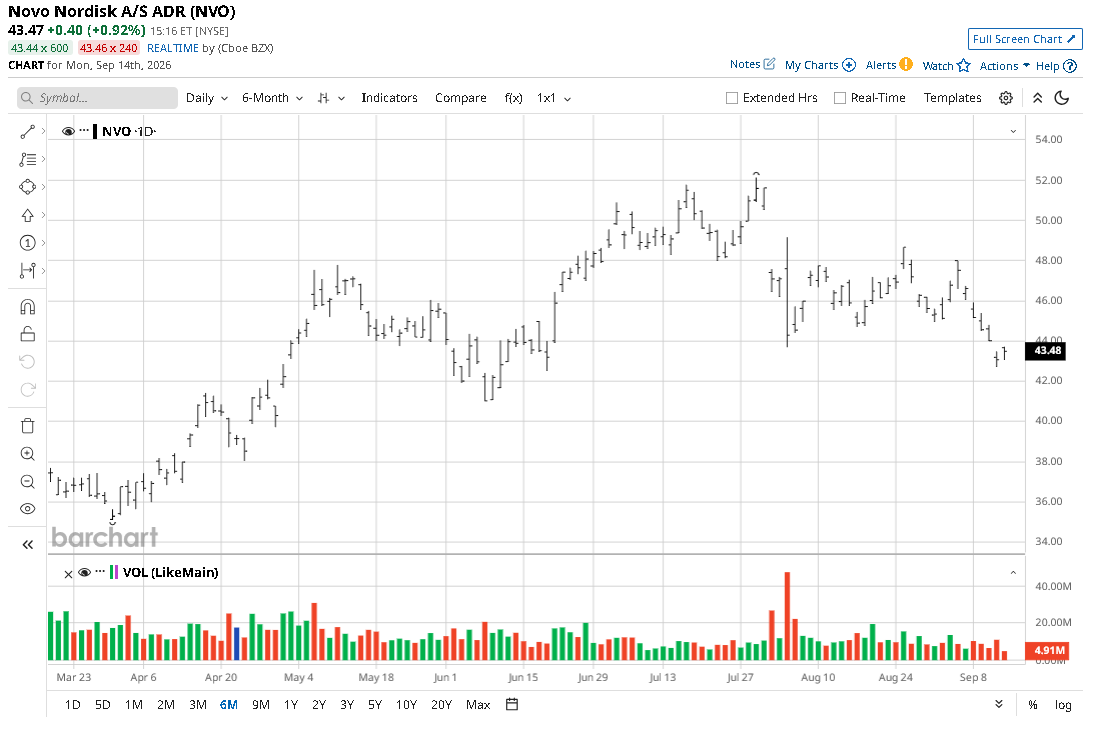
Novo Nordisk (NVO) shares inched higher on Monday after the Danish pharmaceutical behemoth announced a major strategic refresh. The company said it’s rebranding as Novo, while introducing a new visual identity and corporate culture initiative dubbed “The Novo Way.”
The disclosure arrives at a time when Novo Nordisk stock has fallen out of favor with investors, currently down more than 30% versus its year-to-date high.
Why Is Novo Nordisk Rebranding?
In an interview with CNBC, Novo’s chief executive Mike Doustdar explained that the rebranding reflects shifting expectations in global healthcare.
As the firm expands beyond diabetes and obesity into cardiovascular and rare disease markets, the shortened name offers a more memorable, consumer-relevant face for patients.
Doustdar emphasized that while Novo Nordisk remains the legal corporate name, going simply by Novo on a day-to-day basis helps modernize the brand as it attempts to win back customers from Eli Lilly (LLY).
The announcement arrives about a month after NVO reported market-beating financials for its Q2 and raised its guidance for the full year.
What the Refresh Means for NVO Shares
According to industry experts, the rebranding marks a precursor to NVO's highly anticipated Capital Markets Day scheduled for Sept. 21 in London.
While an updated visual identity and “The Novo Way” framework are designed to solidify consumer trust, investors remain focused on pipeline substance and clinical execution.
In short, the strategic refresh is an operational foundation to support long-term growth through the 2030s, but the stock price performance will depend on upcoming pipeline catalysts and commercial updates.
That said, Novo Nordisk shares currently pay a rather lucrative 4.13% dividend yield, which makes them compelling as a long-term holding in 2026.
Wall Street’s View on Novo Nordisk
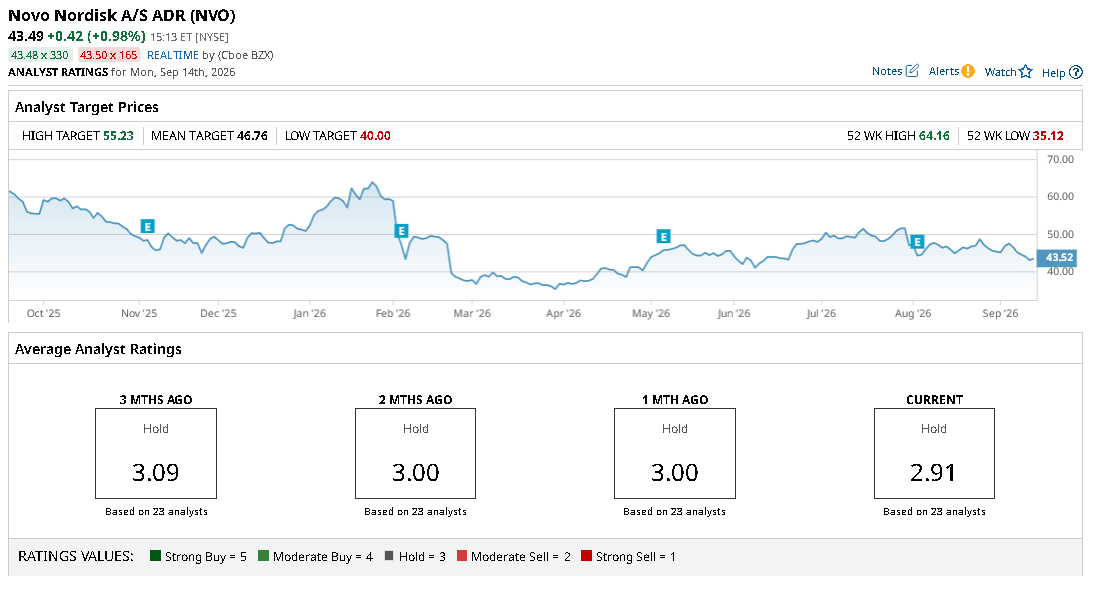
It's also worth mentioning that Wall Street analysts are somewhat bullish on Novo Nordisk for the remainder of 2026.
While the consensus rating on NVO stock sits at “Hold” only, the mean price objective, according to Barchart, is nearly $47, indicating potential upside of about 8% from current levels.
On the date of publication, Wajeeh Khan did not have (either directly or indirectly) positions in any of the securities mentioned in this article. All information and data in this article is solely for informational purposes. For more information please view the Barchart Disclosure Policy here.