
- PRICING
- LIVE QUOTES
- LEARN
- HELP


EN
These 4 Horsemen Are Threatening the Current Bull Market: How to Prepare and Manage Risk
They say they don’t ring a bell at the top of a stock market cycle. Yet when you look beneath the surface of today’s inflated equity multiples, the tolling is becoming impossible to ignore.
The market’s central risk isn’t a technical chart pattern or a single disappointing quarterly report.
Oh, the charts show that there’s a problem. I’m just calling out what the problem is so that investors and traders can focus on the four key risks I see right now. That way, as they are eventually resolved to the market’s satisfaction, a new upcycle can begin.
And based on the history of market sentiment, by then, at lower levels, few will want to hear about it.
Call my views tainted if you want. Tainted by living through multiple market cycles as a then-investment advisor, when clients went from wanting to lever up stock portfolios to asking if CDs were really safe to invest in. You get the point.
The problem right now is one we have not faced in decades, at least not all at the same time. Specifically, basic economic inputs are severely mispriced.
The Four Horsemen
The prices of food, energy, credit, and housing have reached levels that actively drain consumer health and corporate profit margins. These are the Four Horsemen of the real economy.
But rather than fret about things we have no control over (just ask your bank balance after a trip to Costco or the gas station, or if you’ve been in the market to buy a home… forever), we can instead learn what, for many, is perhaps a new skill. If mastered, it can potentially turn any market climate into a profit opportunity. Because, as in past cycles, such as 2022, 2020, 2008, and 2000, I think we’re entering the latest in a series of what I’d call a golden era of risk management. As I’ve discussed frequently, it is chef's choice as to which tools you learn and use. But to be clear, you are the chef!
So whether it is put options, cash holdings, inverse exchange-traded funds (ETFs), leveraged inverse ETFs, or arbitrage strategies, we are living in a time of unprecedented weapons to profit from down markets. That includes those in bonds, stoked by higher interest rates.
When the foundational costs of living and doing business stay elevated, discretionary consumer spending and corporate earnings growth are living on borrowed time. Let’s break down the four horsemen.
- Food: Persistent grocery inflation acts as a non-negotiable tax on household balance sheets. When non-discretionary survival costs consume an ever-larger percentage of real wages, discretionary retail, travel, and consumer goods spending inevitably contract.
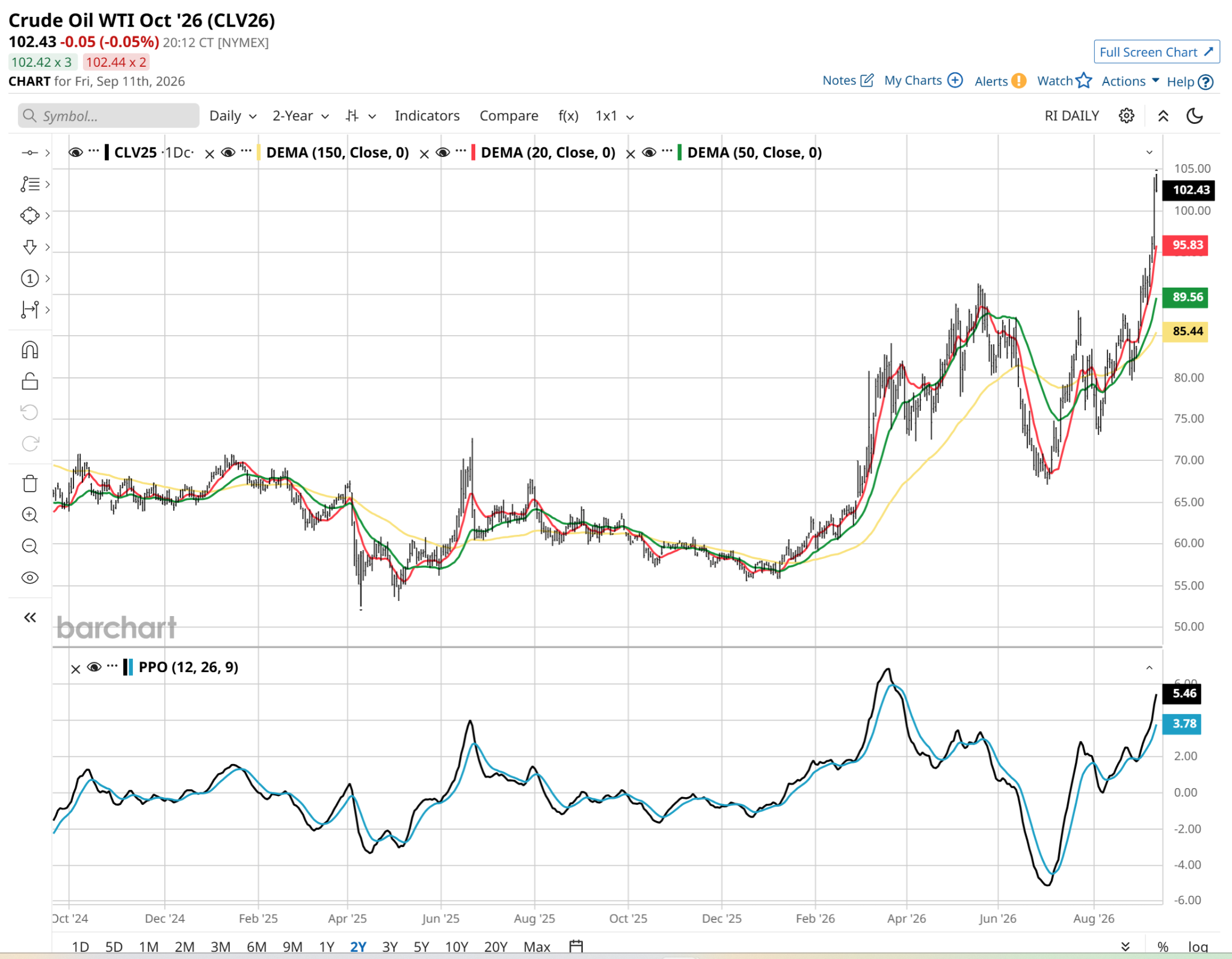
- Energy: This is the main resource that prices everything else. That’s why we are hearing more about things like diesel fuel prices these days. Between geopolitical supply volatility, grid modernization costs, and surging power demand from artificial intelligence (AI) data centers, energy prices squeeze corporate operating margins across every sector.
- Credit: The era of zero-interest-rate policy (ZIRP) and cheap debt overhang is officially over. Re-pricing corporate and sovereign credit at 5% or higher creates a big-time drag on business expansion, share buyback programs, and debt-fueled earnings growth. The party’s over. Drive home safely.
- Housing: Mortgage rates hovering near historic highs combined with elevated median home prices have created the worst housing affordability crisis in decades. Locked-in homeowners refuse to sell, rent costs absorb massive chunks of take-home pay, and young buyers are squeezed out of capital creation entirely.
If only monetary policy could produce cheaper oil, grow more wheat, build cheaper homes, or erase $40 trillion in public debt. Don’t count on it. Instead, learn to play some defense with your offense. And monitor the ongoing impact the four horsemen have on corporate and consumer health. Because just like the bull cycle, this is not forever.
Navigating the Golden Era of Risk Management
Passive, set-it-and-forget-it indexing is facing its toughest test in decades. Relying purely on broad market beta when these basic economic inputs are broken leaves investors fully exposed. Unless they either reduce exposure to the risk assets or counter it with hedging techniques.
This was a quick overview to state the broader issues. Going forward, I plan to devote as much time as possible to what probably matters most. We can’t control the hurdles the markets are putting before us, especially when these four are all hitting us at once. But what can we control? Learning how to exploit them for a good cause.
Rob Isbitts is a semi-retired CIO, former fiduciary investment advisor, and Barchart columnist. Check out his other work at ETFYourself.com (featuring the Fresh Charts weekly trading post), and ROAR.PiTrade.com, helping investors to better-manage their own portfolios.
On the date of publication, Rob Isbitts did not have (either directly or indirectly) positions in any of the securities mentioned in this article. All information and data in this article is solely for informational purposes. For more information please view the Barchart Disclosure Policy here.