
- PRICING
- LIVE QUOTES
- LEARN
- HELP


EN
The Flood of AI Debt Is Poised to Crush Small-Caps. Here’s Why.
Generally speaking, in the stock market, bigger companies are more financially sound. I know some former Enron shareholders would quickly debate that, and I’d join them.
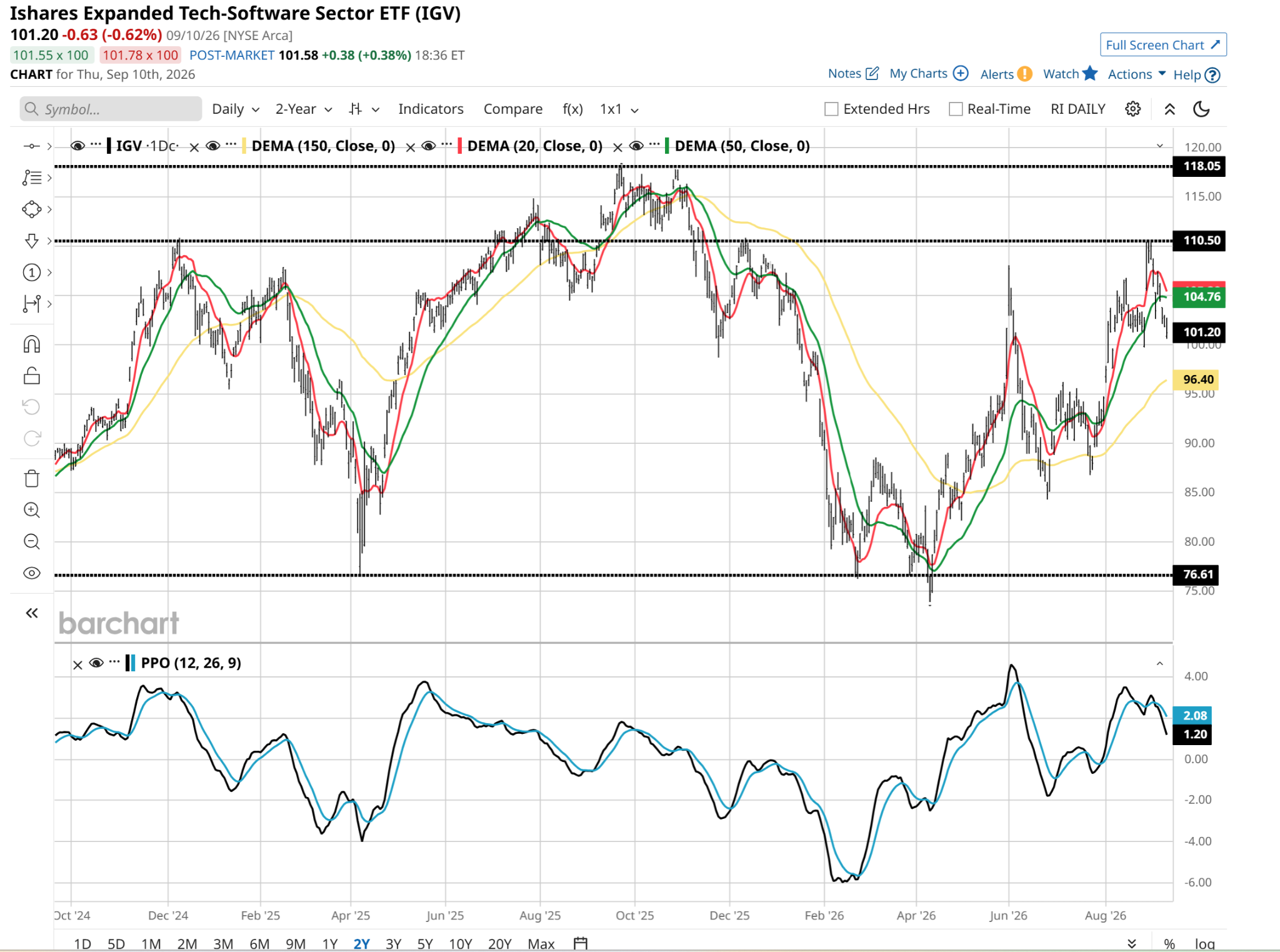
The same goes for the seemingly high-quality outfits known as software stocks. The iShares Expanded Tech-Software Sector ETF (IGV) says otherwise. And while this article is not primarily about technical market conditions, I will say this is one awful-looking chart for the leading index exchange-traded fund (ETF) for software stocks.
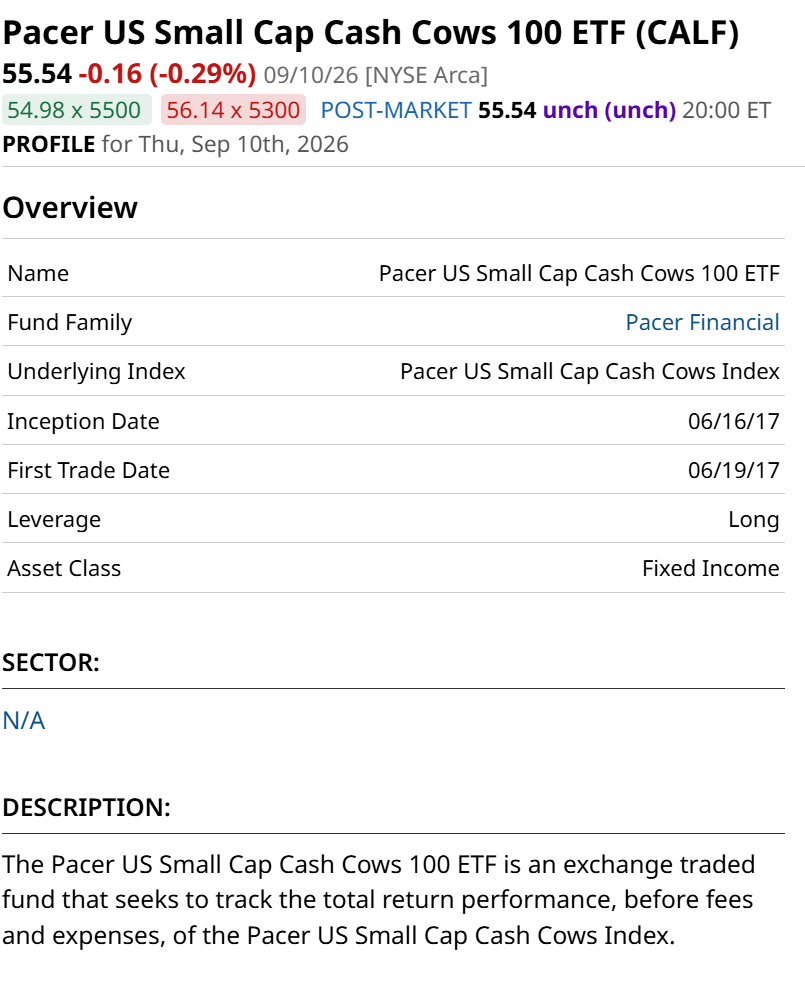
There are small-capitalization stocks with excellent fundamentals. Strong cash flow, low debt, stable management, and reasonable valuations. One ETF I’ve used over time to provide a list of such stocks is the Pacer U.S. Small-Cap Cash Cows 100 ETF (CALF).
However, over the years, the main small-cap gauge in terms of popularity is the Russell 2000 Index. That’s comprised of the 2,000 stocks that fall below the size of the top 1,000 by market capitalization in the U.S. market. The Russell 2000 iShares ETF (IWM) is the longest-tenured ETF that tracks that index. And like most of the stock market as I chart it, it appears it has finally met the wrath of selling pressure.
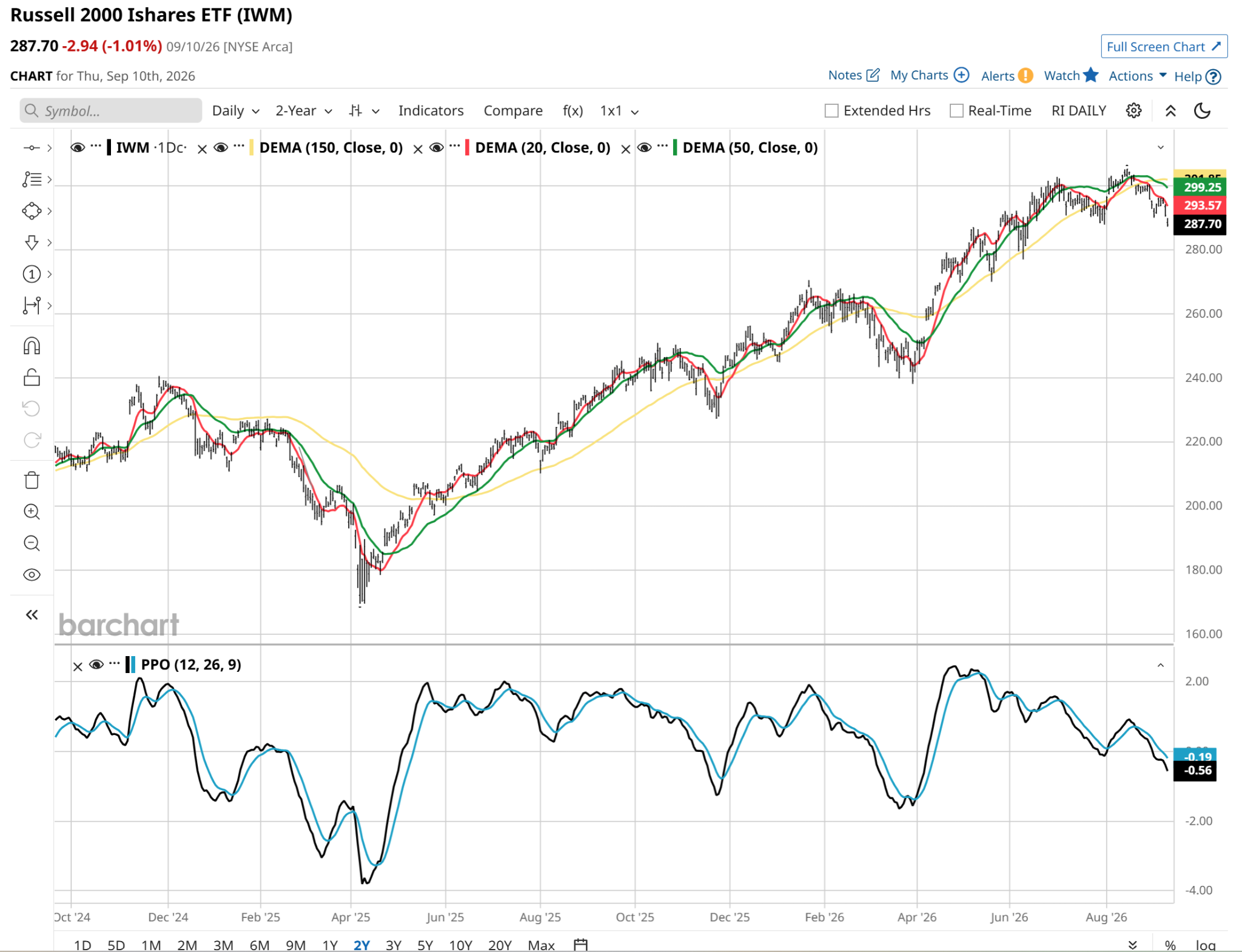
This chart looks like so many others I track. The 20-day moving average is rolling over, and the PPO at the bottom is just entering negative territory from above. Does this mean it is a goner? No, but it makes the odds long that its next major move will be up. It will probably be down.
Over the past decade, small-caps have underperformed large-cap stocks for many and varied reasons. But I think this time around, the rationale is not only a burden to fans of this market segment. I think it is more severe than in the past.
Borrowing costs for the weakest U.S. companies have reached their highest levels since last year’s tariff-driven market turmoil. The main culprit? Rising Treasury yields. That intensifies pressure on heavily indebted businesses.
Traders have become increasingly wary that vulnerable companies will struggle to refinance debt originally issued when interest rates were much lower. If your very survival relies on refinancing your 3% debt issued during the pandemic, and now it costs double or triple that rate, it's a problem. IWM reportedly has as much as 40% allocated to “zombie” companies. They are only alive because they can take on debt to do so. But there’s a lot of debt coming due over the next few years.
And rates are elevated. That’s an existential threat to some of IWM’s holdings. Time will tell which ones. But it makes IWM a very weak player among macro ETF asset classes. Financially sound companies continue to borrow on favorable terms, but weaker businesses face mounting refinancing risks, more defaults and lower recovery values. Continued stress at the bottom of the credit market could eventually weigh on equities and other risk assets.
Default actions, including missed payments and distressed debt exchanges, have risen 9% this year to more than $40 billion, according to J.P. Morgan data cited by the Financial Times. Analysts expect the total to increase further in 2027.
Investors recovered an average of only 29% from defaults during the past 12 months, well below the 25-year average of 40%. A prolonged period of the highest rates we’ve seen in a generation could expose additional weaknesses among companies whose business models and capital structures were formed during the era of near-zero borrowing costs.
This was a problem before, but now there’s a factor that could push small-cap companies’ debt risk to an even higher level — all that money being raised by artificial intelligence (AI) businesses. Ask most big lenders what they would rather back: an AI play or a legacy small-cap company. I’m guessing the former wins by a landslide.
Between 2020 and 2024, the five largest technology hyperscalers issued an average of roughly $30 billion to $45 billion in corporate bonds per year. As AI capital expenditures exploded, annual tech-related debt issuance surged into the hundreds of billions, with estimates for total AI ecosystem bond sales reaching between $300 billion and $500 billion annually.
This wave of supply effectively crowds out lower-rated corporate borrowers. Institutional bond buyers, such as pension funds, insurance companies, and sovereign wealth managers, no longer need to buy lower-quality, high-yield debt to generate attractive income. They can now lock in 5.5% to 6.5% yields on pristine, investment-grade AI bonds backed by fortress balance sheets.
The Small-Cap Maturity Wall Meets the Funding Gap
This credit reallocation arrives at the worst possible time for small-cap companies. As that maturity wall comes due, small-cap companies must refinance billions of dollars in debt at prevailing market rates. A small business that easily serviced a $200 million debt load at 3% interest faces immediate margin compression when forced to roll over that exact same debt at 8% or 9%.
It follows that if public bond markets demand exorbitant rates to absorb small-cap credit, these companies are forced into expensive private credit markets or forced to issue highly dilutive equity offerings to fill the funding gap. Higher interest expense acts as a direct drag on earnings per share (EPS). Every dollar diverted to debt service is a dollar taken away from capital investment, hiring, or share buybacks.
The AI buildout is transforming the bond market, in that the supply of paper to be issued is heavy. While Big Tech can easily afford higher financing costs to build out next-generation computing, the small-cap companies competing for that same pool of institutional capital are about to feel the squeeze on their bottom lines.
That makes ETFs like the Short Russell 2000 -1X ETF (RWM), which essentially shorts the Russell 2000, as well as leveraged peers like the Small Cap Bear -3X ETF (TZA), worth consideration — if not to hedge small-cap single-stock exposure, then to try to profit from the fallout.
Rob Isbitts is a semi-retired CIO, former fiduciary investment advisor, and Barchart columnist. Check out his other work at ETFYourself.com (featuring the Fresh Charts weekly trading post), and ROAR.PiTrade.com, helping investors to better-manage their own portfolios.
On the date of publication, Rob Isbitts did not have (either directly or indirectly) positions in any of the securities mentioned in this article. All information and data in this article is solely for informational purposes. For more information please view the Barchart Disclosure Policy here.