
- PRICING
- LIVE QUOTES
- LEARN
- HELP


EN
Brinker International (EAT) Stock Looks Above Fair Value On Cash Flow But Near Fair Value On Earnings
Brinker International stock has surged over the past three years, yet the current share price screens above the intrinsic value estimate from a Discounted Cash Flow model while market multiples look roughly in line and the broader valuation checks give a mixed read.
- Over the past three years the stock has delivered a very large gain, which now puts extra focus on whether recent optimism already embeds much of the good news in Brinker International’s valuation.
- Stronger and more predictable free cash flow generation can support the current market value, while any setback in margin execution or cash conversion may weigh heavily on what investors are willing to pay.
- The overall value score is 4 out of 6, which points to a mixed picture rather than a clear bargain or clear overvaluation for Brinker International.
The issue now is whether Brinker International’s current price leaves enough room between market expectations and the intrinsic value estimate to justify taking valuation risk in the stock.
Compare Brinker International’s sharp multi year re-rating with a curated list of other stocks that couple strong fundamentals with valuation support using the 32 high quality undervalued stocks.
Has Brinker International Run Too Far on Cash Flow?
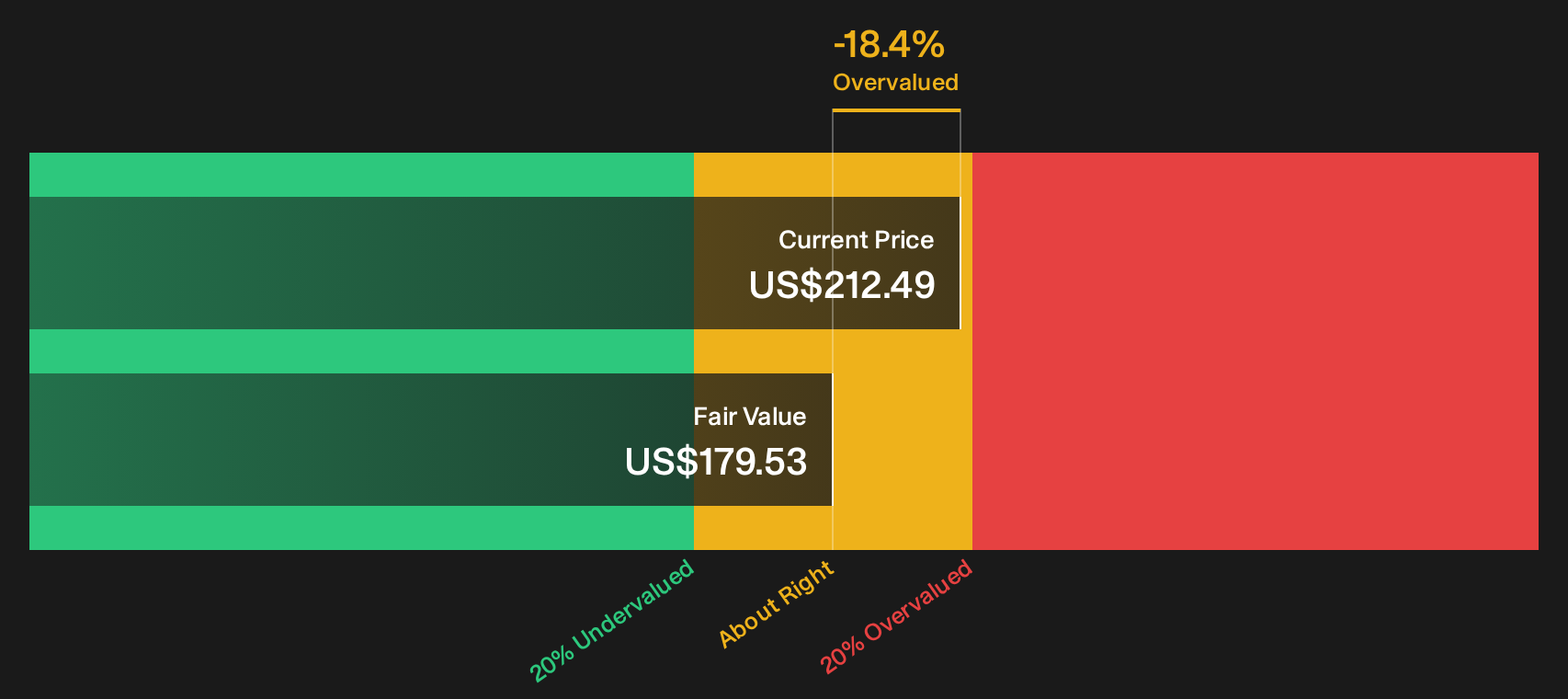
The Discounted Cash Flow (DCF) model here values Brinker International based on its projected cash generation rather than accounting earnings. The latest twelve month free cash flow sits at about $530 million, and the forecast path assumes a generally declining stream of cash flows over the coming years rather than a growth ramp. Using those inputs, the 2 Stage Free Cash Flow to Equity framework points to an estimated intrinsic value of about $180 per share.
Compared with the current share price, that output implies the stock trades roughly 18.4% above the DCF estimate. This gap suggests Brinker International is priced for stronger or more durable cash flows than the model currently assumes, which raises the bar for execution if the valuation is to hold up.
On this cash flow view, the stock currently screens as overvalued.
Our Discounted Cash Flow (DCF) analysis suggests Brinker International may be overvalued by 18.4%. Discover 32 high quality undervalued stocks or create your own screener to find better value opportunities.
Does Brinker International Look Fairly Valued on Earnings?
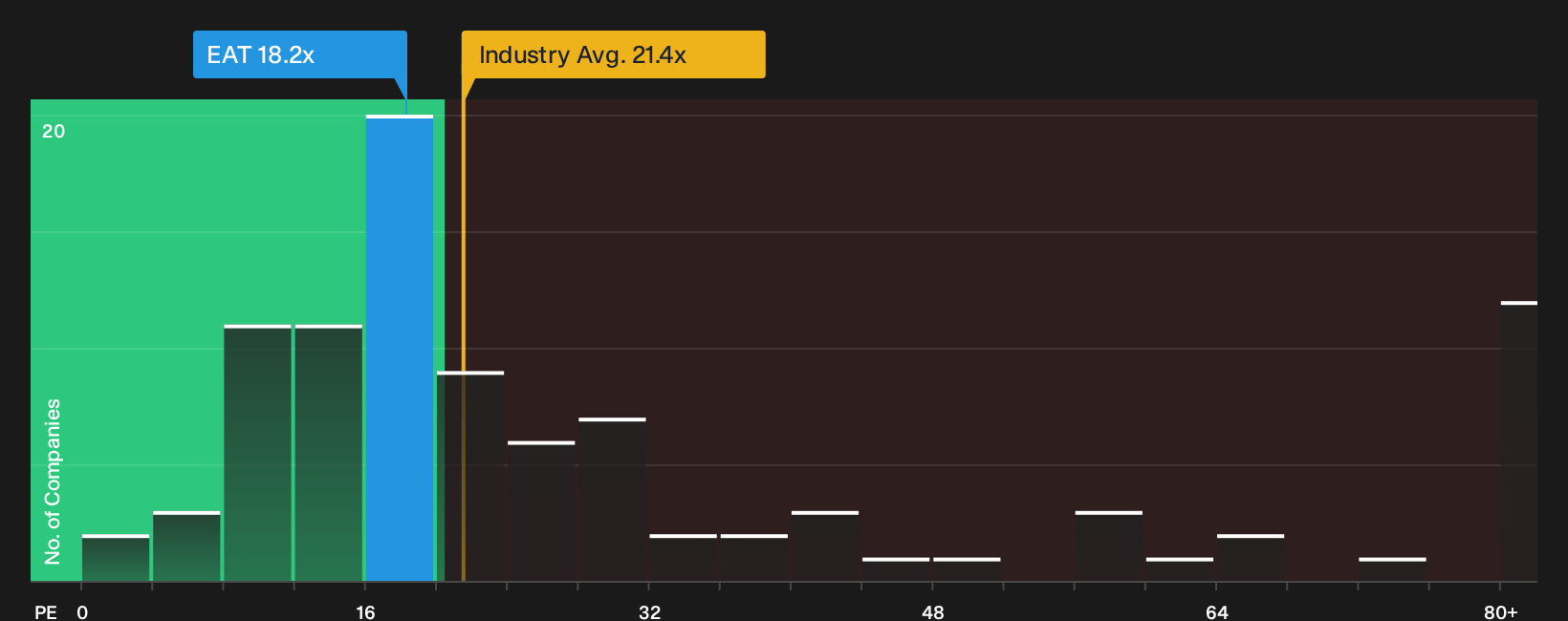
P/E works well for Brinker International because earnings remain the key yardstick most investors use to value mature restaurant operators. On this measure, the stock trades on about 18.2x earnings, which is below the hospitality industry average of roughly 21.4x and far under the peer group average near 52.5x.
The fair P/E ratio based on Brinker International’s profile is estimated at about 20.1x. That is only a small step above where the shares change hands today. The current P/E points to a valuation that neither heavily penalises the business nor awards a big premium for its prospects.
On the P/E yardstick, Brinker International appears priced roughly in line with what the market might expect for this kind of business.
See what the numbers say about this price — find out in our valuation breakdown.
The Brinker International Narrative: What Would Justify Today's Price?
Simply Wall St Narratives pick up where the valuation puzzle for Brinker International leaves off, by explaining which combinations of growth, margins and earnings would need to occur for the shares to be worth materially more or materially less than they are today. Instead of providing a single output from a ratio or model, Narratives describe the future that figure depends on so you can watch how Brinker International's actual progress compares with the story set out on the Community page.
The Brinker International debate splits into two very different stories about what Chili’s momentum and the casual dining model are really worth.
Bull case: 19% undervalued
"Brinker's investments in menu innovation (e.g., upgraded ribs, new chicken sandwiches, beverage innovation) and a sharper focus on core items with broader appeal to younger demographics position it to capture incremental traffic from shifting population and generational consumption patterns, supporting future revenue growth..."
Read the full Bull Case to see why Brinker International could be undervalued
Bear case: 44% overvalued
"The persistent rise of food delivery, meal kits, and in-home dining continues to erode on-premise dining occasions, a revenue segment where Brinker remains heavily over-indexed. Should this trend accelerate, the company risks declining traffic and lower store-level sales productivity, pressuring both earnings and margins..."
Read the full Bear Case to see why Brinker International could be overvalued
Do you think there's more to the story for Brinker International? Head over to our Community to see what others are saying!
The Bottom Line
Brinker International screens as overvalued on a Discounted Cash Flow (DCF) basis, with the current share price sitting above the intrinsic value estimate, while the P/E comparison suggests the stock trades close to what investors are paying for similar restaurant operators. That split reflects a simple tension. Cash flow assumptions in the DCF are more cautious than the earnings multiple implies, after a very strong three year move. The key question from here is whether Brinker International can deliver consistent margins and cash conversion that justify both the higher cash flow expectations and an earnings valuation that is no longer obviously cheap.
This article by Simply Wall St is general in nature. We provide commentary based on historical data and analyst forecasts only using an unbiased methodology and our articles are not intended to be financial advice. It does not constitute a recommendation to buy or sell any stock, and does not take account of your objectives, or your financial situation. We aim to bring you long-term focused analysis driven by fundamental data. Note that our analysis may not factor in the latest price-sensitive company announcements or qualitative material. Simply Wall St has no position in any stocks mentioned.
Have feedback on this article? Concerned about the content? Get in touch with us directly. Alternatively, email editorial-team@simplywallst.com