
- PRICING
- LIVE QUOTES
- LEARN
- HELP


EN
Nvidia’s Jensen Huang Just Delivered a Huge Vote of Confidence to CoreWeave and Nebius
The artificial intelligence infrastructure race is moving from a chip shortage story into a race for something harder to manufacture: data center capacity. Land, electricity, and finished buildings are becoming the bottlenecks as hyperscalers pour hundreds of billions of dollars into AI. That is creating an opening for a new breed of cloud providers that can secure capacity where the largest cloud companies cannot.
At Thursday's Goldman Sachs Communacopia + Technology Conference, Nvidia (NVDA) CEO Jensen Huang made clear that he sees this market expanding for years—and his comments were particularly bullish for CoreWeave (CRWV) and Nebius Group (NBIS).
Nvidia's Neocloud Advantage
Huang said Nvidia remains confident it can deliver roughly 70% year-over-year (YoY) revenue growth next year, even though unconstrained demand is growing at more than 100%. The problem is not customers. It is getting enough power, land, and data centers online. That is where neoclouds enter the picture.
“The power of the neoclouds is this,” Huang said at the conference. “They secure land, power, and shell for us that the CSPs have already exhausted.” He specifically singled out CoreWeave and Nebius, saying both are “doing fantastically.”
That is more than a compliment. It explains why Nvidia is willing to put billions of dollars behind these companies. Nvidia has effectively turned neoclouds into another distribution channel for its AI systems while gaining access to data center capacity that would otherwise be difficult to secure.
CoreWeave Has the Scale—and the Debt
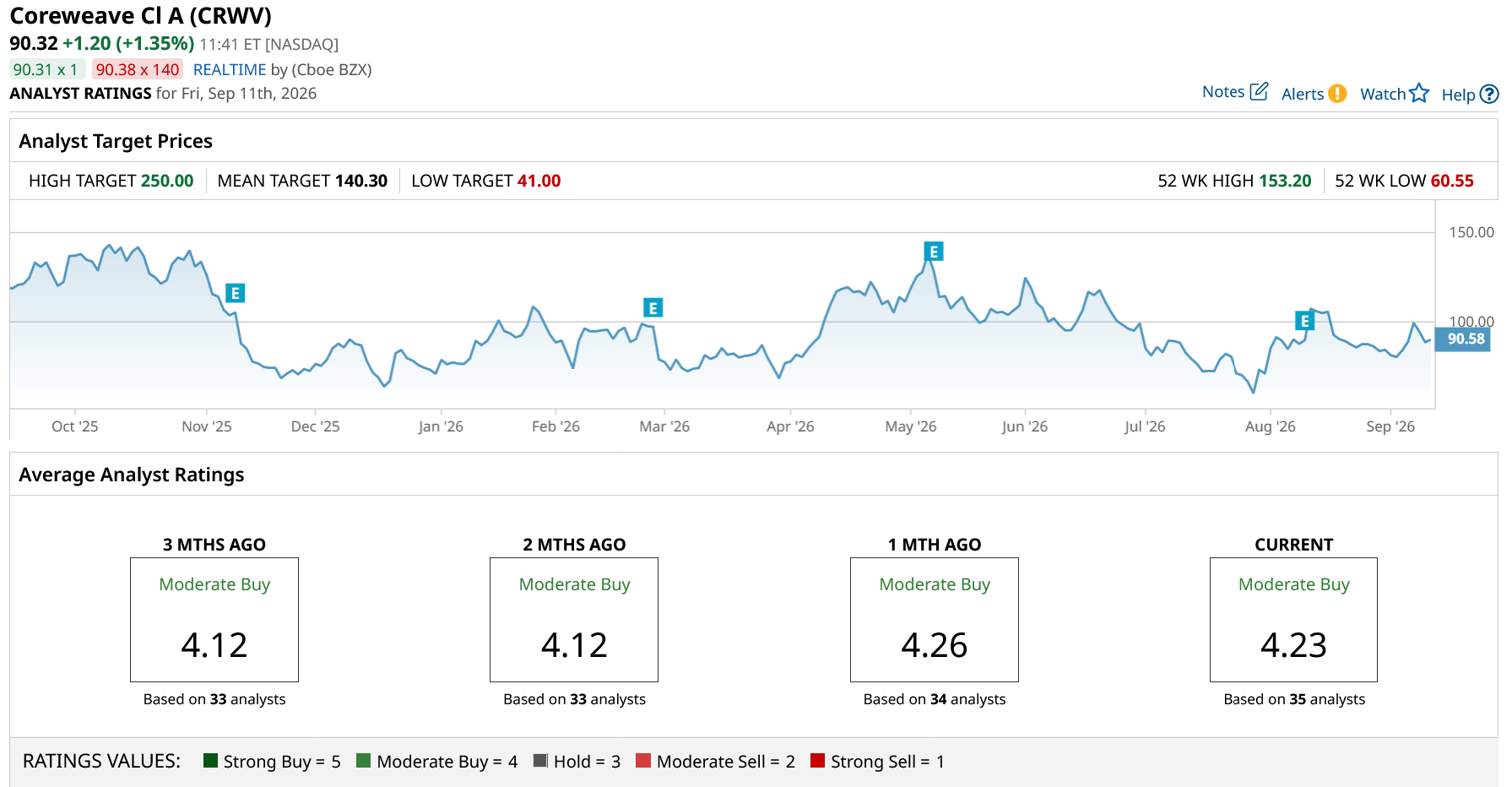
CoreWeave is the larger and earlier-scaled of the two publicly traded neoclouds, having built its AI-cloud business years before Nebius emerged from the Yandex restructuring. Its growth has been extraordinary. According to its second-quarter earnings release, revenue reached $2.58 billion, up from $1.21 billion a year earlier, while its revenue backlog reached $104 billion.
Nvidia put another $2 billion behind that growth in January, purchasing CoreWeave shares at $87.20 apiece. The companies also expanded their relationship to support more than 5 gigawatts of AI factories by 2030, including Nvidia CPUs, storage platforms, and multiple generations of Nvidia systems.
Let's not ignore the other side of the ledger. CoreWeave reported a $626 million net loss in the second quarter and had roughly $33.8 billion of recourse and non-recourse debt as of June 30. Reuters also noted that the company raised its 2026 capital-spending forecast to $35 billion-$39 billion.
The opportunity is enormous, but so is the financing requirement.
Nebius Could Be the Longer-Term Wild Card
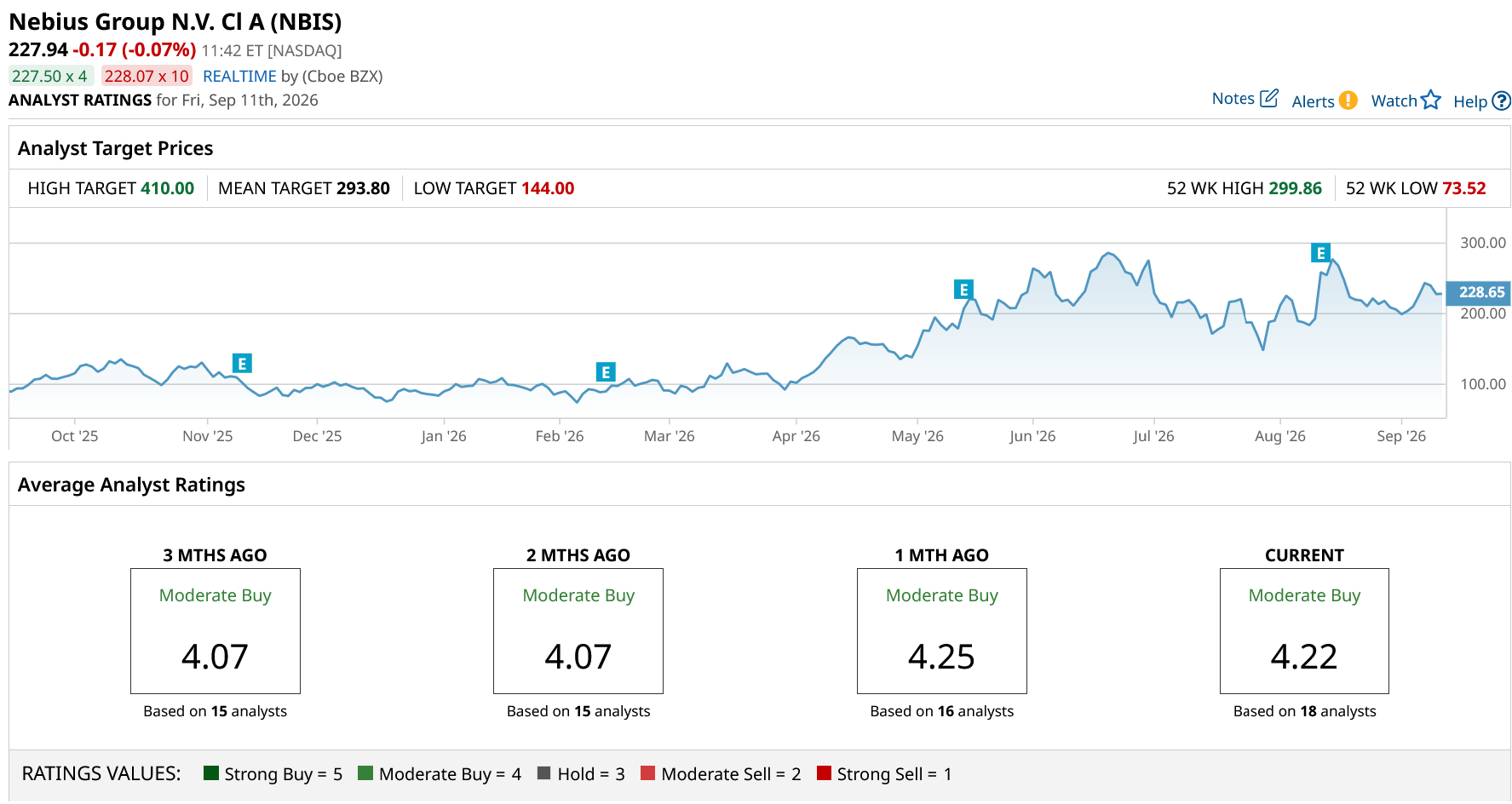
Nebius is earlier in its journey, but its growth numbers are catching up fast. Its second-quarter revenue jumped 454% YoY to $582 million, with AI-cloud-adjusted EBITDA margin reaching 50% and contracted power capacity guidance climbing above 4 gigawatts.
Nvidia committed $2 billion to Nebius in March through a pre-funded warrant covering 21.1 million shares. The partnership targets more than 5 gigawatts of Nvidia systems by 2030.
The neocloud also has substantial contracted demand. Its SEC filings show a potential $27 billion, five-year infrastructure agreement with Meta Platforms (META) and up to $17.4 billion of Microsoft (MSFT) GPU-cloud commitments through 2031.
That gives investors something CoreWeave's early history did not always provide: substantial contracted demand alongside rapidly expanding capacity.
Bottom Line
Huang's comments reinforce the bull case for both neocloud stocks. Nvidia expects AI infrastructure spending to reach $3 trillion to $4 trillion by 2030, and it needs partners capable of turning that spending into functioning data centers.
CoreWeave offers greater scale but carries heavier leverage. Nebius offers faster percentage growth and a large pipeline of contracted capacity.
Granted, both remain capital-intensive businesses vulnerable to financing costs, customer concentration, and an eventual slowdown in AI spending. But Nvidia putting $2 billion into each—while targeting more than 5 gigawatts of deployments with both—is a powerful vote of confidence.
For investors willing to tolerate the risk, CoreWeave looks like the established high-growth bet, while Nebius may offer the more interesting long-term upside.
On the date of publication, Rich Duprey had a position in: NBIS . All information and data in this article is solely for informational purposes. For more information please view the Barchart Disclosure Policy here.