
- PRICING
- LIVE QUOTES
- LEARN
- HELP


EN
3 Defensive Dividend Stocks Worth Watching If Fed Rate Pressure Returns
With markets bracing for a potential Fed rate hike and inflation stuck at 3.4%, investors are again paying close attention to what they actually own, especially when it comes to large U.S. dividend stocks that might handle higher borrowing costs and more volatile policy signals with fewer surprises. This article walks through three defensive dividend stocks from our screener that appear better positioned and explains how the latest Fed backdrop could either help or hurt their appeal.
The three dividend stocks highlighted below are only a sample from this idea, and the full screen surfaced 16 more large U.S. companies with similar income profiles and quality filters that are not covered here but may still deserve a closer look.
To go straight to the source and work through the full list yourself, analyze and compare potential high-conviction opportunities using the U.S. Large-Cap Defensive Dividend Stocks screener.
Elevance Health (ELV)
Elevance Health sits comfortably in the defensive dividend camp, with health insurance and services that rely on recurring premiums rather than economic momentum. This is exactly the kind of earnings profile many investors look for when rate hikes and inflation complicate the outlook for more cyclical sectors.
Elevance Health generates most of its US$201.1b revenue in the United States, led by Health Benefits at about US$169.3b, with Carelon Rx contributing roughly US$44.5b and Carelon Services about US$29.7b. The stock carries a market value near US$90.8b.
"The company is aggressively leveraging advanced analytics, digitization, and AI-enabled tools to streamline clinical workflows, automate processes, reduce fraud, and improve cost management."
What really matters now is how one unresolved pressure on its government programs shapes the path of margins and future dividend headroom.
That margin question is exactly what the full narrative for Elevance Health unpacks. It highlights where Elevance Health’s government exposure could quietly be masking upside in a tougher rate setting.

National Fuel Gas (NFG)
National Fuel Gas leans into the defensive dividend theme through a mix of regulated utility, pipelines, and gas production that can offer steadier cash flows when rates rise and markets punish more rate sensitive stocks. That is exactly why its long term demand story matters.
"Accelerating natural gas demand for baseload power generation, including new data centers, electrification of heating and transportation, and structural shifts in state energy policies, is expected to drive higher and more stable demand for National Fuel Gas's pipeline and utility segments, underpinning predictable revenue and margin growth over the long term."
What really could move the needle for National Fuel Gas is how one unresolved policy and pricing tension ultimately feeds through to cash generation.
National Fuel Gas operates a vertically integrated model that ties together gas production, pipes, storage, and end customers. This fits the screener’s focus on large, income oriented businesses with generally lower volatility and some insulation when higher borrowing costs pressure more cyclical areas of the market.
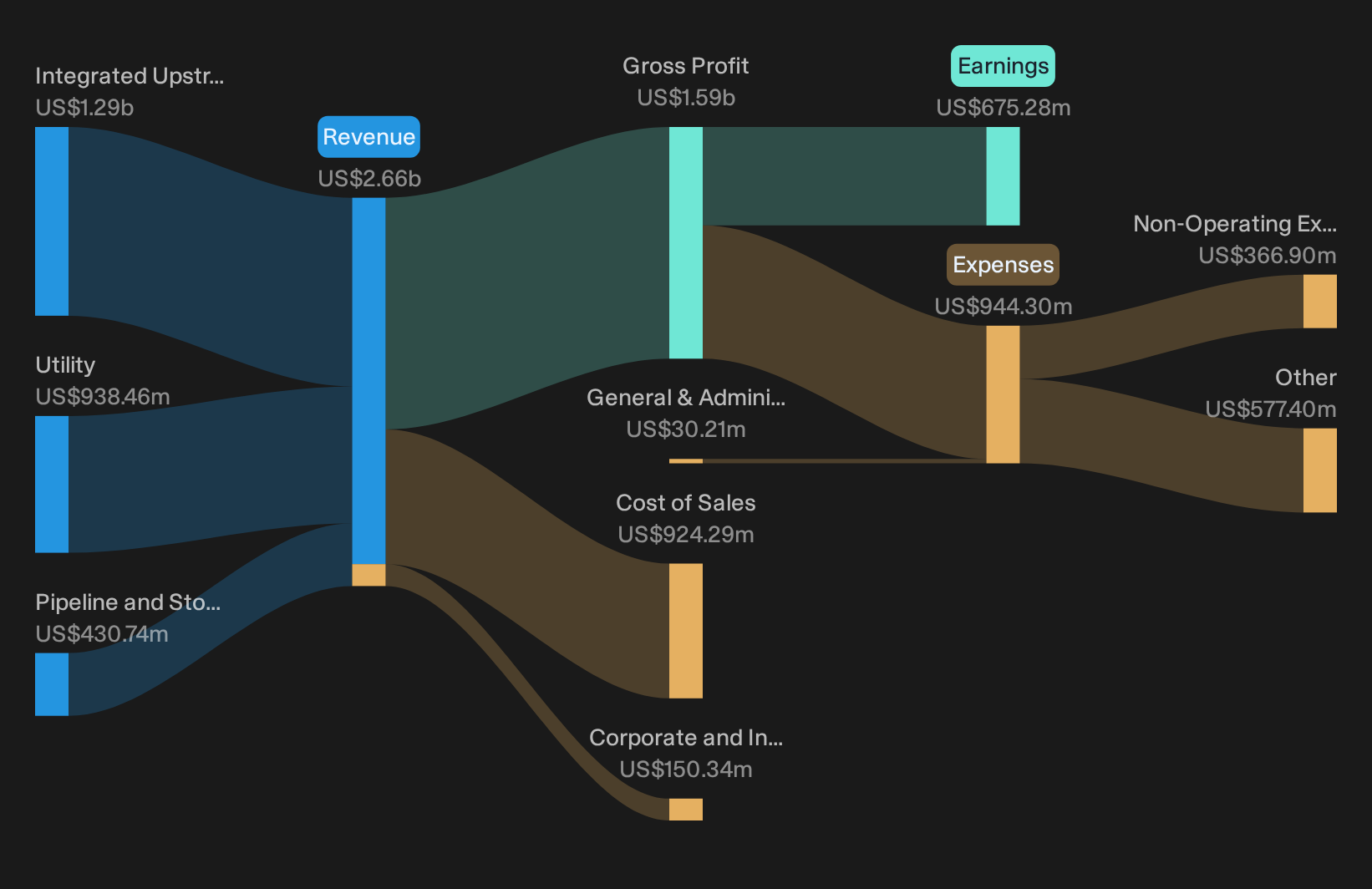
The Integrated Upstream and Gathering arm is the biggest contributor, with about US$1.3b in revenue, while the Utility segment adds roughly US$938 million and Pipeline and Storage brings in around US$431 million, all from U.S. operations, supporting a total business valued near US$7.7b.
How that policy and pricing question resolves is exactly what the full narrative for National Fuel Gas lays out, revealing where accelerating demand could be masking both risk and upside.
Hormel Foods (HRL)
Hormel Foods brings classic consumer-staples income to this defensive dividend screen, with everyday brands that tend to hold shelf space even when rates rise and growth stocks feel the heat. This is why the current push into healthier products and sharper execution really matters.
"Hormel's active modernization, innovation, and investment in healthier, leaner, and natural products (e.g., Jennie-O, Applegate, renovation of core brands) aligns with consumers' rising emphasis on health and wellness, helping preserve pricing power and protect or expand net margins in the future."
What happens to that carefully built margin story if one key input cost or pricing assumption moves against Hormel Foods at the wrong time?
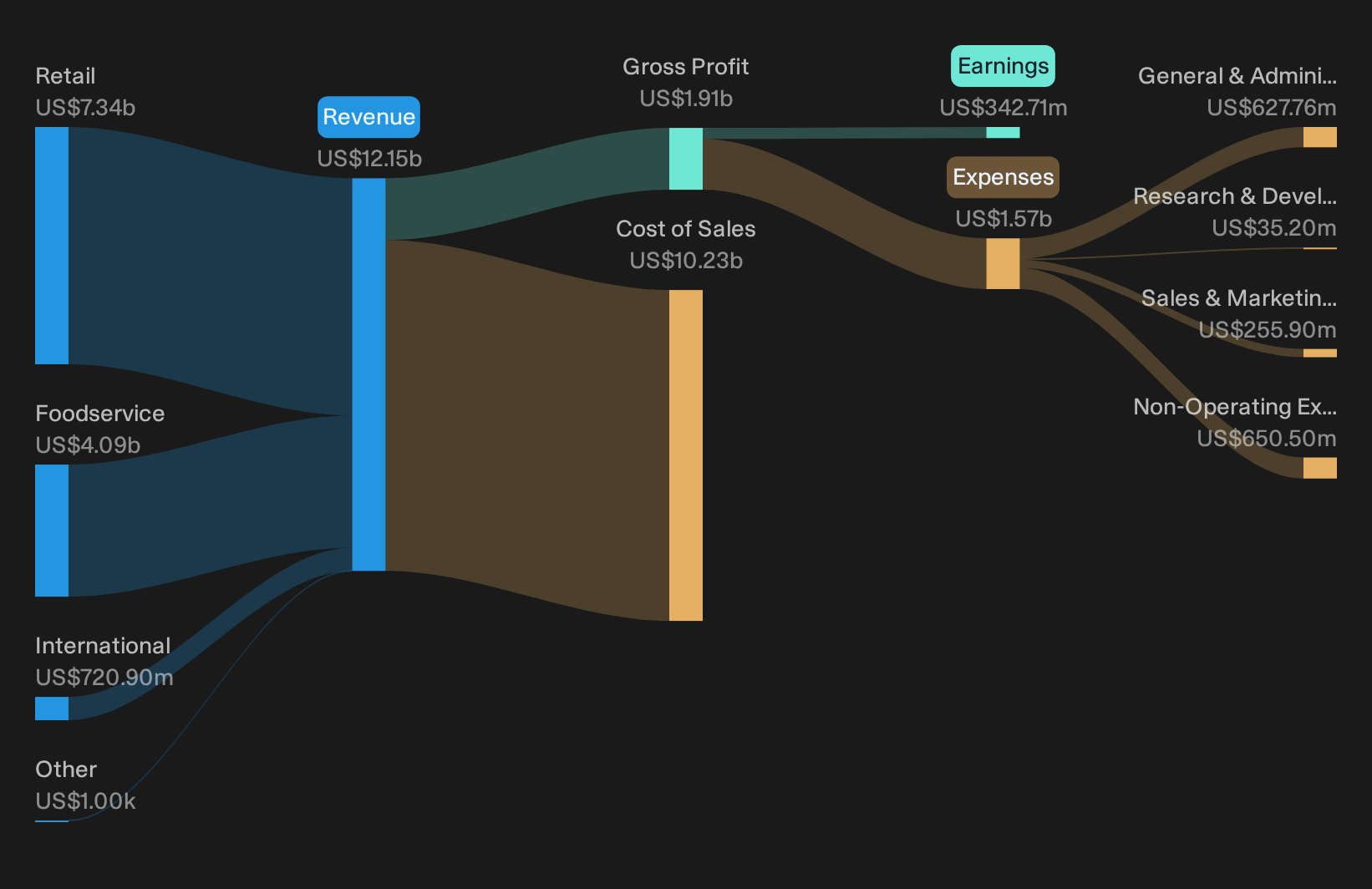
Hormel Foods is a long-established U.S. packaged foods producer. Its mix of meat, nut, and shelf-stable brands fits the screener’s defensive, dividend-oriented theme, with about US$7.3b from Retail, US$4.1b from Foodservice, US$721 million from International, and a roughly US$11.3b market value.
If that pressure point worries you, read the full narrative for Hormel Foods for how Hormel Foods could keep margins accelerating while key costs and pricing power push against each other.
Seeking Fresh Alternatives Beyond Dividends
Market leadership can flip fast as new themes gain momentum and older stories lose steam. Scan fresh ideas before they get crowded, while the data still matters, and get in early.
- Spot quiet income workhorses with strong cash generation and robust balance sheets by reviewing the list of solid balance sheet and fundamentals (23 results) before rising interest costs get fully priced in.
- Chase early strength in machine learning enablers by scanning the 89 AI infrastructure stocks while many investors are still focused only on headline AI platforms.
- Track companies riding infrastructure and demand shifts in electricity by assessing the 39 power grid technology and infrastructure stocks before grid upgrades and policy moves are fully reflected in valuations.
This article by Simply Wall St is general in nature. We provide commentary based on historical data and analyst forecasts only using an unbiased methodology and our articles are not intended to be financial advice. It does not constitute a recommendation to buy or sell any stock, and does not take account of your objectives, or your financial situation. We aim to bring you long-term focused analysis driven by fundamental data. Note that our analysis may not factor in the latest price-sensitive company announcements or qualitative material. Simply Wall St has no position in any stocks mentioned.
Have feedback on this article? Concerned about the content? Get in touch with us directly. Alternatively, email editorial-team@simplywallst.com