
- PRICING
- LIVE QUOTES
- LEARN
- HELP


EN
How Investors Are Reacting To ageas (ENXTBR:AGS) MAHB Stake Sale Completes
- Ageas has completed the sale of its 30.95% stake in Maybank Ageas Holdings Berhad to Maybank for €1.1b, generating a €464m net capital gain after tax and valuing the Malaysian joint venture at €3.5b.
- The deal lifts Ageas's Solvency II ratio by 23 percentage points and gives the insurer more room to allocate capital across dividends, investments and possible future deals.
- This article examines how Ageas's investment narrative is reshaped by this €1.1b disposal and the step up in solvency strength.
Scan how ageas is reshaping its balance sheet after this €1.1b disposal, then compare it with our hand picked 99 resilient stocks with low risk scores for stronger capital positions and financial resilience.
ageas Investment Narrative Recap
To own ageas, you need to be comfortable with an insurer leaning on capital strength, disciplined underwriting and a growing Asia contribution, while consensus expects earnings to decline on average 7.3% a year in the near term. The MAHB sale improves solvency, but does not change that the key short term swing factor is execution in core European and Asian insurance operations.
The biggest operational risk still sits around integration of esure and Saga and the potential for higher U.K. claims inflation to squeeze the combined ratio from 2026. The Malaysia exit reduces capital intensity, yet it does not remove exposure to interest rate, regulatory and tax shifts in Asia that could weigh on margins and cash generation.
The MAHB disposal sits next to an existing investment case that already leaned on a strong balance sheet and healthy capital generation, with a Solvency II ratio previously referenced at about 205% on a pro forma basis. Extra solvency headroom from the sale simply gives ageas more optionality in how it funds dividends, integration costs and any future repositioning of its portfolio.
Without other fresh announcements tied directly to this move, the most relevant context remains the expected shift toward more capital efficient participating life products in Asia and the ongoing integration of U.K. acquisitions. For you as a shareholder, the key question is whether management can translate this added financial flexibility into stable underwriting quality, consistent dividends around 4.99% and delivery against its existing revenue growth expectations of roughly 9.4% a year.
ageas' current analyst script points to revenues of €15.6b and earnings of €1.5b by 2029. That reflects forecast top line growth of 13.7% a year and an earnings decline of €0.4b from €1.9b today to the 2029 consensus level.
Uncover how ageas' fair value indicates a 3% potential downside to its current price, suggesting that the current premium may not be sustainable.
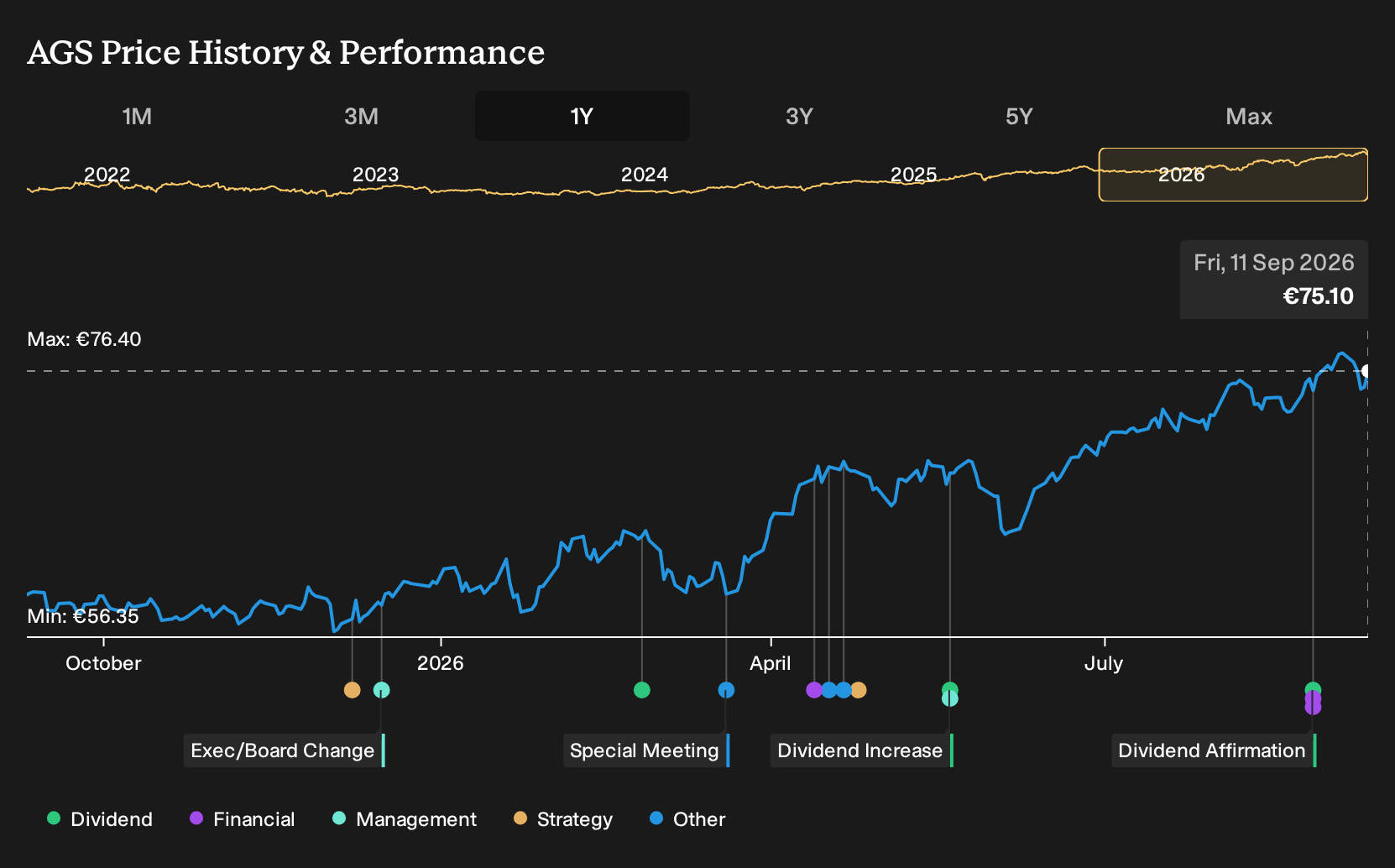
Exploring Other Perspectives
Six fair value views from the Simply Wall St Community span roughly €72.76 to €182.76 a share, showing how far apart private investors can be on ageas. These pre sale estimates sit alongside risks around integration, Asian rate trends and regulation. Use that spread to pressure test your own thesis and explore alternative angles.
Explore 5 other ageas fair value estimates, including one that suggests it could be worth just €72.76.
Decide For Yourself
Disagree with existing narratives? Extraordinary investment returns rarely come from following the herd, so go with your instincts.
- A great starting point for your ageas research is our analysis highlighting 4 key rewards and 1 important warning sign that could impact your investment decision.
- See our latest analysis for ageas. The report includes a comprehensive fundamental analysis summarized in a single visual, the Snowflake, making it easy to evaluate ageas' overall financial health at a glance.
Looking for more investment ideas beyond ageas?
After you have formed a view on ageas, it often helps to widen the lens and compare it with other businesses that fit different risk and income profiles. The Simply Wall St Screener gives you a structured way to do that without having to build your own filters from scratch.
- If capital preservation is high on your list, start by weighing ageas against a 99 resilient stocks with low risk scores that focuses on resilient balance sheets and steadier risk profiles.
- For investors who want income potential, compare that dividend from ageas with a 161 dividend fortresses that already clears a 5% yield hurdle.
- If you are hunting for future compounders rather than incumbents, contrast the ageas story with a 619 high quality undiscovered gems that pairs strong fundamentals with lower market attention.
This article by Simply Wall St is general in nature. We provide commentary based on historical data and analyst forecasts only using an unbiased methodology and our articles are not intended to be financial advice. It does not constitute a recommendation to buy or sell any stock, and does not take account of your objectives, or your financial situation. We aim to bring you long-term focused analysis driven by fundamental data. Note that our analysis may not factor in the latest price-sensitive company announcements or qualitative material. Simply Wall St has no position in any stocks mentioned.
Have feedback on this article? Concerned about the content? Get in touch with us directly. Alternatively, email editorial-team@simplywallst.com