
- PRICING
- LIVE QUOTES
- LEARN
- HELP


EN
Want to Thrive No Matter What the Market Does? Here's the One Move History Says You Must Make.
Key Points
The most successful investors maintain a long-term perspective.
Those who avoid panic selling have the best chance of prospering.
Spreading investments across various sectors and regions can enhance the stability of your portfolio.
Thriving no matter what the market does is less about trying to predict what might happen next and more about making a single choice: to commit to a long-term, diversified, and automated investing plan and stick with it, no matter what's going on. History clearly indicates that this single move has helped legions of investors build substantial wealth.
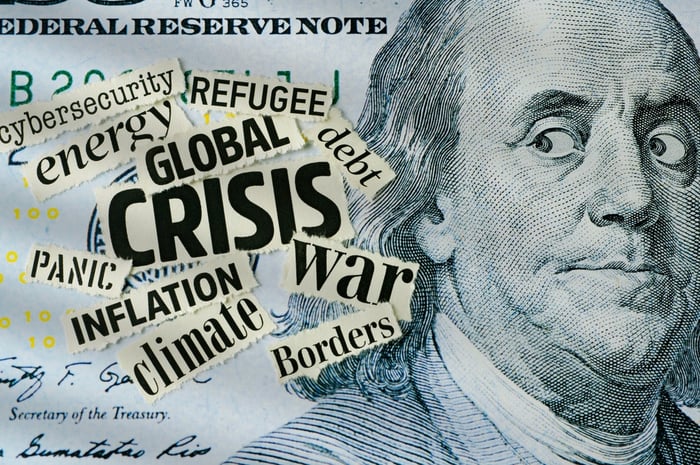
Image source: Getty Images.
Missed Nvidia in 2009? This Rare Signal Is Flashing Again. In 2009, a "Double Down" signal flashed for a little-known chipmaker called Nvidia. For the first time in years, that same "Total Conviction" signal is flashing for a company 1/100th the size of Nvidia. Continue »
What history rewards
Decades of market data indicate that investors who invest regularly and stay the course are the ones who come out ahead -- and there's good reason for that. Since 1928, the S&P 500 (SNPINDEX: ^GSPC) has experienced 27 bear markets. These have an average decline of roughly 35% and an average duration of 289 days, or 9.6 months.
After many others have pulled their money out of the market, and before anyone knows the market is about to rebound, a surprising thing happens: The market shoots back up. In fact, about 42% of the S&P 500's strongest performance days over the past 20 years have occurred during a bear market. Another 36% of the market's hottest days occurred in the first two months of a bull market, before it was clear one had arrived.
Keeping your funds invested can reward your patience as the market recovers.
Why sticking with the market through highs and lows works
Let's say you decide to set up automatic contributions to a diversified portfolio of low-cost index funds or exchange-traded funds (ETFs) and you never stop. Here's why you're likely to thrive -- even during market downturns.
- Diversification: By making contributions to a diversified portfolio, you're spreading your investments across asset classes, sectors, and regions. That diversification ensures no single shock can entirely upend your portfolio.
- Dollar-cost averaging: By investing a fixed amount at regular intervals, you're able to buy more shares when prices are low and fewer when prices are high. This smooths out volatility over time.
- Compound growth: Staying invested when others leave the market allows your returns to compound over time, which history shows is the real engine of wealth.
- Investment discipline: With an automatic plan in place, you're less likely to make impulsive decisions based on the latest headlines or the panic other people appear to be dealing with. Since your strategy doesn't depend on short-term predictions, you can let your investments ride rather than continually asking yourself if you're doing the right thing.
If history has shown anything, it's that the market will go up and down. Given that 42% of the S&P 500's strongest days over the past 20 years occurred during bear markets, sticking with your investment plan means it's your investments that are most likely to benefit.
Dana George has no position in any of the stocks mentioned. The Motley Fool has no position in any of the stocks mentioned. The Motley Fool has a disclosure policy.