
- PRICING
- LIVE QUOTES
- LEARN
- HELP


EN
Radware (RDWR) Stock Could Be 44% Overvalued As Cyber Threats Surge
Radware stock has delivered a solid 66.5% gain over the past three years, yet current valuation checks suggest the shares trade at a premium to what its cash flows and peer comparisons imply. The Discounted Cash Flow (DCF) intrinsic value estimate and market multiple view both point to Radware looking expensive at recent levels.
- Around 66.5% total return over three years can attract momentum focused buyers; however, it also raises the bar for any new investors hoping for a similar outcome.
- Fresh attention on Radware's Global Threat Analysis work, including the reported jump in Web DDoS and AI driven attacks, can support growth expectations. At the same time, rising cyber risk and reliance on effective security execution may increase uncertainty around future cash flows.
- A low value score, with the company screening as undervalued in 0 of 6 checks, suggests Radware does not screen as a clear bargain on the broader valuation framework used by Simply Wall St investors often track. The score is discussed at 0.
For investors, the debate is whether Radware's current share price already reflects the growth and cyber risk trends highlighted in its threat research, or if the premium over intrinsic value leaves limited room for disappointment.
Balance your view on Radware by scanning a curated list of 11 resilient stocks with low risk scores that may offer a different mix of compounding potential and downside protection.
Does Radware Look Pricey on Cash Flow?
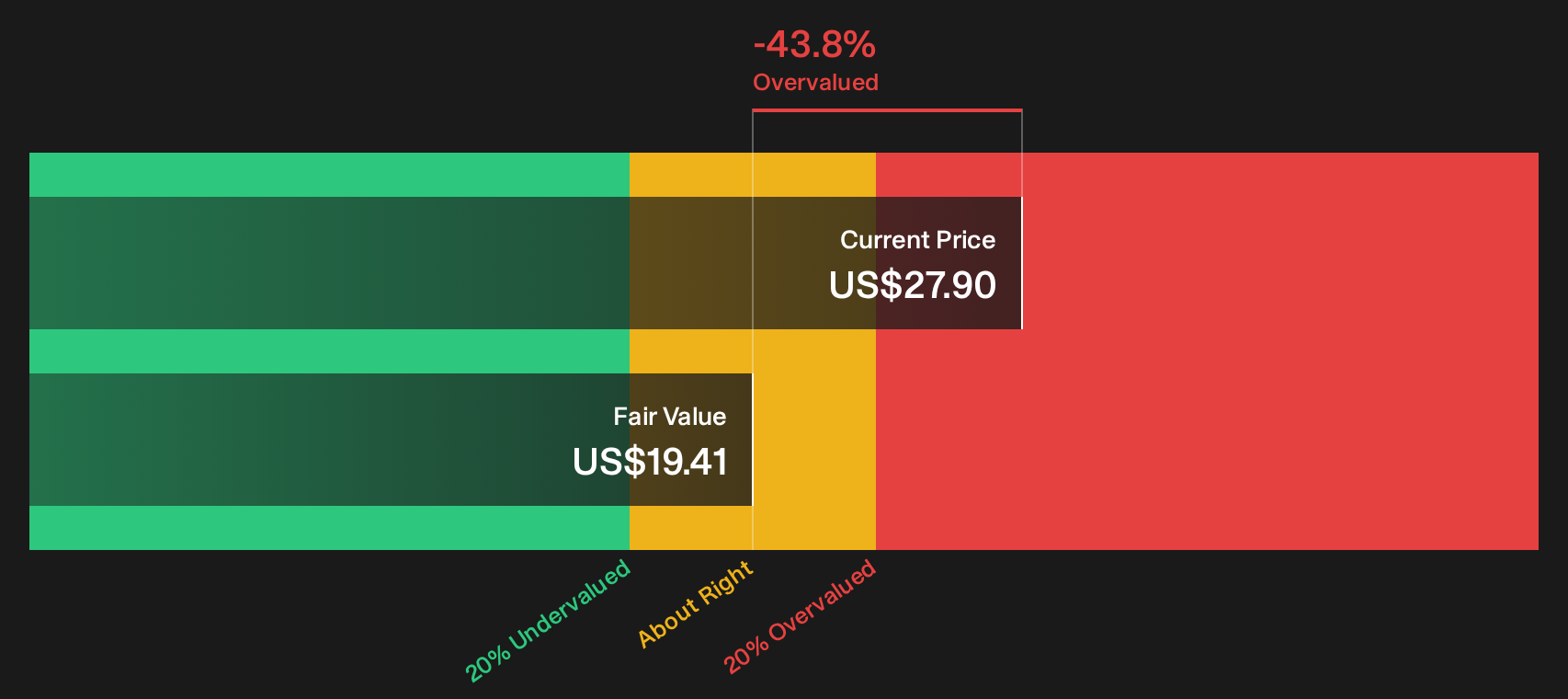
The Discounted Cash Flow (DCF) model values Radware by projecting future free cash flows and bringing them back to today. On this framework, the business is built on relatively modestly growing cash generation, with latest twelve month free cash flow of about $34.4 million and analyst assumptions that point to gradually higher figures over time. Running those projections through a 2 Stage Free Cash Flow to Equity model produces an estimated intrinsic value of about $19.41 per share.
That estimate sits well below the recent market price, which implies an intrinsic discount of roughly 43.8% and leaves Radware screening as overvalued on this cash flow view. Radware’s H1 2026 Global Threat Report, which highlights a sharp escalation in Web DDoS and AI driven attacks, helps explain why investors may be willing to pay a premium for the stock despite the DCF pointing lower.
On the DCF numbers alone, Radware stock currently looks overvalued relative to the cash flows embedded in this model.
Our Discounted Cash Flow (DCF) analysis suggests Radware may be overvalued by 43.8%. Discover 31 high quality undervalued stocks or create your own screener to find better value opportunities.
Is Radware Getting Expensive on Earnings?
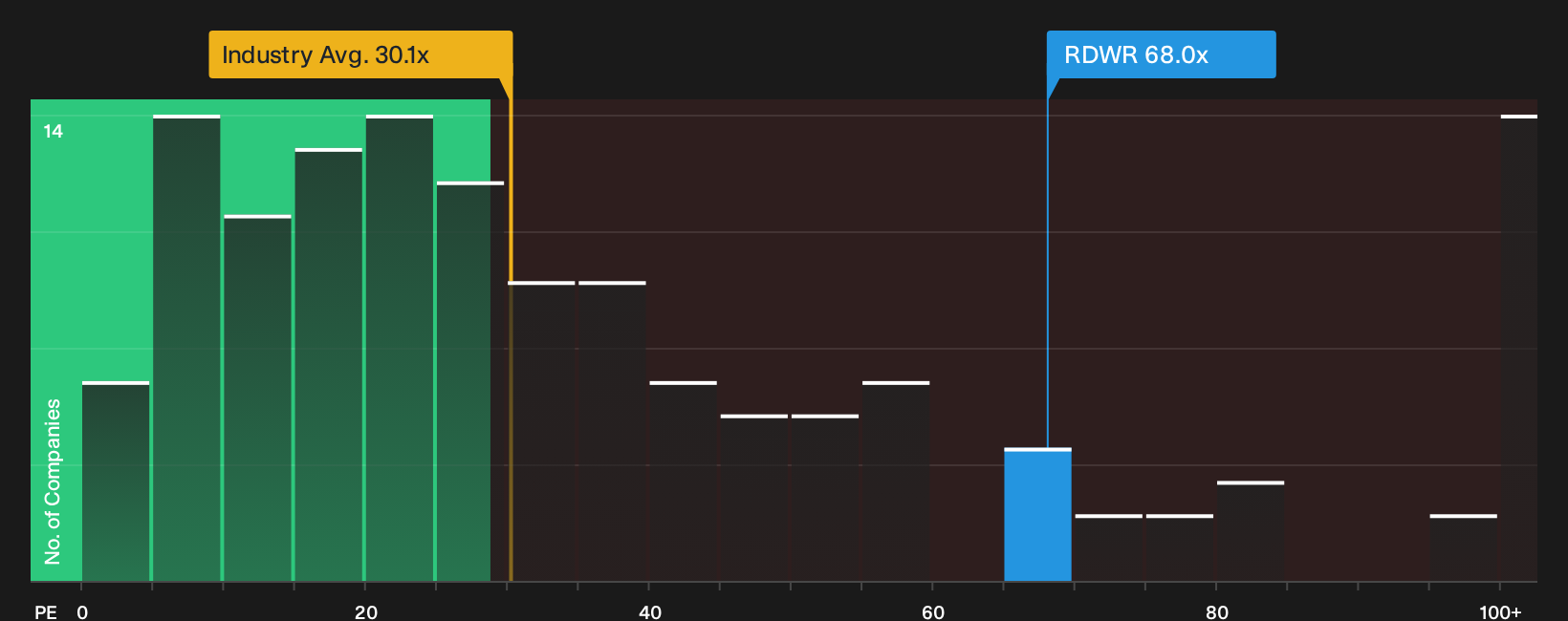
P/E works well for Radware because earnings are a key anchor for how investors view established software vendors. On this lens, the stock trades on a P/E of about 68.0x, compared with roughly 30.1x for the wider software industry and a peer average of about 25.9x. That is a sizeable premium for Radware given the sector it operates in.
The gap suggests buyers are paying a high price for each dollar of current earnings in Radware. The recent Global Threat Analysis work and focus on Web DDoS and AI driven attacks help explain interest in the business. However, the earnings multiple already embeds strong expectations compared with many listed software peers.
On the P/E yardstick alone, Radware stock appears clearly overvalued relative to both industry and peer benchmarks.
See what the numbers say about this price — find out in our valuation breakdown.
The Radware Narrative: What Would Justify Today's Price?
Radware Narratives on Simply Wall St pick up where the valuation puzzle leaves off by spelling out which assumptions on growth, profitability and earnings would need to hold for the stock to be worth significantly more or less than the current share price on the Community page. Rather than relying on a single P/E or DCF line, each scenario lays out the building blocks behind its fair value view so you can compare those inputs with Radware's actual results as they are reported.
Share a Radware Narrative to be one of the first voices in the Simply Wall St community to lay out a number driven case and track how it holds up as fresh results land. If you have a clear view on whether Radware's H1 2026 Global Threat Analysis work and the sharp jump in Web DDoS activity supports today's pricing, spell it out so others can test your thesis against the next few reporting cycles.
Do you think there's more to the story for Radware? Head over to our Community to see what others are saying!
The Bottom Line
Radware screens as overvalued on both the Discounted Cash Flow (DCF) intrinsic value estimate and its earnings multiple, so the current tag already builds in a rich set of expectations. That alignment across methods means the key question is not whether it is cheap, but whether the business can keep justifying a premium as cyber risk stays in focus. For potential buyers, the crux is whether future execution and cash generation match the high bar implied by today’s price, or whether any stumble on growth, margins or security leadership would force the valuation closer to more typical software peers.
This article by Simply Wall St is general in nature. We provide commentary based on historical data and analyst forecasts only using an unbiased methodology and our articles are not intended to be financial advice. It does not constitute a recommendation to buy or sell any stock, and does not take account of your objectives, or your financial situation. We aim to bring you long-term focused analysis driven by fundamental data. Note that our analysis may not factor in the latest price-sensitive company announcements or qualitative material. Simply Wall St has no position in any stocks mentioned.
Have feedback on this article? Concerned about the content? Get in touch with us directly. Alternatively, email editorial-team@simplywallst.com