
- PRICING
- LIVE QUOTES
- LEARN
- HELP


EN
Focus on the trade fair | Qifu Mathematics Zhou Xuqiang: “One Horizontal N Vertical” AI Matrix Boosts the Financial Industry from Intelligence to Intelligence
The Zhitong Finance App learned that on September 9, the China International Trade in Services Fair (trade fair for short) was held in Beijing. The conference attracted more than 90 countries and international organizations to set up exhibitions, and more than 1,800 companies participated offline. At this trade fair's financial services topic - the 8th China Fintech Exchange Conference, Zhou Xuqiang, CEO of Qifu Mathematics, delivered a keynote speech, sharing the “one horizontal and N vertical” enterprise-level AI office platform and application intelligence matrix practices for the banking industry, and exploring digital intelligence innovation paths in the financial industry.
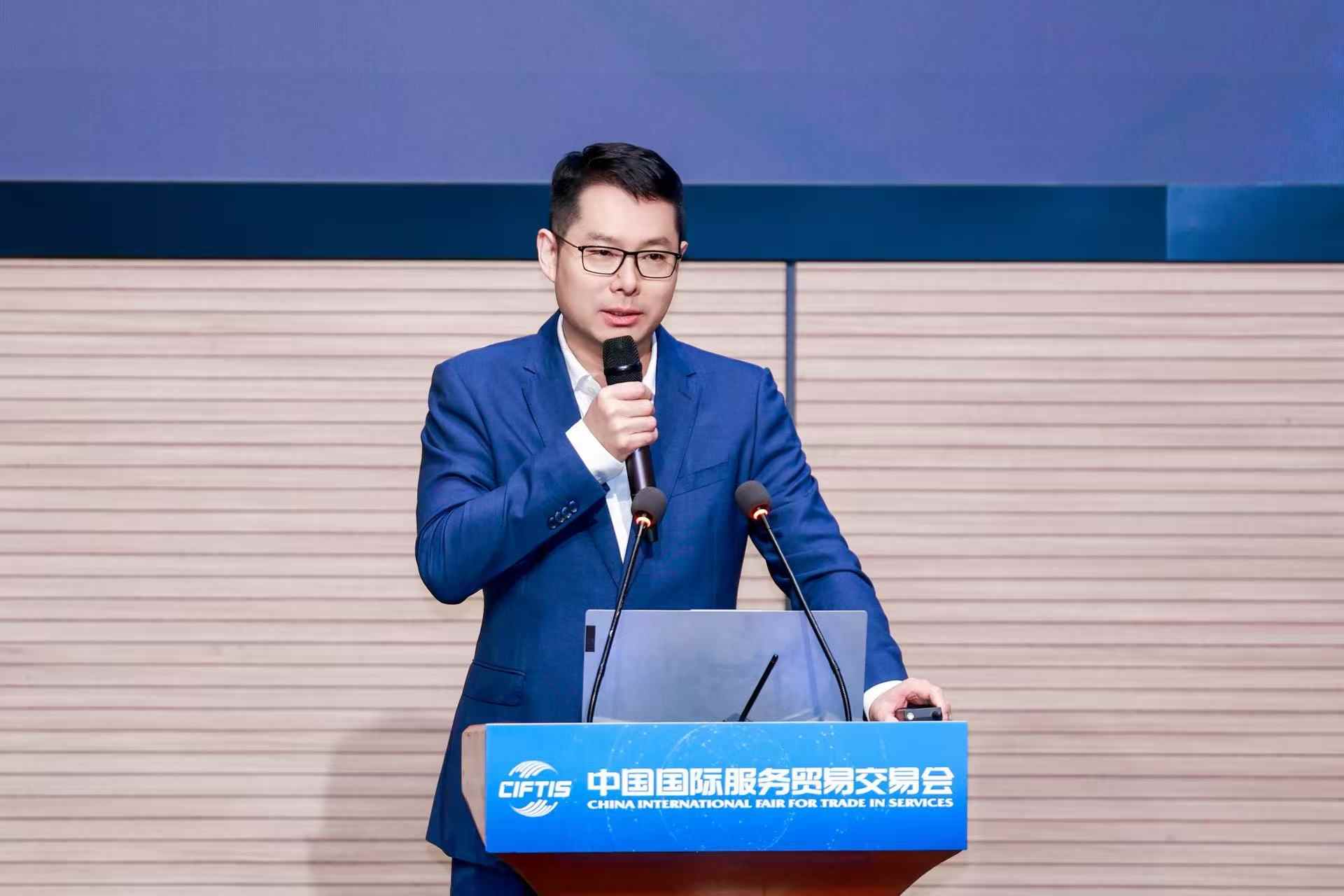
Figure 1. Zhou Xuqiang of Qifu Mathematics delivered a keynote speech at the 8th China Fintech Exchange Conference
In his speech, Zhou Xuqiang said that in the past 20 to 30 years of informatization construction in the banking industry, whether it was system development or model construction, it relied heavily on the intellectual input of experts. Today, by combining AI models with intelligent devices, it is already possible to deposit the intelligence of experts into intelligence, so that more internal employees and account managers have expert level professional abilities. Based on this concept, Qifu Math has built a “one horizontal N vertical” full-stack AI solution.
“One horizontal”: Qwork, an enterprise-level AI office platform, allows AI to reach every employee safely
The so-called “one horizontal” is Qwork's enterprise-grade AI office platform. The platform was built in-house by QFIN.US (03660), and has now been tested by thousands of employees within Qifu Technology. In the future, Qifu Math will bring these internally verified capabilities and experience to more financial institutions.
Through MCP and API agreements, Qwork has connected multiple internal business systems such as email, OA, instant collaboration, cloud documents, data platforms, risk control systems, operation systems, delivery systems, and even manpower, finance, and administration. Qifu Technology has sorted out more than 200,000 cloud documents internally, all of which are connected to the Qwork platform for AI to use.
The platform has four core capabilities: basic model routing, agent platform routing, permission management, and AI security gateway, which greatly reduces the usage threshold for employees to safely call the large model, taking into account data security and AI productivity.
Employees can issue instructions through natural language to complete complex tasks such as summarizing business data and analyzing customer situations. In his speech, Zhou Xuqiang demonstrated two practical examples of Qwork: one is for AI to automatically generate a PPT based on all cloud documents, past presentation materials, and local files for which it has permission; the other is for AI to summarize past emails, Teams group messages, and T5T system records to automatically analyze the current most valuable bank customers and banks with the most service issues. The conclusions are completely consistent with manual analysis.
“N vertical”: intelligent matrix for multiple vertical scenarios, covering the bank's core business
“N Vertical” is an application intelligence matrix built around core business scenarios in the banking industry, covering the two main battlefields of credit and risk control, marketing and growth. According to reports, Qifu Mathematics has formed a multi-agent system including AI due diligence officers, AI modelers, AI strategists, AI anti-fraud agents, AI loan officers, AI wealth managers, AI supervisors, AI operators, and AI growth officers. At present, a multi-agent system for credit and risk control has been implemented in a national joint-stock bank, and a multi-agent marketing and growth agent has also been implemented in a listed bank in the East China region.
Among them, AI strategists can go through the whole process of data access, knowledge base and strategic skill base construction, data cleaning and understanding, strategy generation, deployment verification, and continuous monitoring. It has four major values: one is to make strategy development easy to use; two is to improve efficiency, which is far higher than the speed of traditional strategy development; third, to achieve simultaneous quality improvement. AI can automatically screen high-value features, eliminate redundant variables, and allow all candidate variables to fully participate in model training to generate more accurate and robust strategies; fourth, experience can be passed on, and strategy logic is transferred from the human brain to intelligence, which can be reused and iterated.
AI anti-fraud agents, on the other hand, focus on case review in credit anti-fraud scenarios. They can automatically scrape scattered, multi-format data from customer acquisition systems, risk control systems, collection records, decision engines, and even necessary external source systems to perform case analysis, cross-case aggregation analysis, gang relationship mining, etc., shortening manual investigations that used to take hours or even weeks to a few minutes, and automatically generate new anti-fraud candidate rules for manual decision-making.
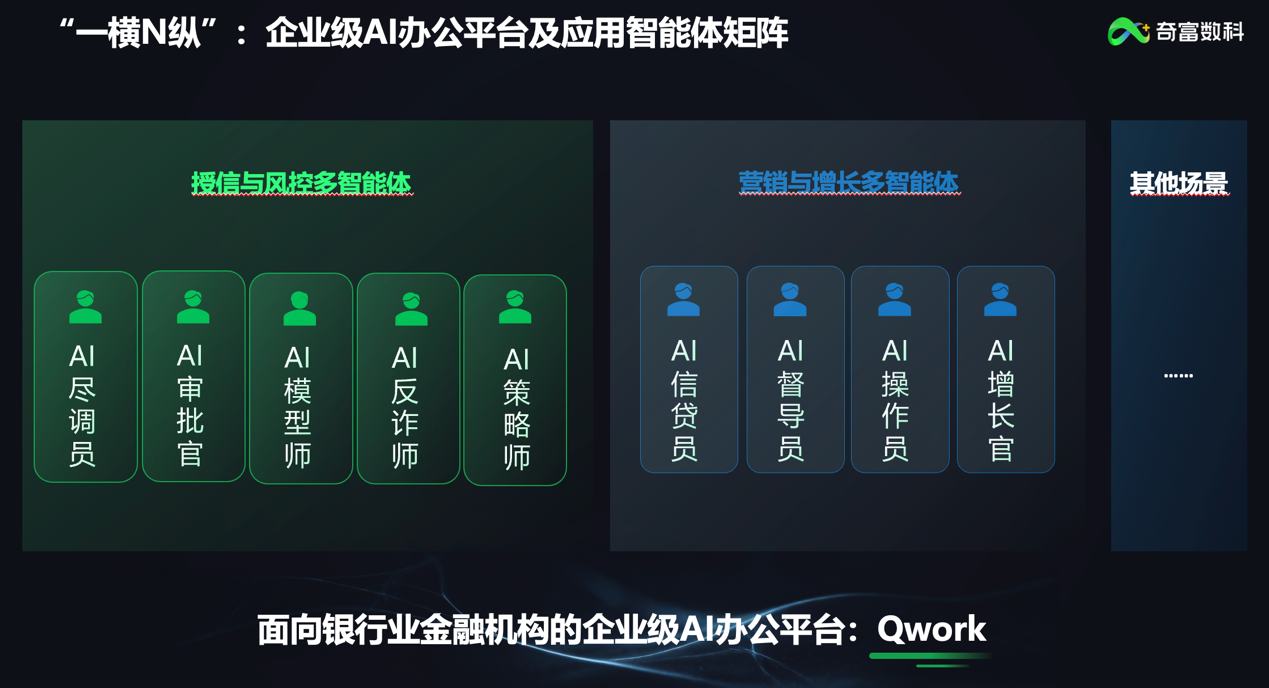
Figure 2. Qifu Mathematics's “one horizontal and N vertical” enterprise-level AI office platform and application agent matrix
Zhou Xuqiang said that the core idea of Qifu Mathematics is to deposit intelligence that relied on expert brains in the past into reusable, inheritable, and evolvable intelligence through smart matrices, so that more financial institutions — especially small and medium-sized banks that lack high-level experts — can obtain richer and more advanced specialized capabilities. Qifu Math will continue to use platform-based platforms and scenario-based intelligent two-wheel drive to promote AI in the financial industry from being usable to easy to use, and from shallow use to deep application.