
- PRICING
- LIVE QUOTES
- LEARN
- HELP


EN
Will Custom AI Chip Deal Change Amazon Stock Narrative
- Amazon.com and Qualcomm Technologies recently agreed a multi-generation collaboration to build custom AI inference chips and high-speed optical connectivity for Amazon Web Services data centers, targeting large-scale AI workloads.
- The deal links Amazon’s AI infrastructure demand directly to Qualcomm’s silicon roadmap and share warrants, tying long-term chip purchases to deeper technical and financial integration in cloud hardware.
- Now we will look at how Amazon's custom AI chip push with Qualcomm could reshape its broader investment narrative and risk profile.
Scan how the AI arms race is rippling beyond Amazon.com into other potential beneficiaries by reviewing the hand-picked 55 AI infrastructure stocks.
Amazon.com Investment Narrative Recap
How Recent Moves Fit Amazon.com's Bigger Picture
Owning Amazon.com today means believing that heavy AI and cloud spending eventually supports healthier earnings from AWS, advertising and a leaner retail operation. The near term hinge point is whether AWS can turn huge capital outlays on data centers and custom chips into consistent, high margin demand. The new fixed income offering in sterling helps fund that build without tapping equity, so it affects capital structure more than day to day performance. The most immediate pressure point remains execution risk at AWS, where rising competition and costs could squeeze returns on this spending.
At the same time, labor actions, regulatory scrutiny and logistics incidents keep operational risk in focus. Strikes at key facilities and the recent Prime Air crash highlight how wage costs, safety investments and compliance can all push expenses higher. For a shareholder, the simple test is whether Amazon.com can keep improving fulfillment efficiency and pricing power fast enough to offset that drag. If it can, the current AI heavy investment cycle looks more like a bridge than a wall. If not, the balance between growth and free cash flow starts to look much less comfortable.
Why The New Bond Deal Matters More Than The Headline
The freshest event that ties closest to Amazon.com's Qualcomm chip partnership is the debut sterling bond sale. Management raised about £4.25b to help fund AI infrastructure at a time when capital expenditure plans for 2026 sit around US$220b. That combination brings the key short term catalyst and risk into the same frame. AWS needs massive capacity to support demand for generative AI services. Funding that through debt keeps equity dilution limited but increases sensitivity to higher interest costs and any slowdown in AI related workloads.
Investors have already seen Big Tech issuance surge, with commentary pointing out that these borrowers now compete directly with governments for long dated capital. Amazon.com is part of that wave. The Qualcomm collaboration tells you the cloud unit is leaning hard into custom silicon and optical networking to stay relevant in AI. The bond program tells you how that bet is being paid for. Execution on both fronts, technology deployment and balance sheet management, will shape whether this spending phase eventually feeds into the margin and free cash flow story that many holders are counting on.
Even so, there is one structural pressure building under all this AI optimism that only really comes into focus when you look at ...
Read the full Amazon.com narrative to see the case behind these numbers.
Amazon.com's narrative projects US$1,152.4b revenue and US$158.3b earnings by 2029, which lines up with analyst assumptions of 14.1% yearly revenue growth and implies an earnings increase of about US$23.0b from US$135.3b today.
Amazon.com's forecasts point to $327.00 versus $256.97, indicating a potential 27% upside to its current price that could close sooner than many expect.
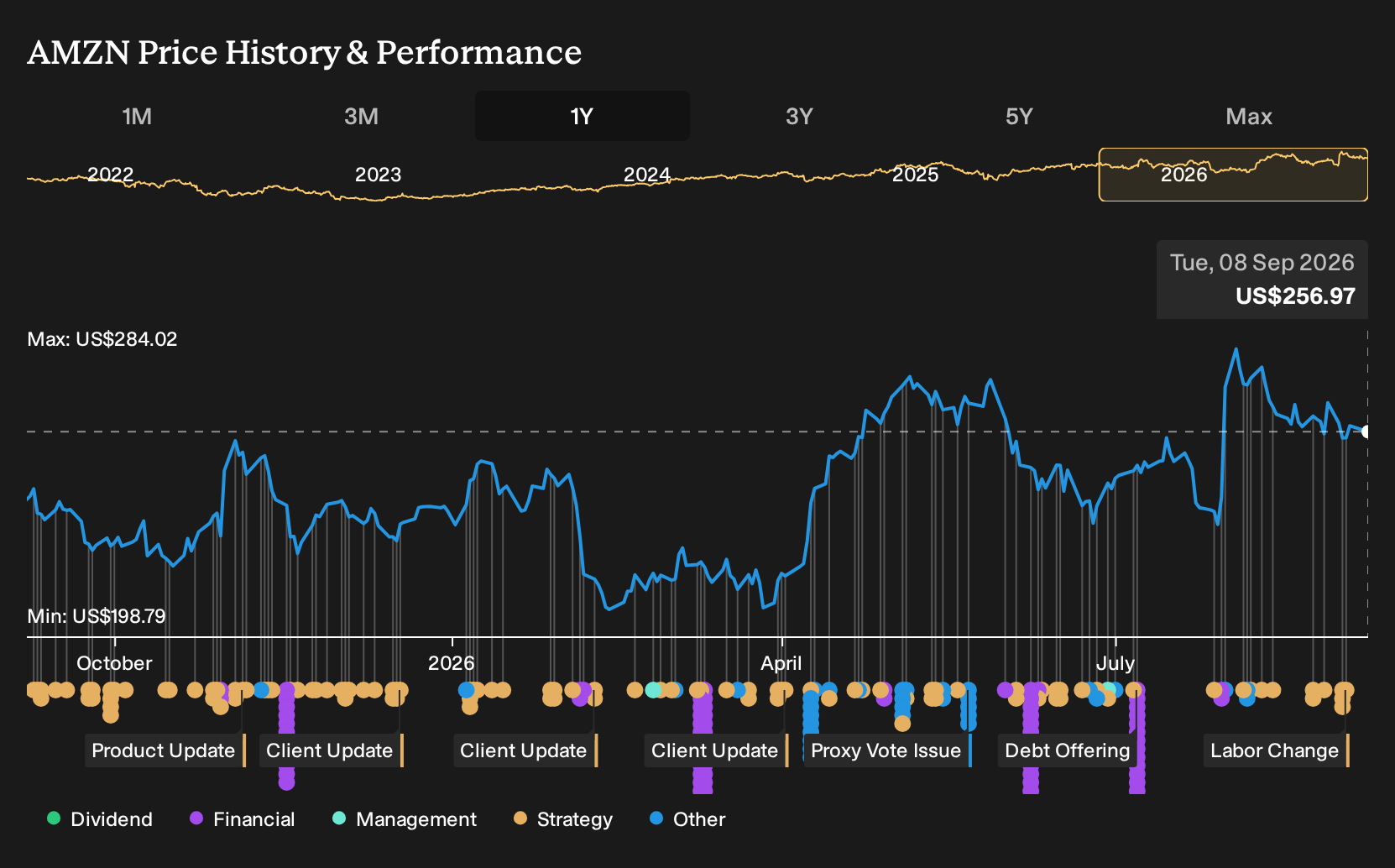
Exploring Other Perspectives
Fair value estimates for Amazon.com from the Simply Wall St Community stretch from US$240 up to about US$475 across 55 individual models, so you are seeing everything from deep discount calls to rich premium cases. When you put those side by side with rising AI capex, new Qualcomm-linked chip commitments and fresh sterling debt, it is clear opinions can diverge sharply. Use that spread as a prompt to examine multiple community views before deciding how this AI and cloud heavy story fits your own risk tolerance.
If you want to see how other investors frame Amazon.com today, compare your view against the 54 other fair value estimates for Amazon.com.
Reach Your Own Conclusion
Don't just follow the ticker. Dig into the data and build a conviction that's truly your own.
- A great starting point for your Amazon.com research is our analysis highlighting 4 key rewards and 2 important warning signs that could impact your investment decision.
- See our latest analysis for Amazon.com. The report includes a comprehensive fundamental analysis summarized in a single visual, the Snowflake, making it easy to evaluate Amazon.com's overall financial health at a glance.
Looking For More Investment Ideas Beyond Amazon.com?
Once you have a view on Amazon.com, it can help to compare it with other opportunities that match different risk and income profiles. The Simply Wall St Screener lets you quickly filter for businesses that fit what you are actually looking for instead of whatever happens to be in the headlines.
- If capital preservation and steadier returns matter most to you, start by reviewing a group of 82 resilient stocks with low risk scores that have been filtered for lower overall risk scores.
- If income is a priority and you want payouts that meaningfully supplement returns, scan a curated set of 6 dividend fortresses with yields above 5%.
- If you prefer earlier stage opportunities with solid numbers behind them, check out a focused 17 high quality undiscovered gems that score well on fundamentals but attract less attention.
This article by Simply Wall St is general in nature. We provide commentary based on historical data and analyst forecasts only using an unbiased methodology and our articles are not intended to be financial advice. It does not constitute a recommendation to buy or sell any stock, and does not take account of your objectives, or your financial situation. We aim to bring you long-term focused analysis driven by fundamental data. Note that our analysis may not factor in the latest price-sensitive company announcements or qualitative material. Simply Wall St has no position in any stocks mentioned.
Have feedback on this article? Concerned about the content? Get in touch with us directly. Alternatively, email editorial-team@simplywallst.com