
- PRICING
- LIVE QUOTES
- LEARN
- HELP


EN
How A Planned SpaceX Stake At EchoStar (ECHO) Has Changed Its Investment Story
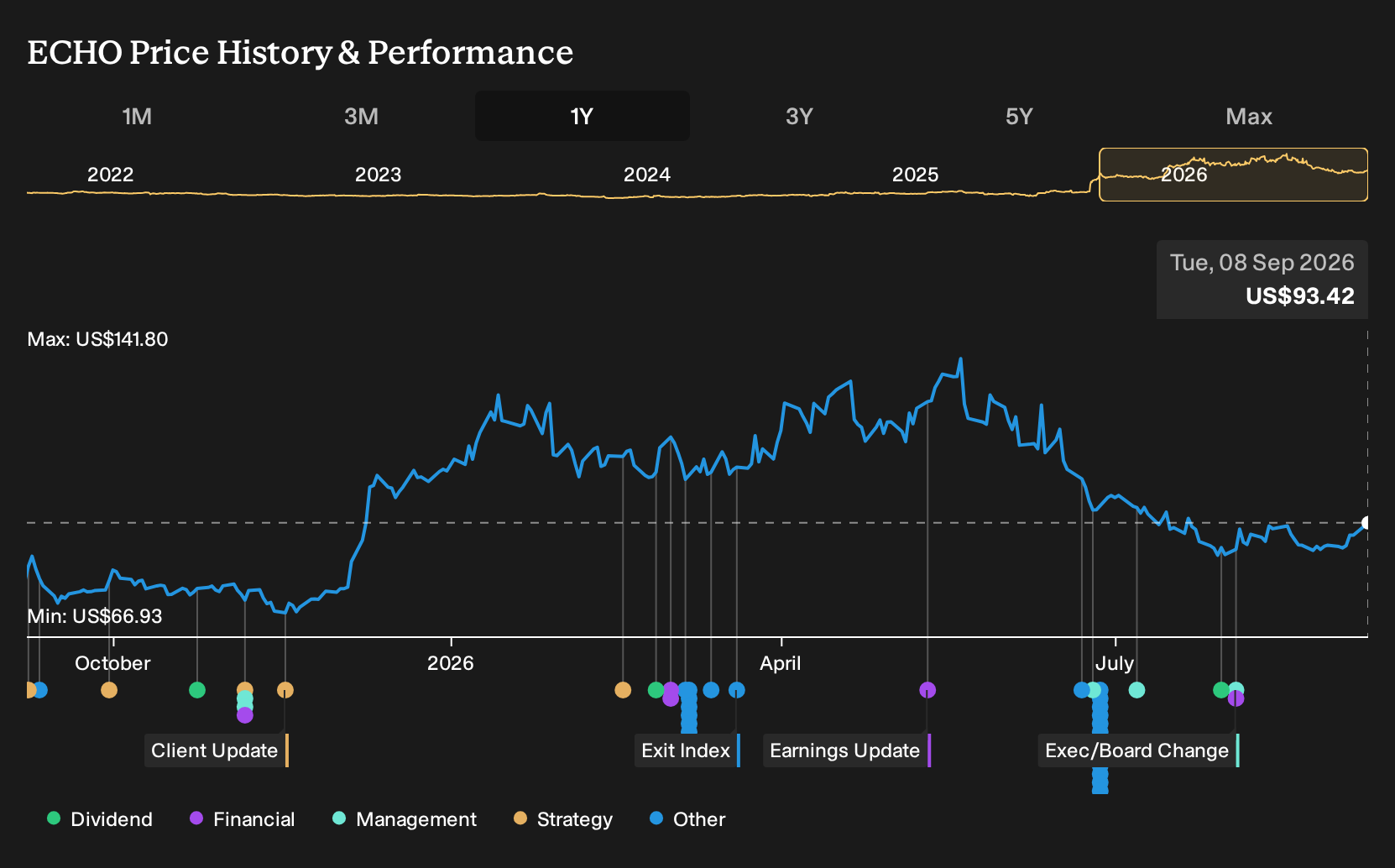
- EchoStar recently drew fresh attention after UBS resumed coverage, highlighting how the business is tying its future to a planned 2% equity position in SpaceX as part of a broader push in satellite connectivity.
- The focus on that SpaceX stake puts a spotlight on how EchoStar might use partnerships and equity interests to support capital intensive network plans and spectrum monetisation efforts.
- Next comes a closer look at how EchoStar’s planned 2% interest in SpaceX could reshape the existing investment narrative around the stock.
EchoStar Investment Narrative Recap
For EchoStar, the core belief is that its satellite and wireless assets can be reshaped into a viable integrated connectivity platform while legacy pay TV and broadband decline. The key near term catalyst remains progress on funding and executing the wideband LEO direct to device network and broader spectrum monetisation, because this has to work against a backdrop of falling Pay TV and Broadband and Satellite Services revenue and ongoing losses. UBS putting fresh attention on the planned 2% SpaceX stake highlights an option on that story but does not change the immediate execution and funding risk.
The planned 2% interest in SpaceX is the announcement that really ties into this latest move in EchoStar shares. That minority holding gives the business direct financial exposure to a leading LEO operator while it commits about US$5b to its own constellation and grapples with less than one year of cash runway and sizeable debt maturities. Investors now have to weigh the potential validation and partnership avenues that association may support against the very real risk that execution, funding terms or regulatory decisions still derail the underlying plan.
Even so, there is a practical complication around EchoStar that rarely shows up in the headline story.
Read the full EchoStar narrative to see the case behind these numbers.
EchoStar's current analyst narrative points to revenue of US$13.2b and earnings of US$775.8m by 2029, based on a projected 3.4% yearly revenue decline and a swing in earnings of about US$6.5b from a loss of US$5.7b today.
EchoStar's forecasts place fair value at $128.43 versus $93.42, a 37% upside to its current price that could narrow quickly.
Exploring Other Perspectives
One alternate angle on EchoStar puts the DISH merger synergies front and centre. The most optimistic analysts were modelling about US$13.6b of revenue and US$1.7b of earnings by 2029, compared with consensus forecasts of US$13.2b and US$775.8m. Those projections all predate the SpaceX news, so views may shift. You can compare these competing stories and decide which assumptions feel realistic.
To see how other investors are framing EchoStar's potential, compare the consensus view with 6 other fair value estimates for EchoStar.
Decide For Yourself
Disagree with existing narratives? Extraordinary investment returns rarely come from following the herd, so go with your instincts.
- A great starting point for your EchoStar research is our analysis highlighting 2 key rewards and 1 important warning sign that could impact your investment decision.
- See our latest analysis for EchoStar. The report includes a comprehensive fundamental analysis summarized in a single visual, the Snowflake, making it easy to evaluate EchoStar's overall financial health at a glance.
Looking for more EchoStar style investment ideas?
If this EchoStar story has you thinking about what else might be out there, use the Simply Wall St Screener to filter for companies that match the kind of risk, income, or value profile you want in your portfolio.
- If capital preservation is high on your list, start with a set of 82 resilient stocks with low risk scores that score well on resilience and downside control.
- For investors looking for quality at a reasonable price, consider a 49 high quality undervalued stocks that combines solid fundamentals with compressed expectations.
- Income focused readers can narrow the field to a 6 dividend fortresses that aims to pair higher yields with more durable cash generation.
This article by Simply Wall St is general in nature. We provide commentary based on historical data and analyst forecasts only using an unbiased methodology and our articles are not intended to be financial advice. It does not constitute a recommendation to buy or sell any stock, and does not take account of your objectives, or your financial situation. We aim to bring you long-term focused analysis driven by fundamental data. Note that our analysis may not factor in the latest price-sensitive company announcements or qualitative material. Simply Wall St has no position in any stocks mentioned.
Have feedback on this article? Concerned about the content? Get in touch with us directly. Alternatively, email editorial-team@simplywallst.com