
- PRICING
- LIVE QUOTES
- LEARN
- HELP


EN
Learn Why The Bull Case For VeriSign Stock Could Change Following Monopoly Lawsuit
- In September 2026, a class-action lawsuit was filed against VeriSign and ICANN alleging an illegal monopoly in the .com registry market, excessive wholesale fees, and anticompetitive contractual terms that allegedly lock in VeriSign’s control.
- The complaint highlights that VeriSign’s .com operating margins exceed 67% and cites bipartisan concern that high registry fees burden more than 150 million .com domain holders worldwide.
- We will now look at how allegations of an entrenched .com monopoly and elevated margins may reshape VeriSign’s longer term investment narrative.
Compare VeriSign’s alleged monopoly-style economics with other companies that appear to be priced for more competition by scanning our curated list of 49 high quality undervalued stocks.
VeriSign Investment Narrative Recap
To own VeriSign, you need to be comfortable with a concentrated, high margin registry franchise built on the .com and .net contracts. The lawsuit goes straight at that foundation. The short term story still revolves around whether domain registration trends, renewal behavior and pricing terms in existing agreements hold up while the legal process plays out. The biggest current swing factor is how stable the .com cash engine remains. The key risk is that regulators or courts eventually constrain pricing or contract renewal, which could pressure those 67% operating margins and the cash returned through dividends and buybacks.
The most relevant recent datapoint is not a fresh announcement, but VeriSign’s own disclosures about economics. Management has indicated registry costs of roughly US$3 per .com domain and wholesale prices of US$10.26, with 2025 cash returns to shareholders above US$1b through dividends and repurchases. That spread is now central to the legal challenge. For you as a holder or prospective holder, the question is whether that pricing structure and capital return pattern remain intact, or whether a reset would slow earnings progress that analysts currently model at mid single digit rates.
That said, there is one structural wrinkle in VeriSign’s setup that could matter far more if the legal pressure intensifies...
Read the full VeriSign narrative to see the case behind these numbers.
VeriSign's current analyst narrative points to revenues of US$2.1b and earnings of US$1.1b by 2029, based on an assumed 7.4% yearly revenue growth rate and a move from US$850.0m in earnings today to that US$1.1b figure. This implies an earnings increase of about US$250m over the period.
VeriSign's forecasts puts fair value at $321.40 compared with $292.08, representing a 10% difference from its current price that may not persist.
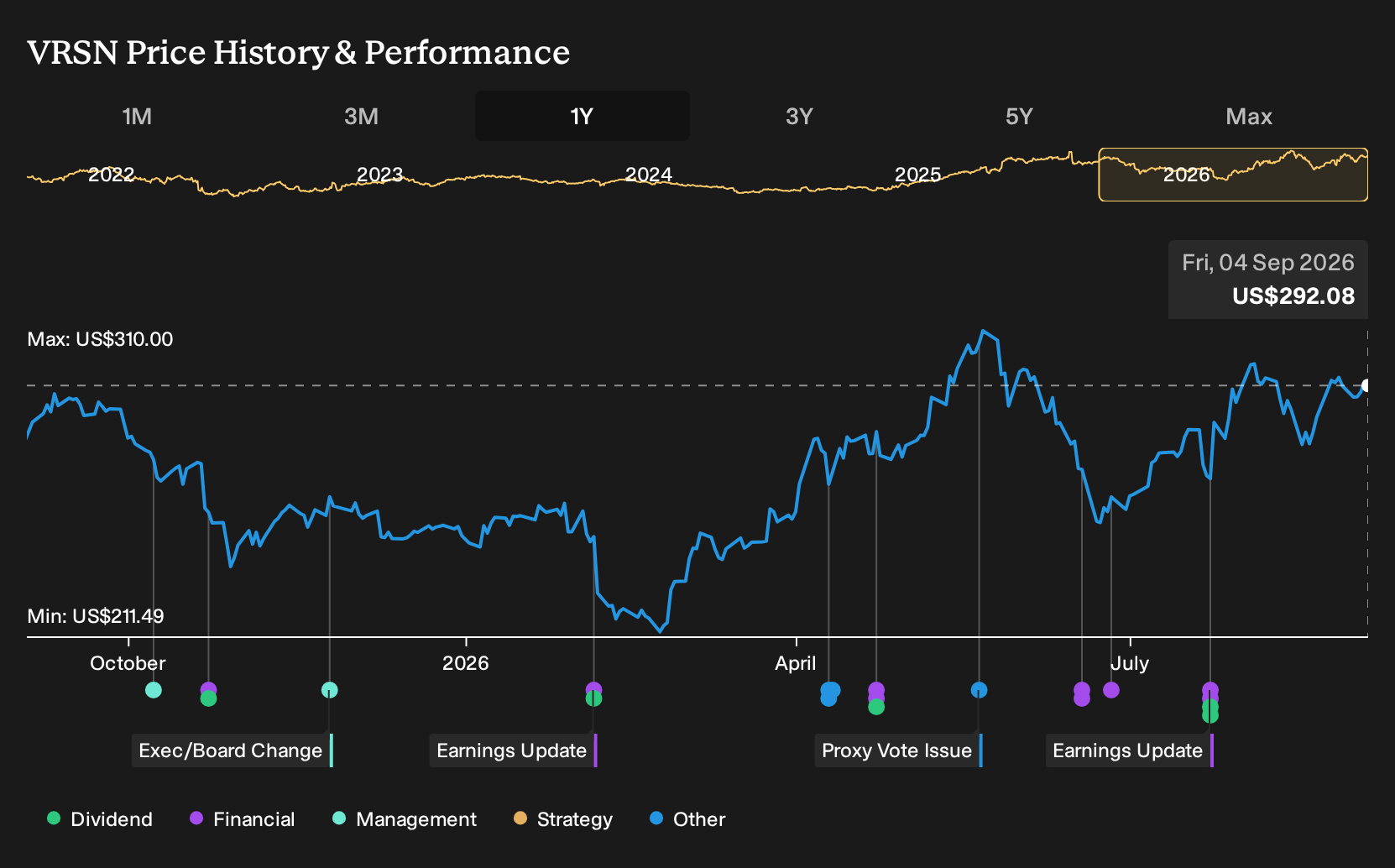
Exploring Other Perspectives
One alternate view on VeriSign focuses on technology risk. The most cautious analysts worry that blockchain style domains and walled gardens could limit traditional .com demand. Their pre lawsuit models already assumed slower revenue growth of 4.6% and earnings of about US$964.5m by 2029. You should expect opinions to shift as this case unfolds, so explore several different narratives before deciding what feels reasonable to you.
If you want a second opinion on what VeriSign might be worth, check out the 5 other fair value estimates for VeriSign.
The Verdict Is Yours
Disagree with existing narratives? Extraordinary investment outcomes rarely come from following the herd, so consider relying on your own judgment.
- A great starting point for your VeriSign research is our analysis highlighting 2 key rewards and 3 important warning signs that could impact your investment decision.
- See our latest analysis for VeriSign. The report includes a comprehensive fundamental analysis summarized in a single visual, the Snowflake, making it easy to evaluate VeriSign's overall financial health at a glance.
Looking For More Ideas Beyond VeriSign?
If the VeriSign story has you rethinking concentration risk, it can help to balance your watchlist with a few different types of opportunities that match your own tolerance for volatility, income needs and balance sheet quality.
- If you want potential high upside in smaller companies and accept higher volatility, scan through 22 elite penny stocks with strong financials that already show stronger financial profiles than many of their peers.
- For investors who care most about robust finances and durability, consider using the list of solid balance sheet and fundamentals (24 results) to focus on businesses that pair cleaner balance sheets with more consistent fundamentals.
- If you prefer situations that the market may be overlooking, filter for 17 high quality undiscovered gems that combine quality metrics with under-the-radar coverage.
This article by Simply Wall St is general in nature. We provide commentary based on historical data and analyst forecasts only using an unbiased methodology and our articles are not intended to be financial advice. It does not constitute a recommendation to buy or sell any stock, and does not take account of your objectives, or your financial situation. We aim to bring you long-term focused analysis driven by fundamental data. Note that our analysis may not factor in the latest price-sensitive company announcements or qualitative material. Simply Wall St has no position in any stocks mentioned.
Have feedback on this article? Concerned about the content? Get in touch with us directly. Alternatively, email editorial-team@simplywallst.com