
- PRICING
- LIVE QUOTES
- LEARN
- HELP


EN
Tariffs Are Rising and These Logistics Stocks Could See More Demand
Tariffs between the U.S. and Canada are climbing again, with up to 50% duties now hanging over billions of dollars in cross border trade. That kind of friction can hurt some businesses, but it can also push more companies to lean on customs brokerage and trade compliance specialists. This article looks at three stocks exposed to this tariff story and why they may matter for your portfolio.
The stocks covered below are only a small sample of this theme. The full screen surfaced 29 more North American customs brokerage and trade compliance companies with similarly detailed business stories that are not included here. To identify and analyze the highest conviction fits for your own plan, go straight to the North American Customs Brokerage & Trade-Compliance Service Providers screener.
Heartland Express (HTLD)
Overview: Heartland Express is a truckload carrier that moves dry van and temperature controlled freight across the United States, Mexico, and Canada, putting it directly in the flow of cross border trade as shippers respond to changing tariffs and routing rules. Through its Heartland Express, Millis Transfer, Smith Transport, and CFI brands, it serves large retailers, manufacturers, food producers, and parcel carriers that rely on consistent, long haul trucking capacity.
Operations: Heartland Express generates all of its reported US$736 million in revenue from trucking transportation services in the United States.
Market Cap: US$962 million
Heartland Express gives you exposure to customers that must keep freight moving across North America even as tariffs and documentation requirements change. However, the company itself remains a straightforward truckload operator rather than a specialist customs broker. Investors may be drawn to its improving earnings profile after a loss year and its steady dividend, while also weighing mixed valuation signals and past insider selling. The balance sheet relies on external funding, which adds sensitivity to credit conditions and freight cycles. If you are looking for a business tied into cross border logistics, the recent return to profitability and ongoing buybacks raise some important questions about where Heartland Express could fit in a tariff driven freight world that this article will unpack in more detail.
Heartland Express is moving from a difficult loss year to a clearer focus on profitability, dividends, and buybacks, but its funding needs and freight exposure still raise significant questions. Get the full picture in the 2 key rewards and 1 important warning sign
Proficient Auto Logistics (PAL)
Overview: Proficient Auto Logistics is a Jacksonville based auto transporter that moves finished vehicles from factories, ports, and rail yards to dealerships and other end customers across North America, putting it close to the tariff story as automakers rethink cross border production and routing. The company runs a large fleet of around 800 car haulers through company drivers and subhaulers, serving traditional automakers, EV brands, dealers, auctions, rental fleets, and leasing companies.
Operations: Proficient Auto Logistics generates about US$265 million of revenue from its Subhaulers segment and around US$158 million from Company Drivers, with all reported revenue coming from the United States.
Market Cap: US$144 million
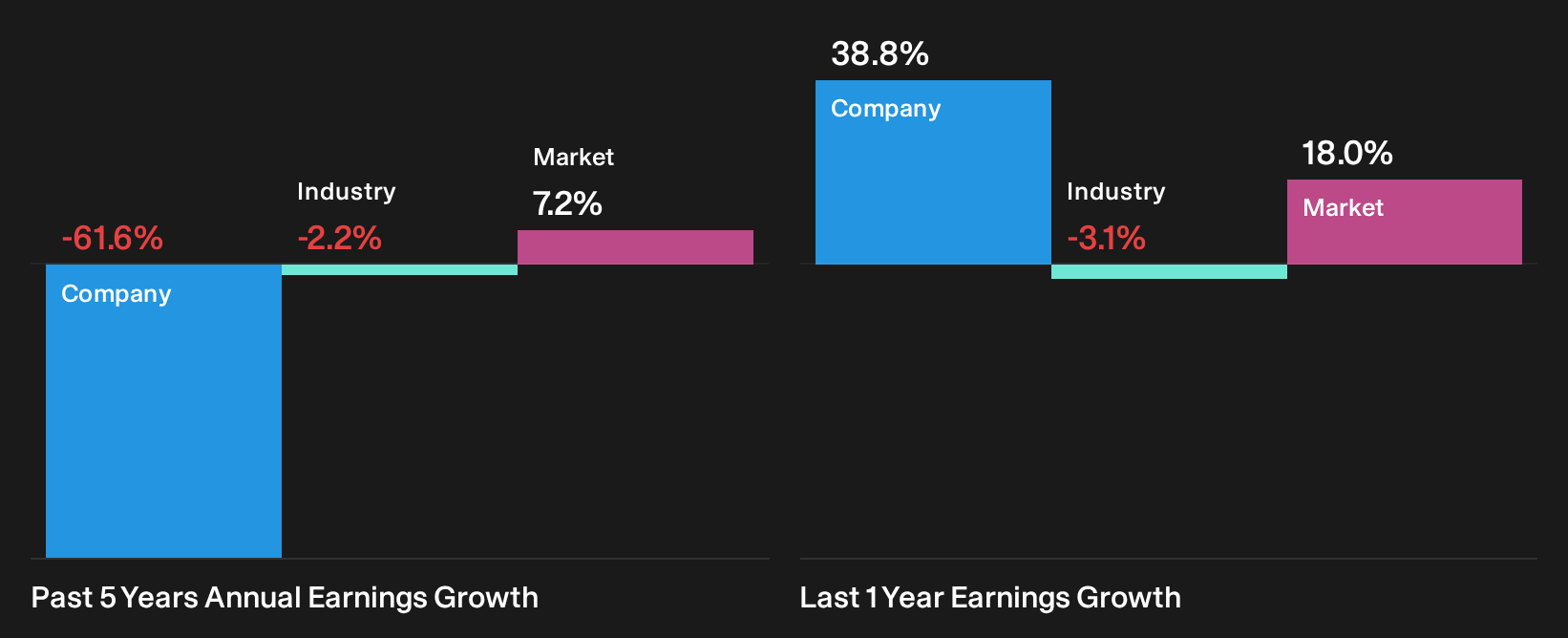
Proficient Auto Logistics provides direct exposure to how automakers respond when tariffs and trade rules change, since rerouted imports, altered production footprints, and dealer restocking all flow through its truck network. Investors are weighing a low valuation signal and analyst perspectives on growth, acquisitions, and potential margin changes against risks that include ongoing losses, heavy reliance on OEM contracts, pricing pressure, and higher leverage from recent convertible notes. For investors seeking a focused way to approach cross border auto logistics as supply chains are rethought, Proficient Auto Logistics is a stock that may warrant further research to determine how it fits individual risk tolerance and portfolio objectives.
Proficient Auto Logistics trades on auto cycle worries while its truck network sits at the crossroads of tariff reshuffles and OEM contracts. Get the full 4 key rewards and 1 important warning sign to see what the market might be missing next.

Marten Transport (MRTN)
Overview: Marten Transport is a Wisconsin based truckload carrier that focuses on temperature sensitive freight across the United States, Mexico, and Canada. It is closely tied to cross border shipping where tariffs and documentation requirements are increasingly important. The company serves food and consumer packaged goods shippers through truckload, dedicated fleets, and a brokerage arm that arranges third party carriers for temperature controlled and dry van loads.
Operations: Marten Transport generates most of its revenue from Truckload services at about US$433 million, followed by Dedicated at around US$264 million and Brokerage at roughly US$152 million, with a small segment adjustment of about US$10 million.
Market Cap: US$1.2 billion
Marten Transport provides targeted exposure to cross border freight where shippers need reliable temperature controlled capacity as tariff rules change, supported by a long operating history and an expanded credit facility that can be used for fleet and systems investment. At the same time, margins are slim at around 1.5%, earnings fell in the past year, and the stock trades on a high P/E multiple relative to many transport peers, so a lot depends on the forecast recovery in profitability actually showing up in reported results. For investors evaluating the trade off between growth expectations, earnings quality, and funding risk in a tariff heavy North American trucking market, Marten Transport may warrant closer review.
Marten Transport’s thin margins and high P/E suggest the story is not fully priced in yet, especially if profitability really does recover. See how the analyst forecasts for Marten Transport could change the risk reward picture just as cross border freight shifts again.

Seeking Alternatives Before The Crowd?
Tariff pressures are only one story. Other themes are already building breakout momentum while many investors stay focused on yesterday’s risks. Scan fresh ideas that are under the radar for now and consider acting before they become crowded.
- Identify stronger balance sheets before momentum picks up by running the list of solid balance sheet and fundamentals (53 results) and filtering for businesses that fit your risk comfort.
- Look for potential breakout payers using the 11 dividend fortresses and focus on companies combining higher yields with balance sheets you are comfortable holding through rough patches.
- Explore possible infrastructure-related opportunities by scanning the 39 power grid technology and infrastructure stocks and monitoring operators that could benefit if grid upgrades increase in importance.
This article by Simply Wall St is general in nature. We provide commentary based on historical data and analyst forecasts only using an unbiased methodology and our articles are not intended to be financial advice. It does not constitute a recommendation to buy or sell any stock, and does not take account of your objectives, or your financial situation. We aim to bring you long-term focused analysis driven by fundamental data. Note that our analysis may not factor in the latest price-sensitive company announcements or qualitative material. Simply Wall St has no position in any stocks mentioned.
Have feedback on this article? Concerned about the content? Get in touch with us directly. Alternatively, email editorial-team@simplywallst.com