
- PRICING
- LIVE QUOTES
- LEARN
- HELP


EN
Coca-Cola Stock at $88: Here's Why Investors Should Pause
Key Points
PepsiCo now offers a higher dividend yield at a lower valuation.
A major Coca-Cola shareholder has not traded any shares since 1994.
Coca-Cola (NYSE: KO) has long been one of the most closely watched consumer stocks. Coca-Cola's flagship beverage anchors the stock, and its success is arguably the biggest factor in supporting the 64 consecutive years of dividend increases.
Moreover, under Warren Buffett's leadership at the time, Berkshire Hathaway has owned the stock for decades, holding 9.3% of Coca-Cola's outstanding shares.
Missed Nvidia in 2009? This Rare Signal Is Flashing Again. In 2009, a "Double Down" signal flashed for a little-known chipmaker called Nvidia. For the first time in years, that same "Total Conviction" signal is flashing for a company 1/100th the size of Nvidia. Continue »
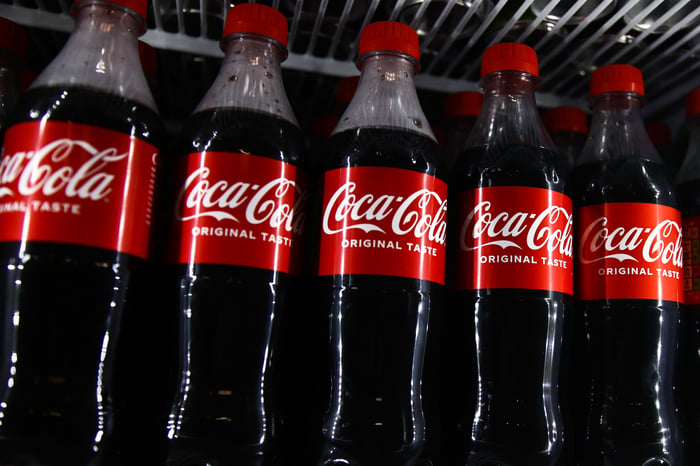
Image source: Getty Images.
Nonetheless, investors should think twice about paying $88 per share for it. For one, that takes its P/E ratio to 27, well above archrival PepsiCo at an 18 earnings multiple.
Additionally, PepsiCo's dividend yields almost 4.2%, well above the near 2.4% cash return investors now earn from Coca-Cola. Still, both stocks retain Dividend King status by virtue of more than half a century of annual payout hikes. Also, Coca-Cola investors should also not ignore the dividend, as it is typically the primary source of returns.

However, the most compelling reason to hold instead of buy Coca-Cola stock may come from Buffett himself. Although he steadily added it to the Berkshire portfolio when he began buying the stock in 1988, his purchases stopped in 1994, and Berkshire has stood pat at 400 million split-adjusted shares since then.
Despite the lack of activity, Berkshire will collect $848 million in dividend income this year alone from an original $1.3 billion investment. That gives little incentive for Buffett's successor, Greg Abel, to sell the stock.
In the end, Coca-Cola's archrival offers a higher dividend yield at a lower valuation. Also, Berkshire has not bought additional Coca-Cola shares in decades. Berkshire's decades of inactivity say more about capital allocation strategy than about today's price specifically.
Will Healy has positions in Berkshire Hathaway. The Motley Fool has positions in and recommends Berkshire Hathaway. The Motley Fool has a disclosure policy.