
- PRICING
- LIVE QUOTES
- LEARN
- HELP


EN
IPO News | Plypharm's second listing on the Hong Kong Stock Exchange's core product PL-5 is the world's first Ganamian antimicrobial peptide drug to submit an NDA
The Zhitong Finance App learned that according to the Hong Kong Stock Exchange's disclosure on August 31, Pray Pharmaceuticals (Jiangsu) Co., Ltd. (abbreviation: Pray Pharmaceuticals) submitted a listing application to the main board of the Hong Kong Stock Exchange, and CITIC Securities is its sole sponsor. The company submitted a listing application to the Hong Kong Stock Exchange on February 13.
Company profile
According to the prospectus, Pray Pharmaceuticals is an antimicrobial peptide (AMP) biomedical company established in April 2009, focusing on the two core treatment fields of anti-infection and metabolic diseases. As of the last practical date (August 24, 2026), the company has (i) a core product PL-5 (peleganan), which is a product administered as a topical spray to treat primary or secondary burn wounds (secondary infection of burn wounds) and diabetic foot infections (DFI) caused by Staphylococcus epidermidis, Staphylococcus hemolyticus, or Acinetobacter baumannii; and (ii) there are three other drug candidates in the company pipeline.
According to Frost & Sullivan, the company's core product, PL-5 spray (PRIK®), is the world's first first-of-its-kind (FIC) Canadian drug to be approved by the New Drug Marketing Application (NDA). With the membrane differentiation mechanism theory first coproposed by the company's founders in 2006, PL-5 represents a new mechanism of action. Its secondary peptide structure folds to disrupt the integrity of microbial membranes to address challenges associated with antibiotic resistance.
In June 2026, the company's core products were approved by the NDA of the State Drug Administration to treat infections secondary to burn wounds. With its key advantages of resistance, broad spectrum and efficiency, PL-5 provides a breakthrough solution for treating multiple drug-resistant infections, and the company plans to seek additional indications for secondary infections of other types of wounds through further clinical trials in China, such as treating DFI, and treating and preventing wound infections caused by physical trauma. It has been continuously selected for the country's major scientific and technological projects for the creation of new drugs in the 12th and 13th Five-Year Plan.
The company's main product, PL-3301, is a temperature-sensitive peptide gel used to treat oropharyngeal candidiasis (OPC). Another of the company's main products, PL-18, is an AMP drug used to treat vulvovaginal candidiasis (VVC), and may also be used to treat a range of gynecological infections, including bacterial vaginosis, fungal vaginitis, and mixed vaginitis. The two main products are also based on membrane differentiation mechanisms and aim to fill clinical gaps in their respective treatment fields.
According to Frost & Sullivan's data, the company's preclinical asset PL-MD-333 is an oral FGF19/FGF21 inducer and lipid metabolism regulator. Preclinical studies have shown that PL-MD-333 can reduce fat mass, increase lean muscle mass, and show synergistic effects when used in combination with glucagon-like peptide-1 (GLP-1) agonists such as simeglutide, making it a potential drug candidate that is expected to change treatment patterns for metabolic diseases.
According to the prospectus, there is no guarantee that the company will eventually be able to successfully develop and list the company's core products or any products under development.
Financial data
Earnings
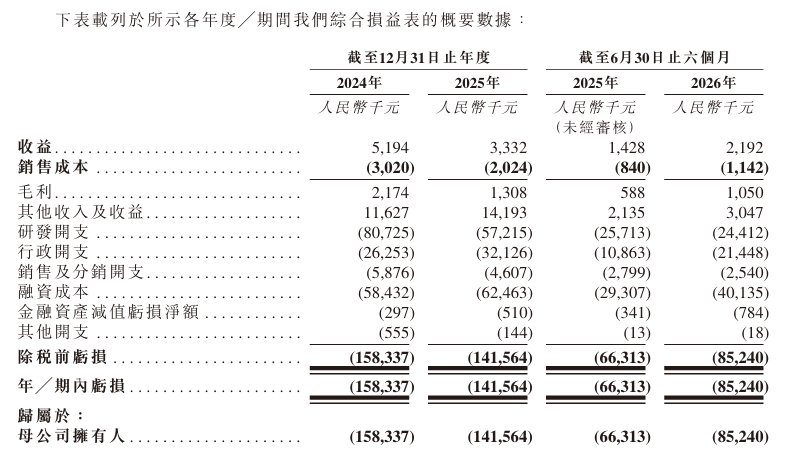
In 2024, 2025, and the six months ended June 30, 2026, the company achieved revenue of approximately RMB 5.194 million, RMB 3.32 million and RMB 2.192 million, respectively.
Mouri
In 2024, 2025, and the six months ended June 30, 2026, the company recorded gross profit of approximately RMB 2.174 million, RMB 1.308,000 and RMB 1.05 million, respectively.
Loss during the period
In 2024, 2025 and the six months ended June 30, 2026, the company recorded losses of approximately RMB 158 million, RMB 142 million and RMB 85,240 million, respectively.
Industry Overview
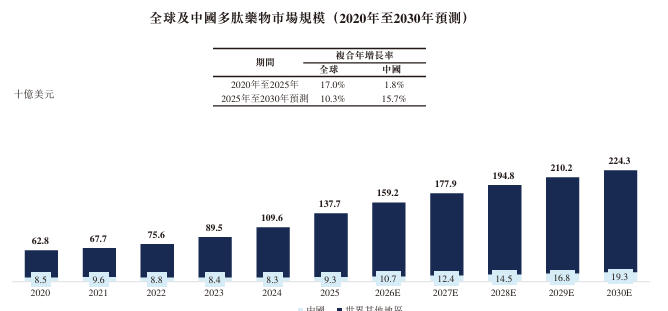
The global peptide drug market continues to grow, from US$62.8 billion in 2020 to US$137.7 billion in 2025. The global peptide drug market is expected to grow at a CAGR of 10.3% between 2025 and 2030 to reach US$224.3 billion in 2030.
In 2025, by treatment field, diabetes accounted for the largest share of the global peptide drug market, at 59.6%, reaching US$82.1 billion, followed by weight management, accounting for 24.8%, reaching US$34.1 billion, oncology accounting for 8.2%, reaching US$11.3 billion, and other treatment fields accounting for 5.9%, reaching US$8.1 billion, while peptide anti-infective drugs accounted for 1.5%, reaching US$2 billion.
China's peptide drug market will grow from US$8.5 billion in 2020 to US$9.3 billion in 2025. It is expected to grow at a CAGR of 15.7% between 2025 and 2030, reaching US$19.3 billion in 2030. In 2025, by treatment area, diabetes accounted for the largest share of the Chinese peptide drug market, at 47.4% (US$4.4 billion), followed by growth and development (15.9%, US$1.5 billion), immunomodulation (10.4%, US$1 billion), weight management (8.3%, US$800 million), cardiovascular disease (6.3%, US$600 million), other therapeutic areas (4.8%, US$400 million), and nervous system (4.3%, US$400 million), while peptide anti-infective drugs accounted for 2.7% (US$200 million).
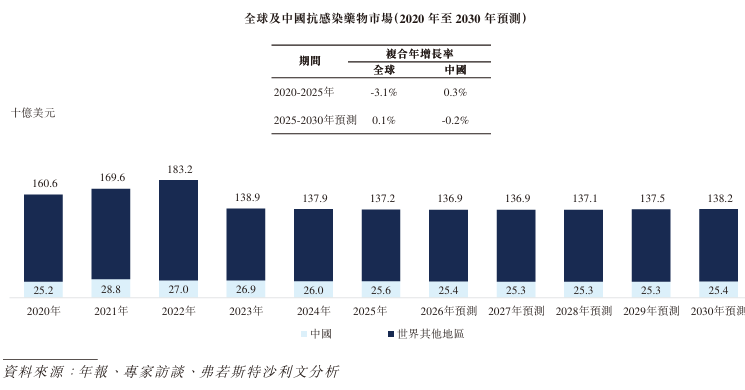
The global anti-infective drug market was US$137.2 billion in 2025 and is expected to drop to US$138.2 billion by 2030. The recent decline is due to a sharp drop in demand for anti-COVID-19 drugs/vaccines after the pandemic, as well as generic drug competition due to the expiration of HIV drug patents. The global anti-infective drug market shows similar phased dynamics, but is mainly affected by pandemic-related demand fluctuations and long-term structural characteristics of the market.
The negative CAGR observed between 2020 and 2025 is mainly due to the high base effect of increased use of anti-infective drugs during the COVID-19 pandemic, followed by a return to normal demand as the pandemic subsided. The market is expected to remain relatively stable between 2025 and 2030, as the market continues to be dominated by generic antibiotics facing ongoing pricing pressure, and innovative anti-infective treatments have yet to be commercialized on a large scale.
In China, the market reached $25.6 billion in 2025 and is expected to reach $25.4 billion by 2030. The contraction was driven by pandemic-related declines in medical visits, lower drug prices due to multiple rounds of volume procurement, and stricter antibiotic control policies. In China, the historical growth pattern of the anti-infective drug market has been shaped by a combination of policy-driven regulation and pandemic-related demand fluctuations. Over the past few years, the country has stepped up efforts to address antimicrobial resistance (AMR), including implementing antibiotic management policies to make the use of antimicrobials more rational and limited. Furthermore, the inclusion of key antimicrobial drugs such as ceftazidime and vancomycin in volume procurement plans led to a sharp drop in prices, putting downward pressure on market value. Furthermore, anti-infective drug use remained at a high level during the COVID-19 pandemic, and the normalization of post-pandemic demand led to a decline from this high base.
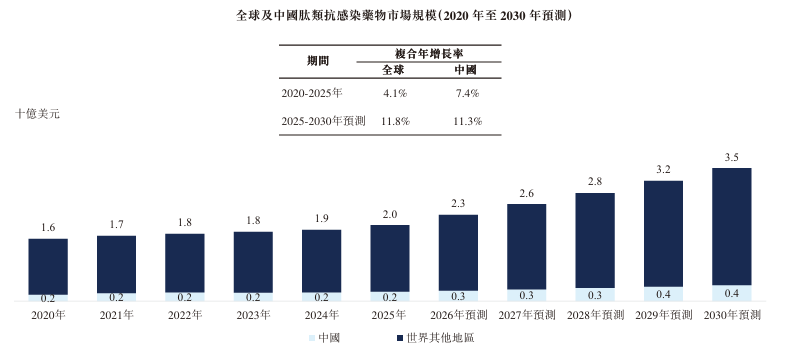
In 2025, the global market for peptide anti-infective drugs will reach 2 billion US dollars. Driven by the growing global antimicrobial resistance (AMR) challenge and the urgent need for a last line of defense against multidrug-resistant pathogens, the market is expected to expand to $3.5 billion by 2030, at a CAGR growth rate of 11.8%. Continued breakthroughs in peptide synthesis and stabilization technology have further consolidated this strong growth. Such technologies have significantly expanded the treatment window of such highly effective drugs and improved patient compliance, enabling them to occupy a larger share of the global anti-infective field.
At the same time, the scale of peptide anti-infective drugs in the Chinese market in 2025 was 200 million US dollars. China is shifting its focus to high-quality domestic innovation and clinical value-oriented healthcare. The market is expected to grow to US$400 million by 2030, with a CAGR of 11.3%. The deep penetration of innovative treatments under the National Health Insurance Drug Catalogue (National Health Insurance Catalogue) and the strategic focus on import substitution have contributed to this upward trend. As domestic companies overcome technical barriers to large-scale peptide production, the Chinese market is expected to transition from relying on conventional antibiotics to an era of high-barrier peptide precision anti-infective drugs.
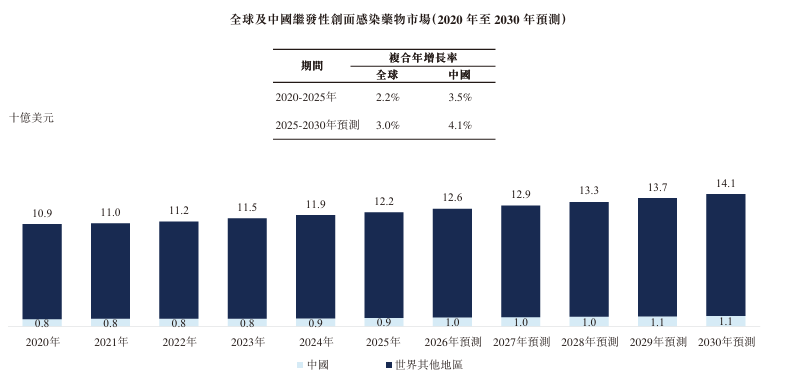
The global secondary wound infection drug market reached US$12.2 billion in 2025 and is expected to expand to US$14.1 billion by 2030, with a compound annual growth rate of 3.0%. This increase is mainly due to the increasing prevalence of metabolic diseases (especially diabetes) around the world. Such diseases often cause chronic complications such as diabetic foot ulcers, and such complications can easily cause persistent secondary infections. Furthermore, the increasing volume of complex surgeries and increasing clinical emphasis on infection control protocols in post-operative care are driving continued demand for advanced anti-infective therapies aimed at speeding up wound healing and preventing systemic complications.
In China, the drug market for secondary wound infections reached US$900 million in 2025 and is expected to increase to US$1.1 billion by 2030, with a compound annual growth rate of 4.1%. This upward trend is mainly influenced by the demographic shift in the country's aging population, which has led to heavier clinical burdens of unhealed wounds and impaired immune responses. Optimizing the structure of clinical treatment guidelines and improving the accessibility of innovative anti-infective drugs through the National Medical Insurance Drug Catalogue (Health Insurance Catalogue) have further promoted market expansion. As healthcare infrastructure continues to be modernized, the market is clearly shifting to specialized wound management solutions that provide clinical efficacy superior to traditional treatments.
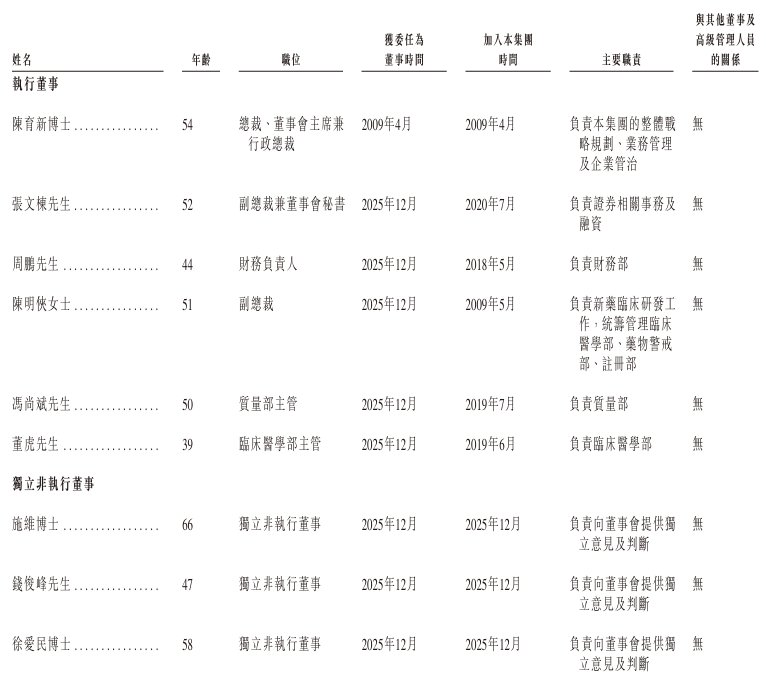
Board Information
After [compilation], the board of directors will be composed of nine directors, including six executive directors and three independent non-executive directors. The term of the company's directors is three years, and they can be re-elected.
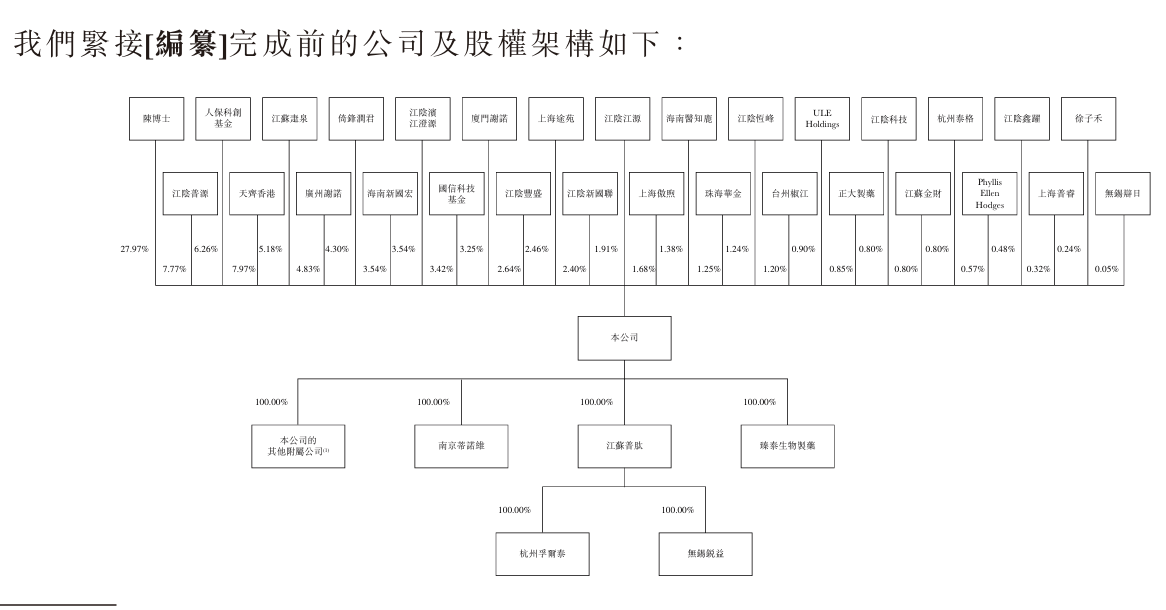
Shareholding structure
As of the last practical date, Dr. Chen Yuxin, Chairman of the Board of Directors, Executive Director, CEO and CEO of the Company, is entitled to exercise the Company's voting rights over (i) approximately 27.97% of the total number of issued shares of the Company directly held and (ii) approximately 7.77% of the total number of issued shares of the Company directly held by Jiangyin Puyuan (of which Dr. Chen is the executive and general partner). According to Jiangyin Puyuan's partnership agreement, all management and voting rights of Jiangyin Puyuan belong to its executive affairs and general partner Dr. Chen. According to this, as of the last practical date and immediately before [compilation] was completed, Dr. Chen (directly and indirectly through Jiangyin Puyuan) controlled about [35.74]% of the total issued share capital of the company and formed a group of controlling shareholders with Jiangyin Puyuan.
Intermediary team
Sole sponsor: CITIC Securities (Hong Kong) Limited;
The company's legal advisors: relating to Hong Kong and US law: Jiayuan Law Firm; relating to Chinese law: AllBright Law Offices;
Sole sponsor legal adviser: relating to Hong Kong and US law: Sullivan Cromwell Law Firm (Hong Kong) limited liability partnership; relating to Chinese law: Commerce Law Firm;
Reporting accountant and independent auditor: Ernst & Young;
Industry consultant: Frost & Sullivan (Beijing) Consulting Co., Ltd. Shanghai Branch;
Compliance Advisor: Kaisheng Capital Co., Ltd.