
- PRICING
- LIVE QUOTES
- LEARN
- HELP


EN
Jizhijia (02590) highlights multi-dimensional growth potential in the first half of 2026: orders increased by 35.5%, subscription services exploded, growth boundaries continued to expand
The Zhitong Finance App learned that recently, Jizhijia (02590) released the 2026 interim results report. In the first half of 2026, JiZhijia's new order volume reached 2,385 billion yuan, an increase of 35.5%; achieved revenue of 1,284 billion yuan, an increase of 25.3%; gross margin further increased to 35.8%, with adjusted net loss Narrow 32.1%. If investment in self-intelligent R&D is excluded, the company's main business is already clearly close to break-even.
If you only interpret these data as “performance growth” of a leading AMR company, you probably underestimate the financial content of this interim report. Jizhi Jiazheng is showing a new growth structure: the basic AMR warehouse market continues to expand, manufacturing scenarios break through rapidly, subscription-based services form a scale, and Embody Intelligence has received cooperation from the world's top 500.
In other words, Jizhijia is shifting to a multi-engine business system driven by products, scenarios, services, AI, and embodied intelligence.
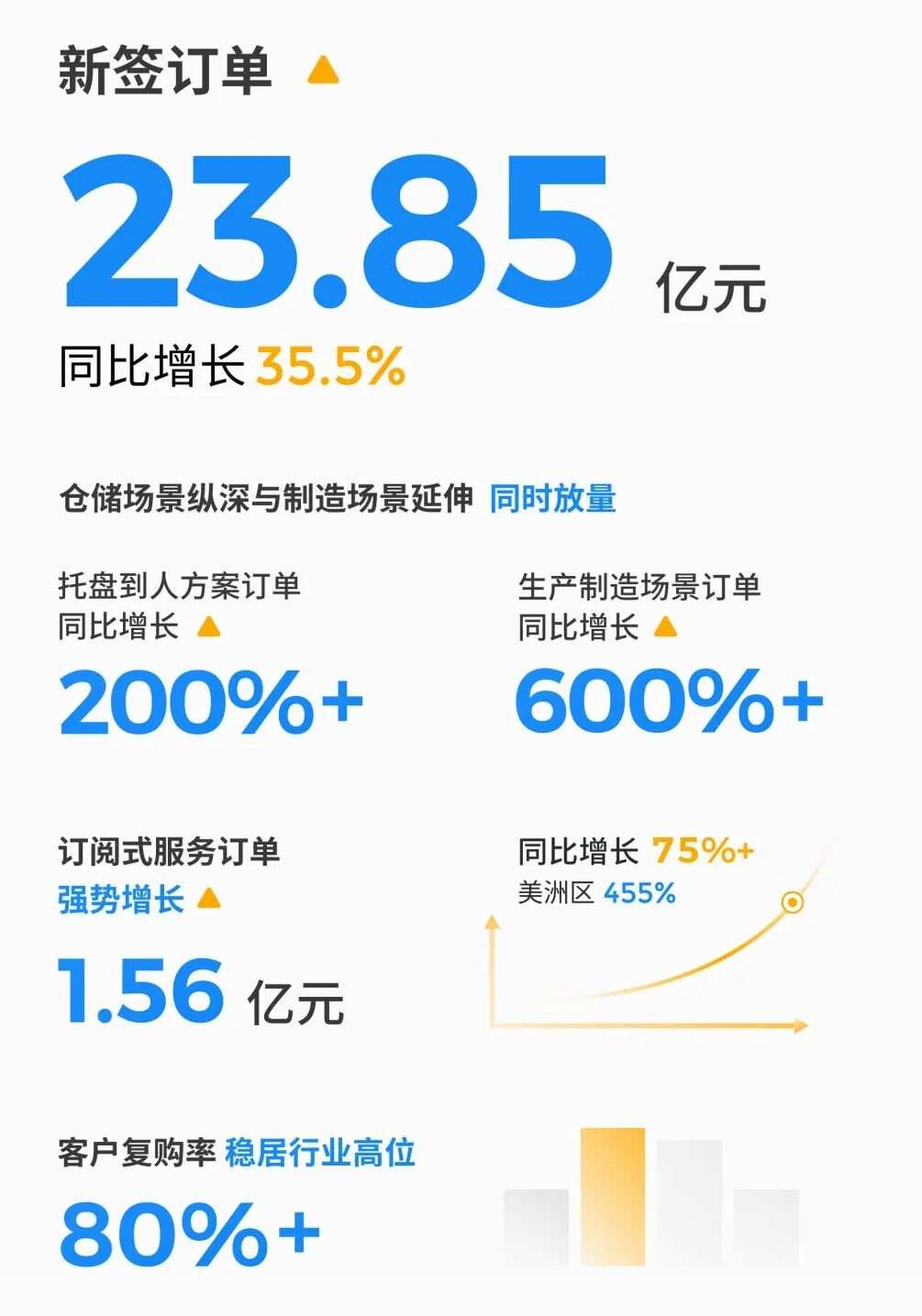
Orders increased by 35.5%, subscription-based services exploded, and “business after robots” was realized at an accelerated pace
To evaluate the operating status of a robotics company, orders are often more forward-looking than current revenue.
In the first half of 2026, Jizhijia signed a new order of 2,385 million yuan, an increase of 35.5% over the previous year. This means that while it already has a large revenue scale, the company still maintains a strong ability to acquire new projects and reserves sufficient orders for subsequent revenue growth.
More important than the increase in total order volume is the continuous optimization of the order structure.
If hardware sales determine the size of a robotics business, software and operational services are likely to determine its future profit cap.
In the first half of 2026, new orders for Jizhijia's subscription service reached 156 million yuan, an increase of more than 75%; of these, orders from the American region increased 455% year over year.
Traditional robotics projects have obvious project-based attributes: customer investment, enterprise delivery, revenue confirmation, and then enter the maintenance phase. The subscription service, on the other hand, means that the relationship between the two parties begins to shift from “one-time project delivery” to “continuous operation.”
In particular, after AI technology accelerates its entry into warehousing operations, robotics companies are no longer just software for scheduling robot movements, but may further undertake inventory optimization, task allocation, operation analysis, anomaly management, and even overall warehouse efficiency optimization.
This actually changed the robotics company's value logic. In the past, customers purchased robotic equipment; future customers may buy the ability to continuously improve logistics efficiency.
Jizhijia's AI intelligent operation subscription service builds a software and service system that continuously generates value on top of already deployed robots and systems. Relying on a global network of more than 1,000 customers and 81,000 robots already deployed, the business can be quickly replicated, bringing high renewal, high stickiness, and predictable revenue — one of the important ways for robotics companies to improve long-term revenue and profitability.
The year-on-year increase from tray to person increased by more than 200%, orders in the manufacturing scenario increased by more than 600%, and the volume of storage and manufacturing scenarios increased simultaneously
The basic warehousing market is also moving deeper. Jizhijia's tray-to-man product line orders increased by more than 200% year over year. In the past, the most mature applications of AMR were focused on processes such as bin and shelf selection, and as the degree of customer automation continued to increase, robot systems are increasingly entering scenarios for whole pallet handling, intensive storage, and upstream and downstream connections in warehouses, further consolidating Gizhijia's leading position in pallet warehouse automation.
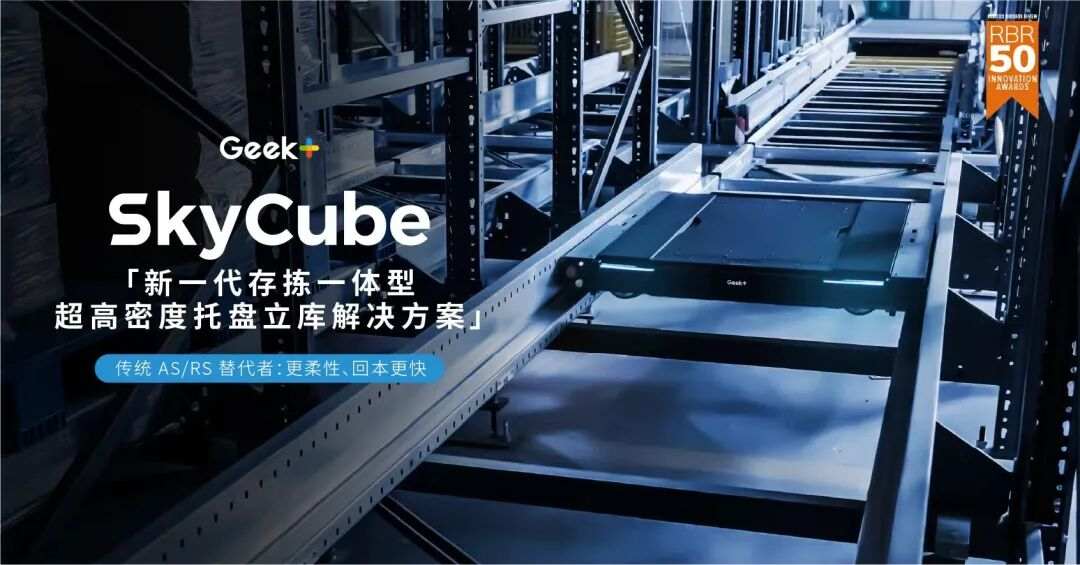
At the same time, orders for Jizhijia's manufacturing scenario increased by more than 600% year over year. For a long time, the most mature demand in the global AMR market has focused on e-commerce, retail, and warehousing fulfillment scenarios. However, manufacturing production logistics has the characteristics of complex processes, large process differences, and high system integration requirements. It is also an area where robot companies must break through to further expand market boundaries.
Jizhijia is forming a characteristic path: first entering the customer's warehousing system, then naturally extending to production logistics along the customer's supply chain and production process.
This “warehouse-to-production” expansion model has clear advantages over relying entirely on new customer development. On the one hand, existing system operation data and project delivery capabilities reduce decision-making costs for customers when purchasing again; on the other hand, there are also opportunities for product collaboration and cross-selling between different scenarios for the same customer.
In this sense, the increase in manufacturing orders of more than 600% does not only mean that the company has added a business segment, but also that its robotic capabilities are moving from “warehousing automation” to “enterprise logistics automation.”
Profitability continues to improve, and scale effects are beginning to be unleashed
Rapid growth and profitability are often the two hardest problems for robotics companies to solve at the same time.
Jizhijia's adjusted net loss for the first half of 2026 was 60.6 million yuan, a year-on-year decrease of 32.1%. It is worth noting that the company invested 44.5 million yuan for intelligent R&D during the same period; if this investment is excluded, the adjusted net loss was only 16.1 million yuan, a year-on-year decrease of 81.9%, and the main business is already close to break-even.
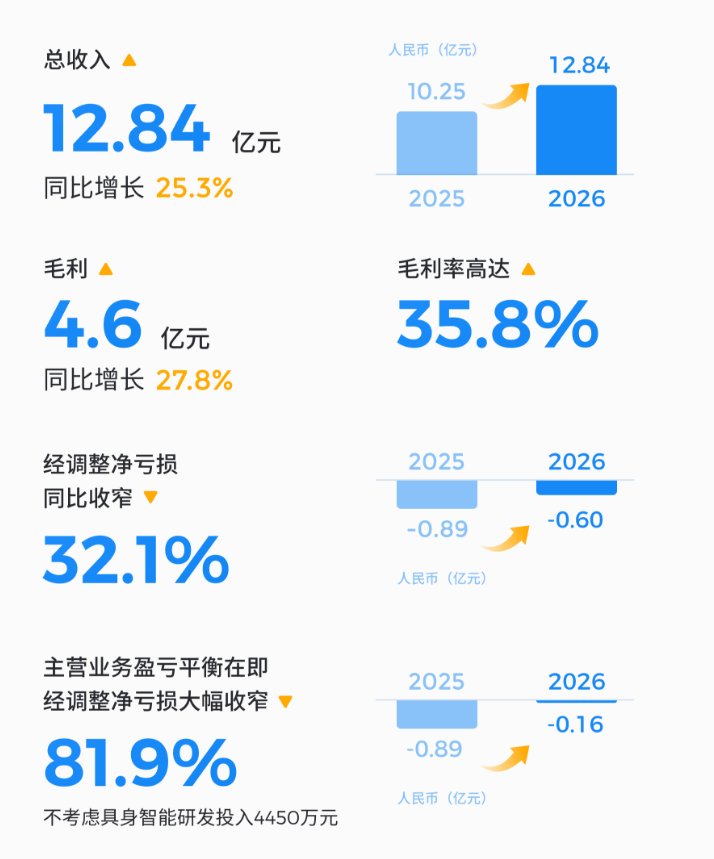
The signals behind this set of data are clear:
The global scale effect formed by Jizhijia's investment over the past few years is gradually being reflected in the income statement.
For robotics companies, after reaching a certain scale, R&D platforms, core components, supply chains, software systems, and global delivery systems can all be shared by multiple product lines.
The product strategy currently adopted by Kizhijia also reinforces this. Different robot products share technical bases and core components. On the one hand, it can reduce the cost of new product development, and on the other hand, it is also conducive to large-scale supply chain and cross-selling between different products. Its business model will gradually move from a “high growth robot company” to a stage where “scale growth goes hand in hand with profit improvement”.
Behind the new RoboShuttle Hyper is a further implementation of the “full scenario strategy”
Another notable change is that Gizhijia is beginning to be more proactive in entering high-growth segments.
In August 2026, the company launched the RoboShuttle Hyper climbing box-to-person solution. The system's throughput capacity reached 6,000 boxes per 1,000 square meters per hour, focusing on high-traffic and high-throughput application scenarios such as MFC front warehouses.
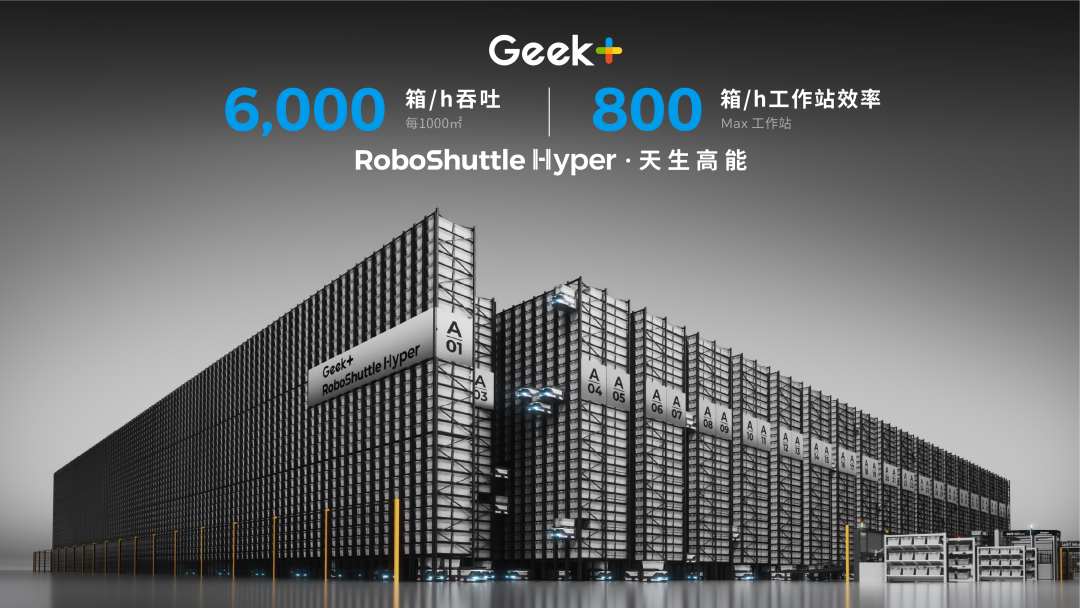
Judging from the product logic, this is not simply adding a robot.
The global smart logistics market is entering an increasingly obvious “scenario segmentation stage”.
In the past, enterprises may have relied on a set of relatively standard robots to solve a large number of problems, but as automation enters the deep-water zone, customers are beginning to demand more refined throughput, storage density, flexibility, and return on investment cycles.
Therefore, it is likely that the core of future competition among leading robot manufacturers will no longer be who owns a “star robot”, but who can have a complete product matrix covering more scenarios.
Product systems such as shelf to person, tray to person, container to person, RAPS unmanned robotic arm picking workstation, and Gino1 wheeled humanoid robot essentially revolve around this logic.
The richer the product, the more obvious the scale effect of the shared technology platform; the more scenarios covered, the greater the cross-selling opportunities for the same customer.
This also explains why “full scenario” will be an important key word in the next phase of Gizhijia's strategy.
Personalized smart products have received cooperation from the world's top 500 companies, and the target is to ship more than 10,000 units in 3 years
If AMR for warehousing determines the current basic market of Jizhijia, then embodying intelligence determines the upper limit of its room for growth in the next few years.
In the first half of 2026, Jizhijia's physical intelligence business has received cooperation from a number of Forbes Fortune 500 companies. The company proposed that in the future, it will rely on the data flywheel and GINO ECO ecological strategy to promote collaboration between humanoid robots and AMR in the warehousing scenario to form a robot productivity system covering “storage, picking, transportation, and inspection”, and plans to further extend the application to manufacturing, retail and other scenarios over the next three years to achieve cumulative shipments of over 10,000 units of personalized intelligent products.
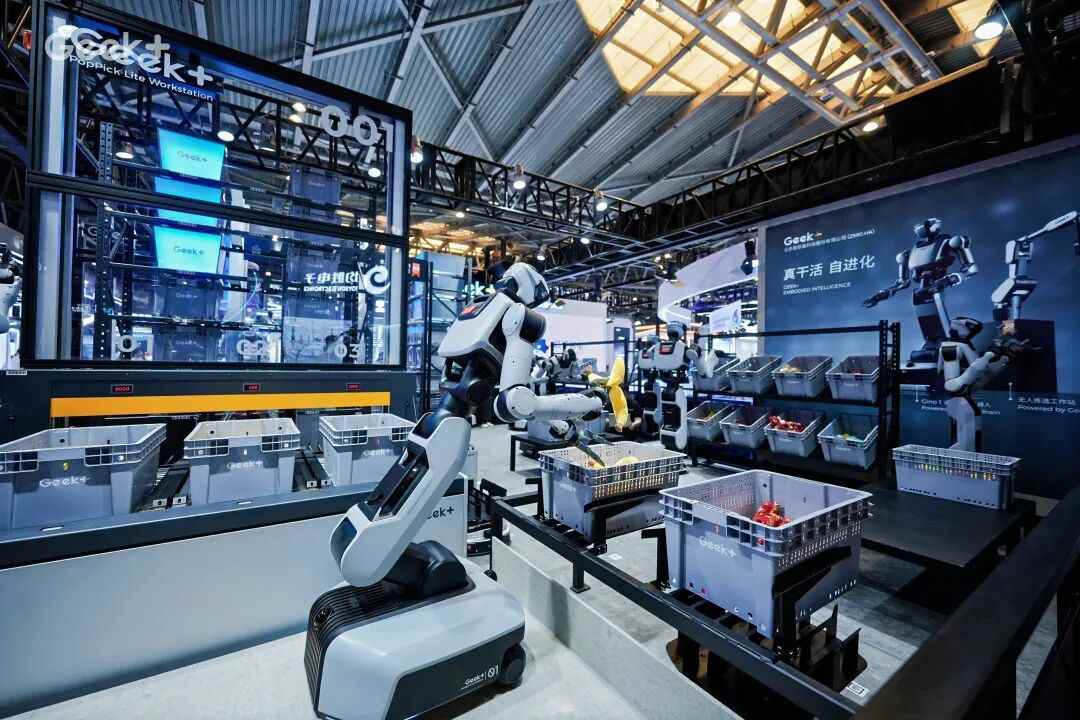
Compared to the large amount of competition around “humanoid robot bodies” in the market, Gizhijia's path has obvious characteristics:
Instead of searching for application scenarios in a laboratory, it reverses the definition of embodied intelligence from existing real business scenarios.
This is critical.
Currently, the biggest challenge of embodying intelligence has never been about being able to complete a demo, but whether it can run stably in a complex real environment, whether it can form an ROI that customers are willing to pay for, and whether it can be replicated on a large scale.
However, warehousing and logistics is one of the scenarios that are relatively suitable for pioneering commercialization with physical intelligence.
The tasks are clear, the environment is relatively structured, and at the same time, there are a number of flexible operation steps that cannot be fully covered by traditional AMR and required manual completion in the past.
More importantly, Jizhijia doesn't need human robots to automate the entire warehouse alone.
In its vision, humanoid robots and AMR will form a collaboration: AMR is responsible for highly sophisticated movement, handling, and transportation tasks, humanoid robots further undertake tasks requiring dexterous operation, and then achieve scheduling through unified software and AI systems.
This means that the unit that competes in the future may no longer be a “robot,” but an intelligent productivity system composed of a group of robots.
If this path can be completed, then the AMR technology, global customers, warehouse data, and software systems that Jizhijia has accumulated in the past can all become an infrastructure for intelligent commercialization.
This is why its embodied intelligence strategy is worthy of the industry's long-term attention.
From “AMR Champion” to “Embodied Intelligent Platform-level Company”, business boundaries continue to expand
Reviewing Gizhijia's performance in the first half of 2026, we can see several relatively clear trends:
First, AMR's core business continues to maintain strong growth, providing a stable basic market for the company;
Second, subscription services are turning a huge stock into a steady stream of service increments, and then into high repeat purchases, high gross profit, and sustainable stable income;
Third, the global customer network and full-scenario strategy are being rapidly transformed into scenario expansion and cross-selling capabilities;
Fourth, the scale effect continues to be unleashed, and the main business is already close to break-even;
Fifth, embodied intelligence is gradually moving from the technology investment stage to the commercialization stage of real scenarios.
These five lines ultimately point to the same change:
Jizhijia is no longer a traditional “AMR supplier”, but an “intelligent robot platform company” that uses innovative robot solutions as an entry point, AI software and intelligent operation as a long-term connection, and general-purpose embodied intelligence as the long-term technology engine.
For the entire Chinese robot industry, this path also has some representative significance.
In the first stage, Chinese robot companies proved that they can make globally competitive products;
The second stage requires proof of being able to enter the global mainstream customer supply chain;
In the third stage, the real competition will be global customer operation capabilities, continuous service capabilities, AI capabilities, and platform-based capabilities across robot forms.
Kizhijia is entering the third phase.
New orders of 2,385 billion yuan, the share of overseas revenue of more than 75%, the increase in orders in manufacturing scenarios of more than 600%, the increase in subscription services by more than 75%, and the promotion of intelligent commercialization all came from different business dimensions, but ultimately formed a common signal: this Chinese robot company, which has been at the forefront of the global AMR market for many years, is opening a larger growth boundary than AMR.
For Jizhijia, the first half of 2026 was not so much a “high performance growth point” as the starting point for structural changes in its business model.
What is really worth watching for the industry in the next phase is when AMR, AI intelligent operation services, and the business curves of physical intelligence begin to be superimposed on each other, whether Gizhijia can further transform its global scale advantage into a continuous growth advantage, and eventually establish an intelligent robot ecosystem for the global market.