
- PRICING
- LIVE QUOTES
- LEARN
- HELP


EN
IPO News | Weimou Biotech once again announced that all of the core products of the Hong Kong Stock Exchange have entered Phase III clinical trials
The Zhitong Finance App learned that according to the Hong Kong Stock Exchange's disclosure on August 28, Weimu Biotechnology (Zhejiang) Co., Ltd. (hereinafter: Weimu Biotech) submitted a listing application to the main board of the Hong Kong Stock Exchange, and CICC is its sole sponsor. The company submitted a listing application to the Hong Kong Stock Exchange on February 13.
Company Information
According to the prospectus, Weimou Biotech was founded in 2016 and is a clinical-stage biotechnology enterprise focusing on the field of ophthalmology. Relying on a technical platform in the fields of small molecule drug discovery for ophthalmology diseases, high-end formulation development, and translational medicine research, it is building a product pipeline covering various ophthalmic indications on the surface and bottom of the eye. The company has two core products, VVN461 (high dose) and VVN001, both of which have initiated phase III clinical trials in China.
During the track record period, the company hired a contract development and production organization (CDMO) to produce candidate drugs for the company's pre-clinical and clinical supplies. The company plans to continue to cooperate with contract manufacturers after regulatory approval to achieve future commercial production of the company's core products. Furthermore, the company may also consider establishing internal production capacity in the future.
The company is actively developing commercialization plans and is expected to launch several potential products over the next few years. In developing these strategies, the company will consider key factors such as pricing, dosage plans, patients' economic, social, and demographic characteristics, and market access and reimbursement policies. As of the last practical date, the company did not have any approved pharmaceuticals, so no specific pricing strategy has been developed for the company's candidate products. The company's primary commercialization approach will focus on collaboration with well-known pharmaceutical companies, supported by a dedicated in-house team with strong medical and scientific backgrounds.
During the track record period, the company's suppliers mainly included (i) CROs for pre-clinical and clinical research, (ii) CDMO for the production of drug candidates for research, (iii) field management organizations (SMO) for clinical trials, and (iv) suppliers of laboratory supplies, machines and equipment.
As of the last practical date (August 20, 2026), the company has 6 patents in China and 12 patents overseas. As of the same day, the company had 14 patent applications in China and 36 overseas patent applications. Specifically, as far as core products are concerned, the company has 4 patents in China and 11 overseas patents, and has applied for 2 patents in China and 31 overseas patents.
Financial data
Other income and earnings
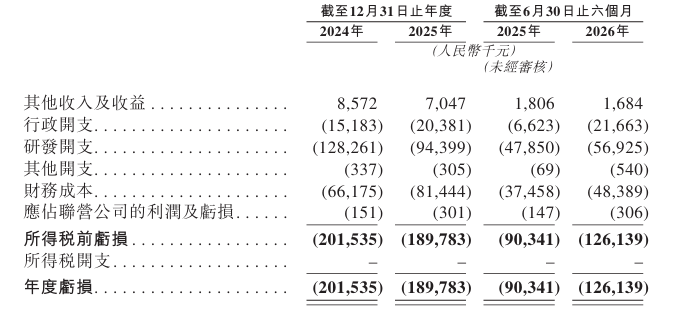
For 2024, 2025 and 2026 for the six months ended June 30, the company's other revenue and revenue were RMB 8.572 million, RMB 7.047 million and RMB 1,684 million, respectively.
Loss during the period
In 2024, 2025 and 2026 for the six months ended June 30, the company's losses during the period were approximately RMB 202 million, RMB 190 million and RMB 126 million respectively.
Industry Overview
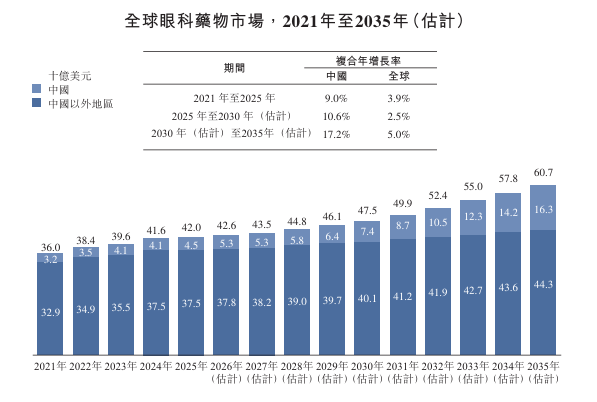
Driven by the continued development of innovative drugs, China's ophthalmic drug market grew rapidly from US$3.2 billion in 2021 to US$4.5 billion in 2025, with a compound annual growth rate of 9.0%. The market size is expected to reach US$7.4 billion in 2030, with a compound annual growth rate of 10.6% from 2025 to 2030, and will maintain a strong growth momentum, reaching US$16.3 billion by 2035, and a compound annual growth rate of 17.2% from 2030 to 2035.
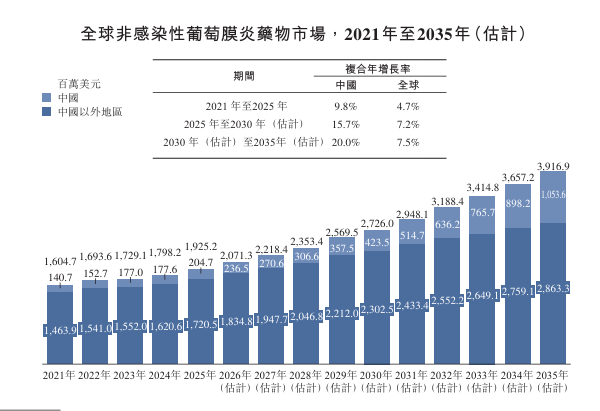
The global NIAU pharmaceutical market grew from $1,604.7 million in 2021 to $1,925.2 million in 2025, with a CAGR of 4.7%. Supported by the growing NIAU patient population and expanded use of long-term medications, and further driven by the adoption of higher-value therapies, the market size is expected to grow to $2,726.0 million in 2030 and $3,916.9 million in 2035. In China, the NIAU pharmaceutical market increased from $140.7 million in 2021 to $204.7 million in 2025, with a CAGR of 9.8%. It is expected to reach $423.5 million in 2030 and $1,053.6 million in 2035. This translates into growing demand for drug interventions (including higher-value treatment options) due to the expansion of patient populations, increased diagnosis rates, and increased treatment penetration.
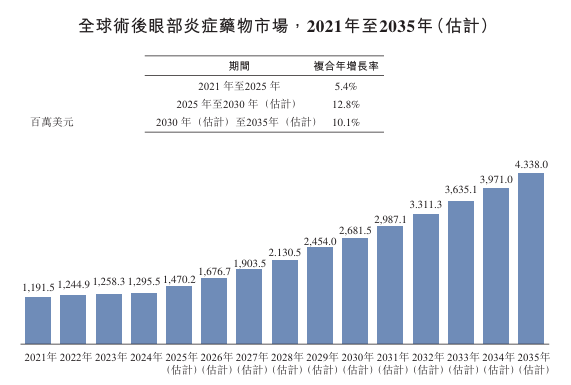
The number of patients with post-operative eye inflammation worldwide increased from 38.8 million in 2021 to 44.2 million in 2025. This increase was mainly driven by an increase in the number of ophthalmic surgeries, particularly cataract and refractive surgery. The affected population is expected to reach 52.2 million in 2030 and 61.5 million in 2035. In line with this epidemiological trend, the global market for post-operative eye inflammation drugs grew from $1,191.5 million in 2021 to $1,470.2 million in 2025, with a CAGR of 5.4%. The market size is expected to reach $2,681.5 million in 2030 and $4,338.0 million in 2035, thanks to the increase in the number of surgeries and the increase in drug use for post-operative eye inflammation. The figure below shows the past and estimated performance of the post-operative ocular inflammation drug market during the indicated period.
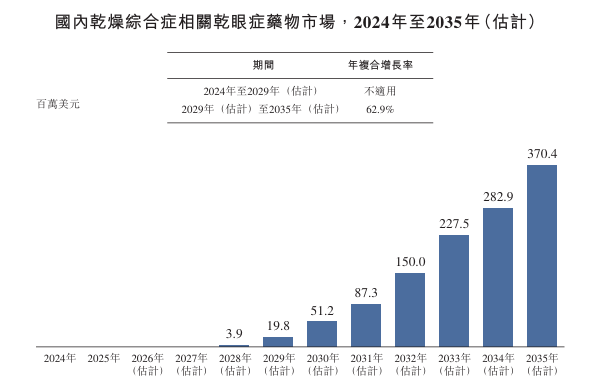
As of the last practical date, China has not approved any innovative drugs for the treatment of SS-DED, nor are there any clinical-stage drug candidates for SS-DED. However, with in-depth research in the field of immune system diseases and dry eye treatment, the SS-DED drug market in China is expected to reach $370.4 million in 2035. The figure below shows the past and estimated performance of the SS-DED drug market in China during the indicated period.
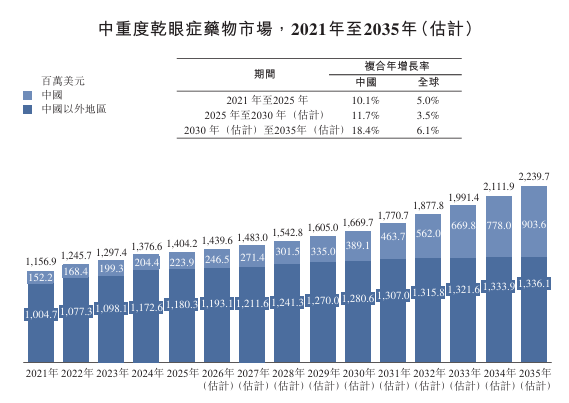
The number of patients with moderate to severe DED worldwide increased from 322.0 million in 2021 to 349.5 million in 2025. It is estimated that the global DED population will reach around 386.3 million in 2030 and 425.3 million in 2035. The number of DED patients in China increased from 107.5 million in 2021 to 113.7 million in 2025, and is expected to reach about 121.6 million in 2030 and 130.1 million in 2035. Current epidemiological research reports in China show that the prevalence of dry eye is relatively high, usually in the range of 21.0% to 52.4%.
Board Information
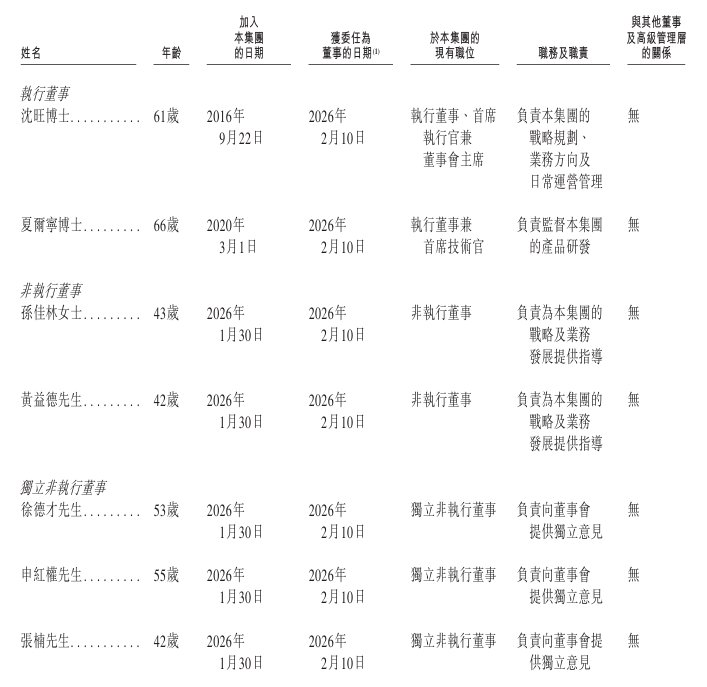
The board of directors of the company consists of 7 directors, including 2 executive directors, 2 non-executive directors and 3 independent non-executive directors.
Shareholding structure
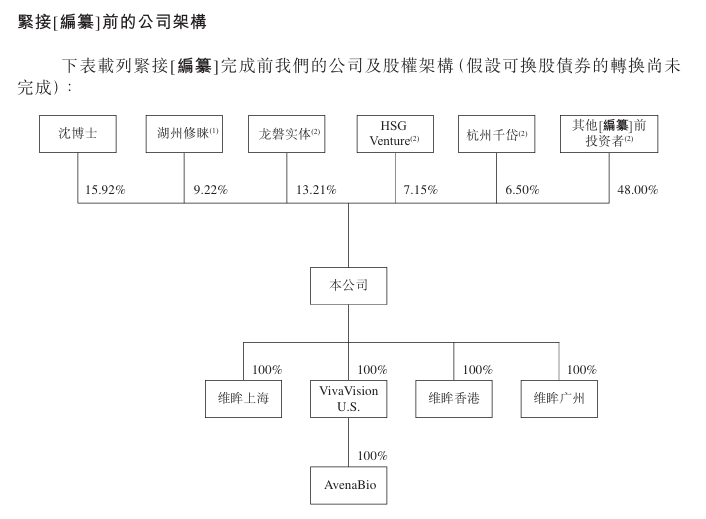
As of the last practical date, Dr. Shen was the company's single largest shareholder, holding approximately 15.92% of the shares. Huzhou Xiuyi holds about 9.22% of the shares. In total, Longpan entities hold about 13.21% of the shares. HSG Venture holds approximately 7.15% of the shares. Hangzhou Qiandai holds about 6.50% of the shares. Other [Compiled] Former investors collectively held approximately 48.00% of the shares.
Intermediary team
Sole sponsor: China International Finance Hong Kong Securities Limited
Company Legal Advisors: Hong Kong and US Law: Linklaters; Relevant Chinese Law: Global Law Firms; Relevant Chinese Intellectual Property Law: Global Law Firms; US Intellectual Property Law: Venture Partner, LLC
Sole Sponsor Legal Adviser: On Hong Kong and US Law: Baker & McKenzie; On Chinese Law: Jingtian Gongcheng Law Firm
Auditors and reporting accountants: Ernst & Young
Industry Advisor: Frost & Sullivan (Beijing) Consulting Co., Ltd. Shanghai Branch
Compliance Advisor: New Berry Finance Co., Ltd.