
- PRICING
- LIVE QUOTES
- LEARN
- HELP


EN
IPO News | Digger Pharmaceuticals (688192.SH) has submitted another listing on the Hong Kong Stock Exchange, Schwarzer® has been listed in mainland China and approved in the US
The Zhitong Finance App learned that according to the Hong Kong Stock Exchange's disclosure on August 27, Digger (Jiangsu) Pharmaceutical Co., Ltd. (688192.SH)) submitted a listing application to the main board of the Hong Kong Stock Exchange, with Goldman Sachs and Huatai International as co-sponsors. The company submitted a listing application to the Hong Kong Stock Exchange on January 23.
Company profile
According to the prospectus, Dizhe Pharmaceutical is a biopharmaceutical company in the commercialization stage. The company's core treatment fields are tumors and hematological diseases. During the track record period, the company developed and commercialized golixitinib (Collixitinib®), a next-generation highly selective Janus kinase 1 (“JAK1”) inhibitor in mainland China. Additionally, the company developed, commercialized, and externally authorized Schwarzer®, the world's first small molecule epidermal growth factor receptor (“EGFR”) tyrosine kinase inhibitor (“TKI”) approved for the treatment of EGFR exon 20 (“exon20ins”) mutant lung cancer.
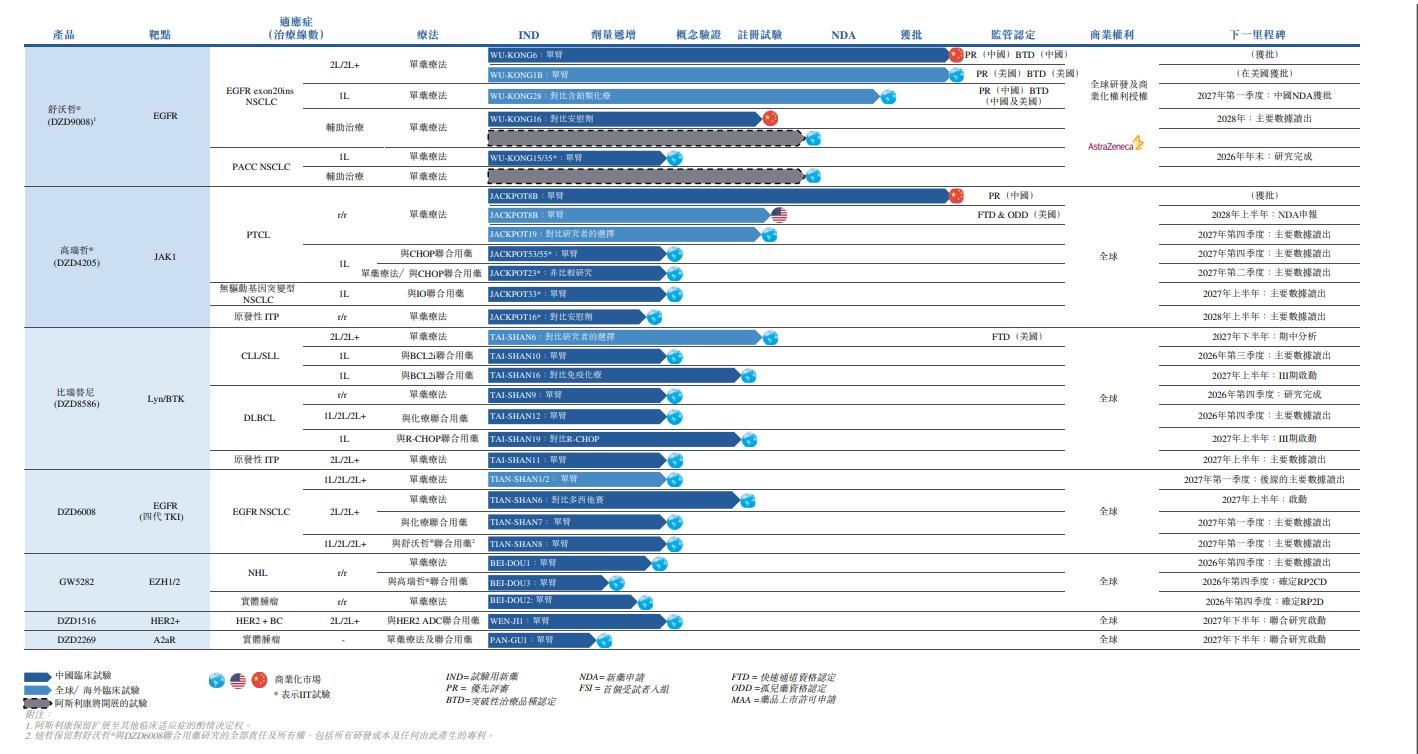
Prior to the establishment of Digel in 2017, the company was AstraZeneca's Global Center for Translational Oncology Sciences - Asia Center for Innovative Drugs and Early Development (“iMed Asia”). Relying on the company's experience in disease research and translational science and drug design capabilities, the company has built a product pipeline, including Schwarzer® and Clarion®, a candidate drug in the registered clinical phase (DZD8586), three assets in the post-proof-of-concept stage, and one asset in the early clinical phase. Schwarzer® has been marketed in mainland China and approved in the US. It is the first lung cancer drug developed in China and certified as a breakthrough therapy by the US FDA and China National Drug Administration at the same time.
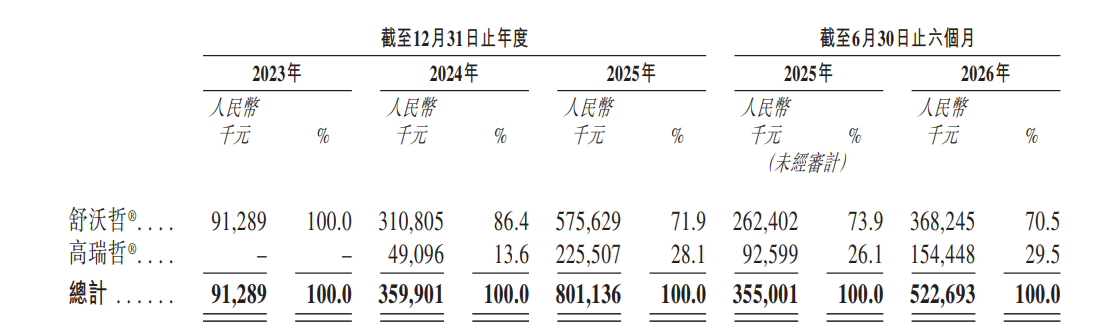
The breakdown of total revenue by product is as follows:
As of the last practical date, Schwarzer® is currently the only small-molecule drug currently recommended for the treatment of EGFR exon20ins NSCLC by the international authoritative NCCN treatment guidelines. It is also the only targeted drug included in China's National Medical Insurance Drug List (“National Health Insurance Catalogue”) to treat recurrent or refractory (“r/r”) indications of EGFR exon20ins. As of the same date, Colgate® was the world's first and only JAK1 inhibitor approved for the treatment of recurrent or refractory peripheral T-cell lymphoma (“r/r PTCL”). Based on its clinical value, the US FDA has granted Kaorizhe® fast track and orphan drug qualification. Gao Ruizhe® has also been included in China's national health insurance catalogue. During the track record period, Schwarzer® and Gao Ruizhe® have been commercialized and generated revenue in mainland China.
On July 14, 2026, the Company signed a license agreement (“AstraZeneca Agreement”) with AstraZeneca UK Limited (“AstraZeneca”) under which the Company granted AstraZeneca an exclusive license to develop and commercialize Schwarzer® worldwide. AstraZeneca expects to pay the company a one-time, non-refundable, and non-deductible initial payment of 600 million US dollars as part of the company's compensation for granting these rights to AstraZeneca. According to Insight Consulting, this is the largest initial payment in a single-asset licensing transaction for small molecule drugs in China so far. Additionally, the company is entitled to a total development milestone payment of up to $400 million and a total sales milestone payment of up to $500 million, depending on the achievement of specific development, regulatory, and sales milestones. The company also has the right to charge a tiered royalty fee of up to a low double-digit percentage on Schwarzer®'s global sales.
Financial data
Revenue:
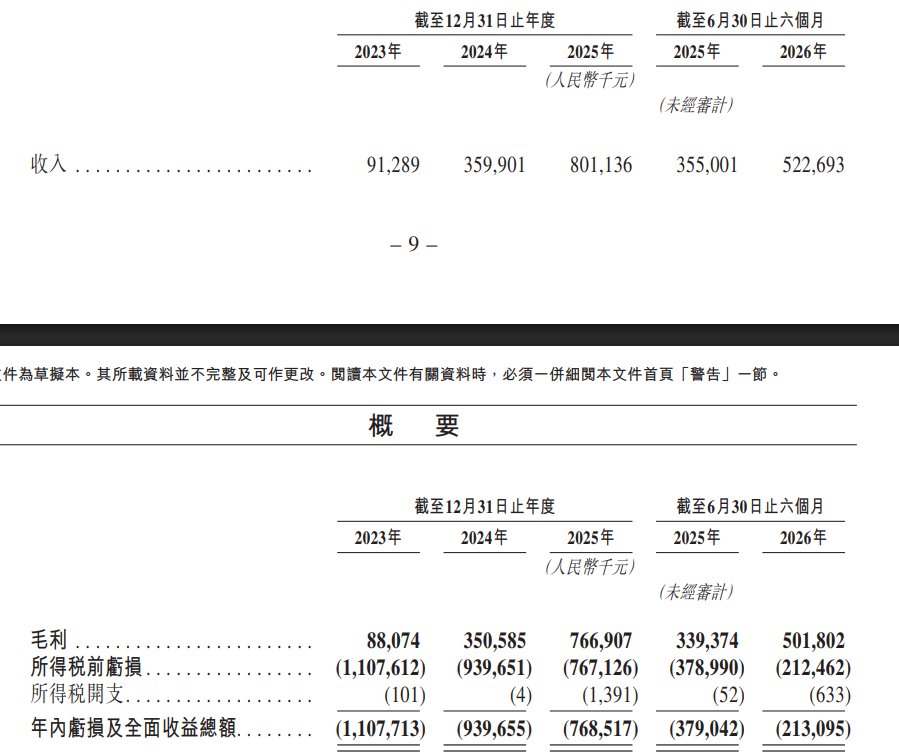
In the six months ended June 30 in 2023, 2024, 2025, 2025 and 2026, the company achieved revenue of 91.289 million yuan, approximately 360 million yuan, 801 million yuan, 355 million yuan, and 523 million yuan respectively.
Losses:
For the six months ended June 30 in 2023, 2024, 2025, 2025 and 2026, losses were approximately RMB 1,108 million, RMB 940 million, RMB 769 million, RMB 379 million, and RMB 213 million, respectively.
Gross profit margin:
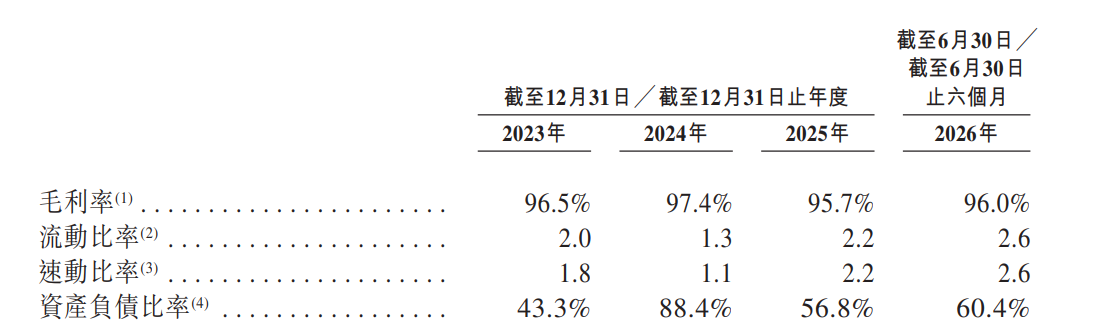
For the six months ended June 30 in 2023, 2024, 2025 and 2026, gross margins were 96.5%, 97.4%, 95.7%, and 96.0%, respectively.
Industry Overview
According to Insight Consulting, the global market for oncology drugs increased from US$167 billion in 2020 to US$304.1 billion in 2025, with a compound annual growth rate of 12.7%. It is expected to reach US$729.2 billion in 2035, and the compound annual growth rate from 2025 to 2035 is 9.1%. In China, the market size increased from US$25.8 billion in 2020 to US$39.1 billion in 2025, and is expected to reach US$131.2 billion by 2035, with a compound annual growth rate of 12.9% from 2025 to 2035. The growth of the global oncology treatment market is driven by the following factors: continued rise in cancer prevalence and expanded access to diagnosis and treatment. The spread of innovative therapies, continued increase in R&D investment, and favorable reimbursement and policy support, particularly in high-growth markets such as China, have further accelerated this growth trend.
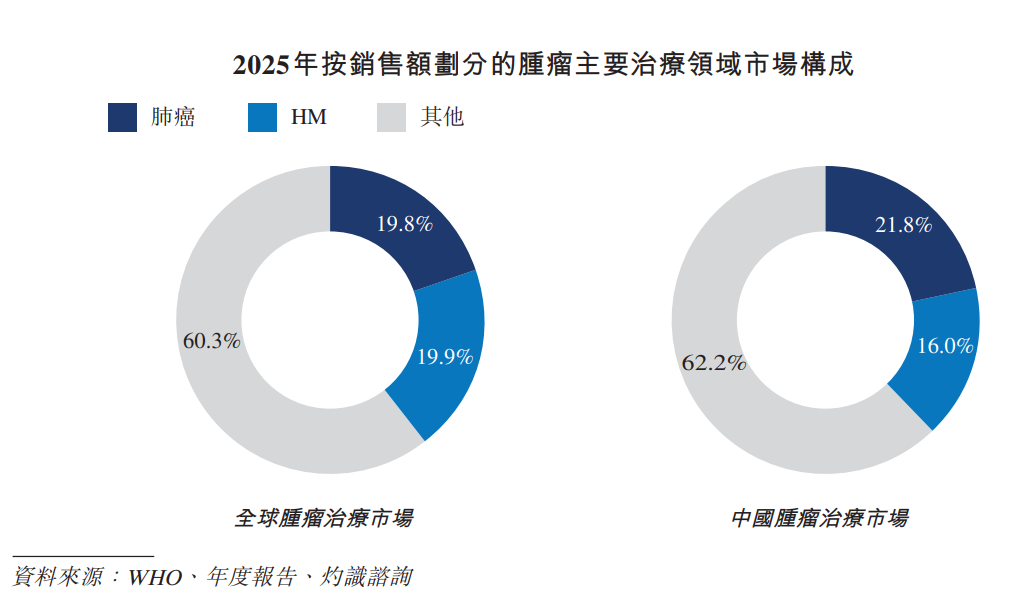
In the field of global cancer treatment, lung cancer and hematologic malignancies (“HM”) together will account for about 40% of the total tumor treatment market in 2025. Among solid tumors, lung cancer has always been the most common type. In 2025, the number of new cases worldwide exceeded 2.5 million, of which about 40% occurred in China - the incidence of lung cancer in China is about double that of the next most common cancer. The five-year survival rate is still low, with 28.1% in the US and 28.7% in China. In 2025, the number of common cases of HM worldwide caused by abnormal differentiation of hematopoietic stem cells exceeded 5.7 million, including more than 1 million cases in China, accounting for about 20% of the global total.
Lung cancer remains one of the world's most burdensome cancers. Among them, non-small cell lung cancer (“NSCLC”) accounts for about 85% of the total number of cases, and the number of cases continues to rise in major regions. According to Insight Consulting, the number of NSCLC cases worldwide is expected to increase from about 1.9 million in 2020 to 2.9 million in 2035. China has greatly contributed to this increase, and the number of cases is expected to rise from around 800,000 in 2020 to 1.3 million in 2035. Additionally, 55% of NSCLC patients were diagnosed in advanced stages. As a result, NSCLC remains the leading cause of cancer deaths, and there are huge and continuing unmet medical needs around the world and in China.
According to Insight Consulting, the global NSCLC drug market increased from US$22.5 billion in 2020 to US$54.3 billion in 2025, with a compound annual growth rate of 19.2%, and is expected to reach US$115.8 billion in 2035, with a compound annual growth rate of 7.9% from 2025 to 2035. China remains a key growth engine. The market size increased from US$5.3 billion in 2020 to US$7.7 billion in 2025, with a compound annual growth rate of 7.5%, and is expected to reach 23 billion US dollars in 2035, with a compound annual growth rate of 11.6% from 2025 to 2035.
EGFR exon20ins mutations account for approximately 12% to 15% of all EGFR mutant patients. The number of cases of EGfrexon20INs NSCLC worldwide increased from 63,700 in 2020 to 76,700 in 2025, and is expected to reach 99,600 in 2035. In China, the number of cases increased from 41,200 in 2020 to 50,100 in 2025, and is expected to reach 65,700 in 2035. The global number of 2L/2L+ EGFR exon20ins NSCLC cases increased from 41,300 in 2020 to 49,700 in 2025, and is expected to reach 64,500 in 2035. In China, the number of cases increased from 27,100 in 2020 to 32,900 in 2025, and is expected to reach 43,200 in 2035.
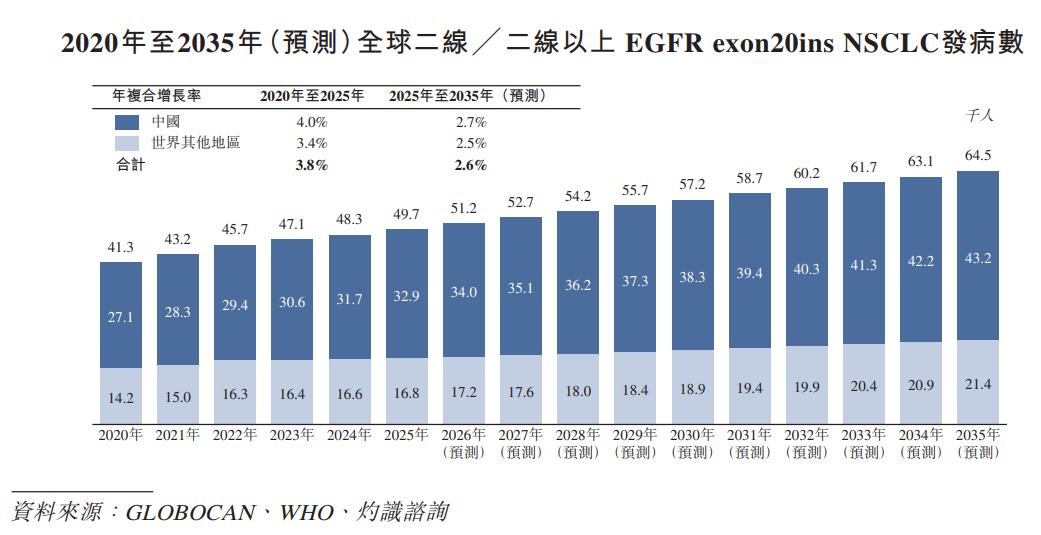
About 75% of EGFR exon20ins NSCLC cases globally and in China are in advanced stages when confirmed. In 2025, about 90% of these patients received first-line treatment, that is, the global forecast is 69,000 cases and the Chinese forecast is 45,100 cases. Subsequently, in 2025, about 70% of patients receiving first-line treatment will recover to require second-line and post-line treatment, with 49,700 cases globally and 32,900 cases in China. According to NCCN guidelines, the first-line treatment for advanced non-squamous NSCLC with EGFR exon20INs mutations is carboplatin/pemetrexed in combination with evantuzumab. Follow-up treatment options include suvortinib, evantuzumab, or other systemic treatments.
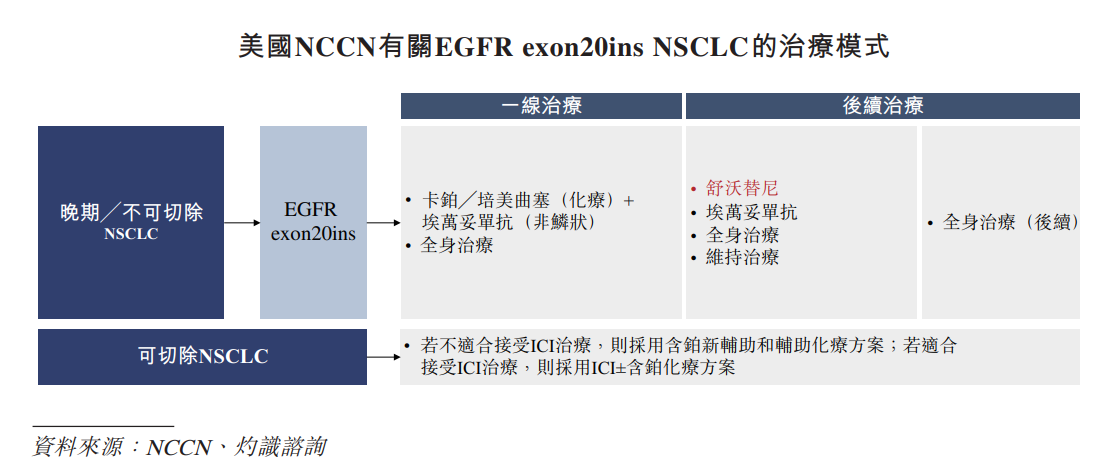
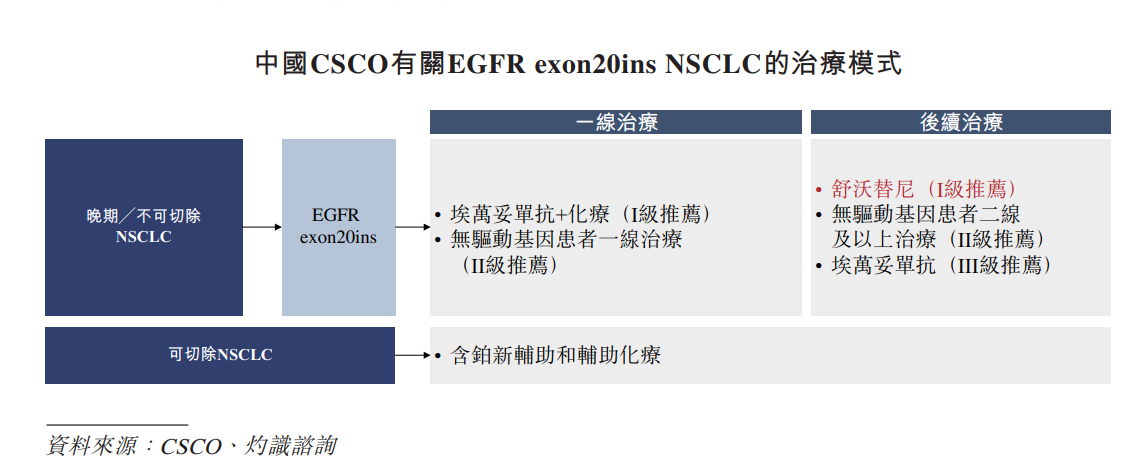
According to the CSCO guidelines, evantuzumab combination chemotherapy (class I) is preferred for first-line treatment of EGFR exon20INs-positive advanced NSCLC. In follow-up treatment, suvortinib was used as a Class I plan, and the chemotherapy plan for patients with negative driver genes was classified as a Class II plan, and the eventuzumab regimen was classified as a Class III plan.
For second-line advanced EGFR exon20ins NSCLC, chemotherapy only provided limited remission rate and disease control until targeted treatments such as Schwarzer® and Ruike® were introduced, highlighting the huge gap between it and classical EGFR mutations. There are currently no oral medications approved for first-line treatment. For resectable tumors, there are currently no targeted treatment recommendations for mutations, and platinum chemotherapy is still the standard treatment plan during the perioperative period.
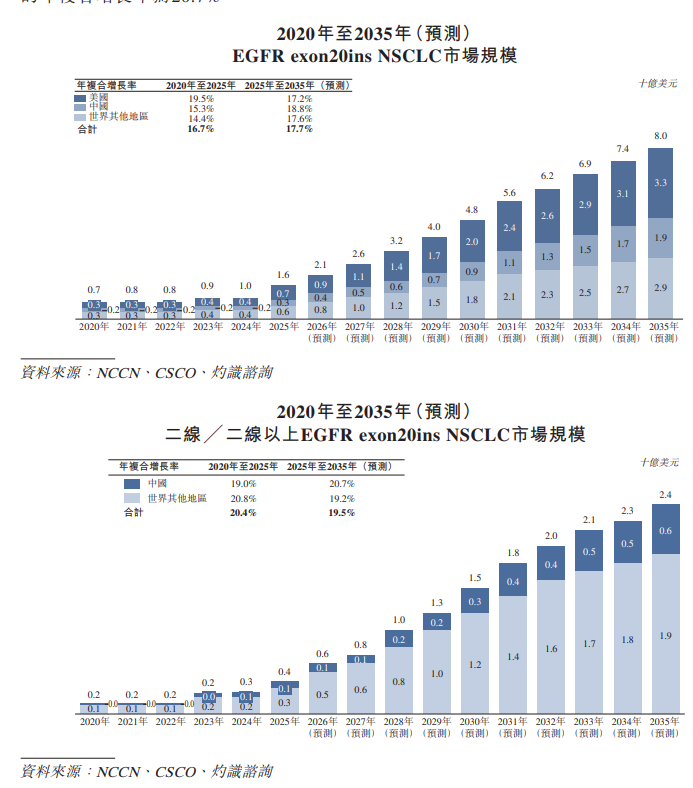
The global EGFR exon20ins NSCLC market size increased from US$700 million in 2020 to US$1.6 billion in 2025, with a compound annual growth rate of 16.7%. It is expected to increase to US$8 billion in 2035, and the compound annual growth rate from 2025 to 2035 is 17.7%. The global second-tier/second-tier EGFR exon20ins NSCLC market will increase from US$200 million in 2020 to US$400 million in 2025, and is expected to grow to US$2.4 billion in 2035, with a compound annual growth rate of 19.5% from 2025 to 2035. The market size of China's second-tier/second-tier EGFR exon20ins NSCLC market increased from US$0.4 billion in 2020 to US$100 million in 2025, and is expected to grow to US$600 million in 2035, with a compound annual growth rate of 20.7% from 2025 to 2035.
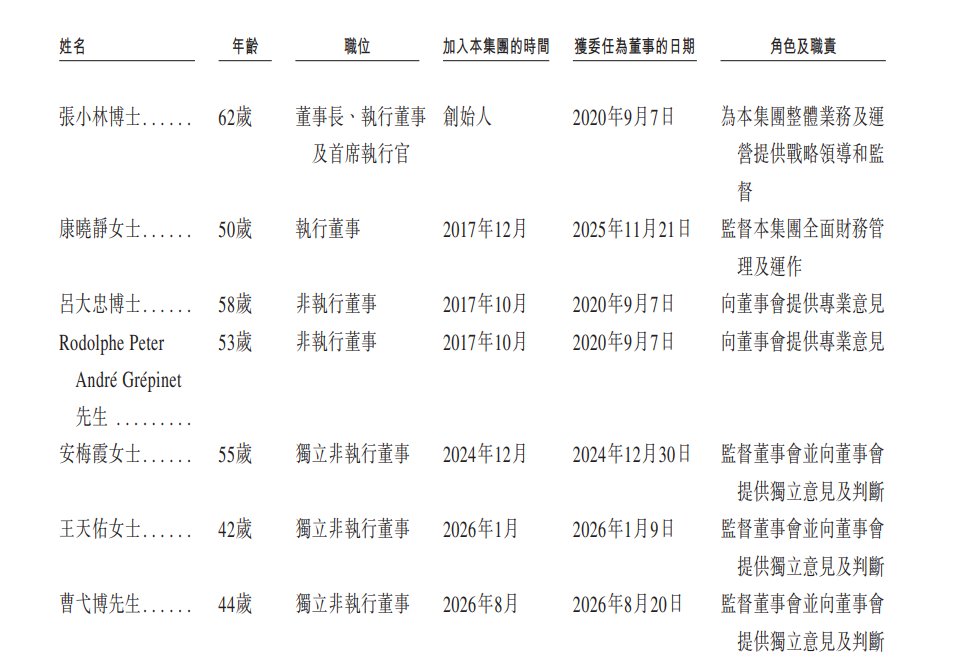
Board Information
The board of directors will be composed of seven directors, including two executive directors, two non-executive directors and three independent non-executive directors.
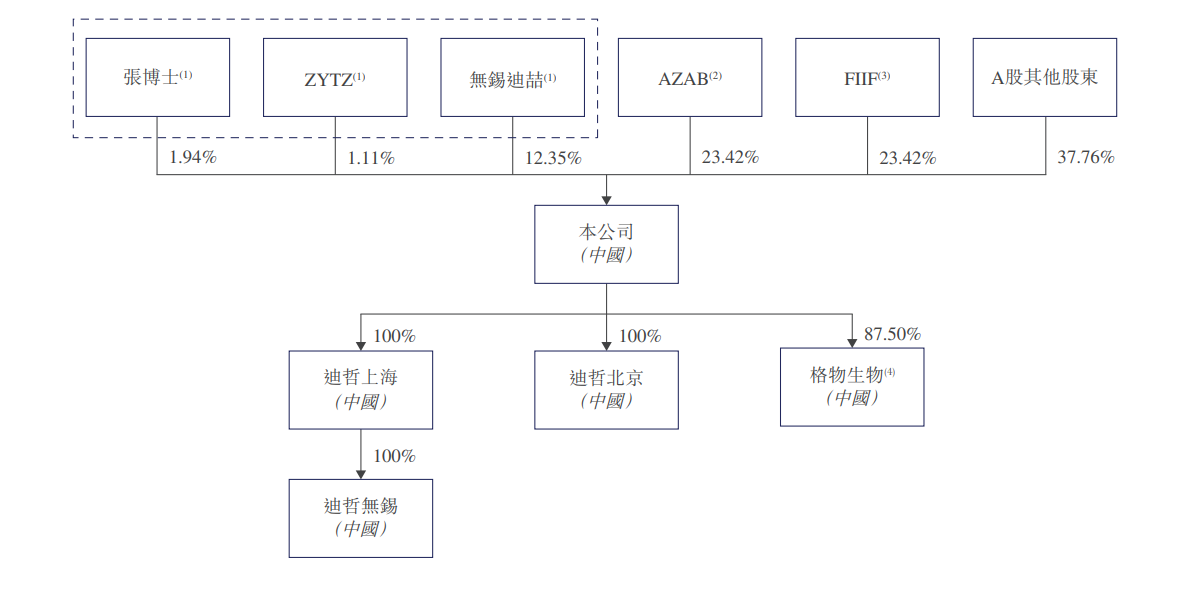
Shareholding structure
As of the last practical date, the company (i) was owned by Dr. Zhang Xiaolin; (ii) 12.35% was owned by Wuxi Di Zhe, a limited partnership owned by the following persons (a) Wuxi Dunhe as its general partner, and Dr. Zhang, Chairman and CEO Dr. Yang Zhenfan, and Dr. Yang Zhenfan, Deputy General Manager and Chief Medical Officer, owned 90% and 10% respectively; (b) Dr. Zhang Xiaolin owned 61.11% as limited partner; (c) Dr. Yang Zhenfan owned 14.65% (c) Dr. Yang Zhenfan as a limited partner (14.65%) d) Mr. Lu Hongbin, the company's chief financial officer, owns 5.91%; (e) Ms. Chen Suqin, the company's deputy general manager, holds 4.35% as limited partner; (f) 32 other limited partners, each holding less than 2% of the partnership; and (iii) ZYTZ owns 1.11%. ZYTZ is a limited liability company incorporated in Hong Kong and wholly owned by Dezent Partners Limited. The company is a limited liability company incorporated in the British Virgin Islands, with Dr. Zhang and Yang Dr. Zhenfan, Dr. Xu Hanzhong, and Dr. Zeng Qingbei held 75%, 10%, 7% and 8% interests respectively. Both Wuxi Dizhe and ZYTZ are the company's employee shareholding platforms.
Intermediary team
Co-sponsors: Goldman Sachs (Asia) Limited, Huatai Financial Holdings (Hong Kong) Limited
Company Legal Advisors: Hong Kong and US Law: Kaiyi Law Firm; Related to Chinese Law: Zhong Lun Law Firm
Legal Adviser to the Co-Sponsors: Related to Hong Kong and US Law: Fuller Law; Related to China Law: Fangda Law Firm
Reporting Accountant and Independent Auditor: Hong Kong Lixin Dehao Certified Public Accountants Limited
Industry Advisor: Insight Industry Consulting Co., Ltd.
Compliance Advisor: First Shanghai Securities Co., Ltd.