- PRICING
- LIVE QUOTES
- LEARN
- HELP


EN
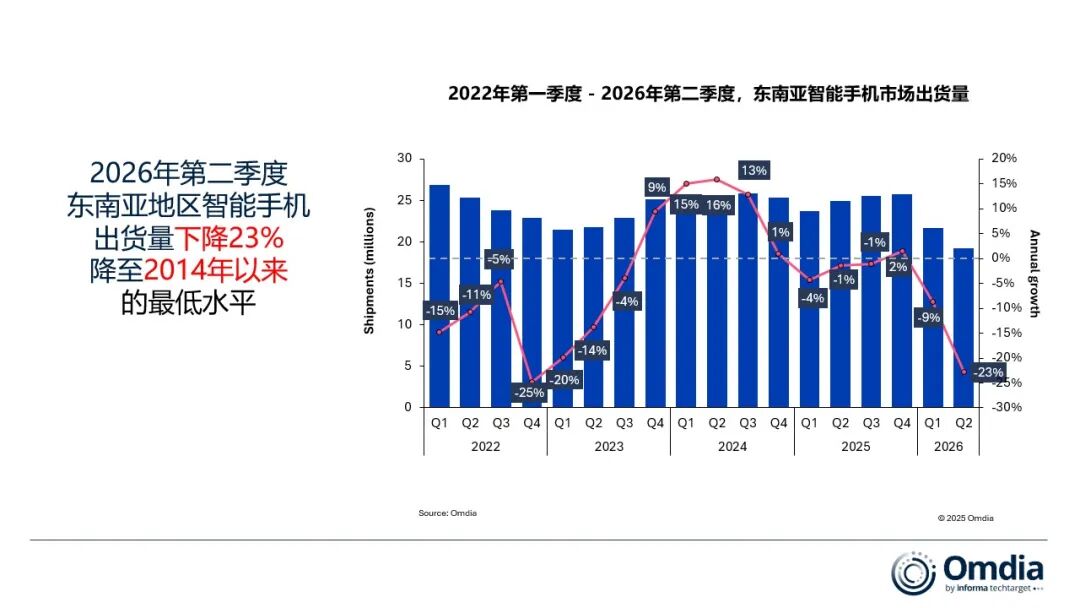
Omdia: Southeast Asia smartphone shipments in the second quarter of 2026 fell 23% year on year to the lowest level since 2014
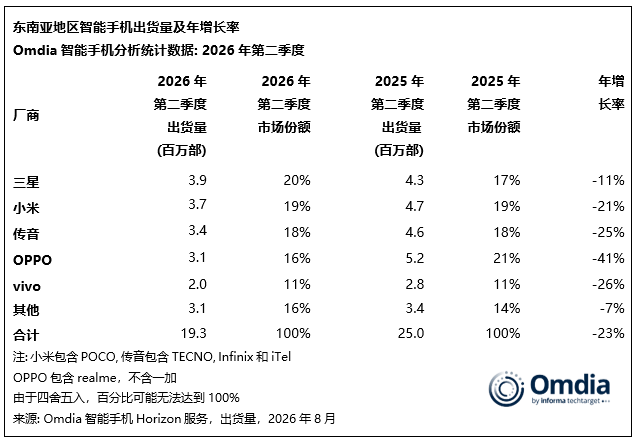
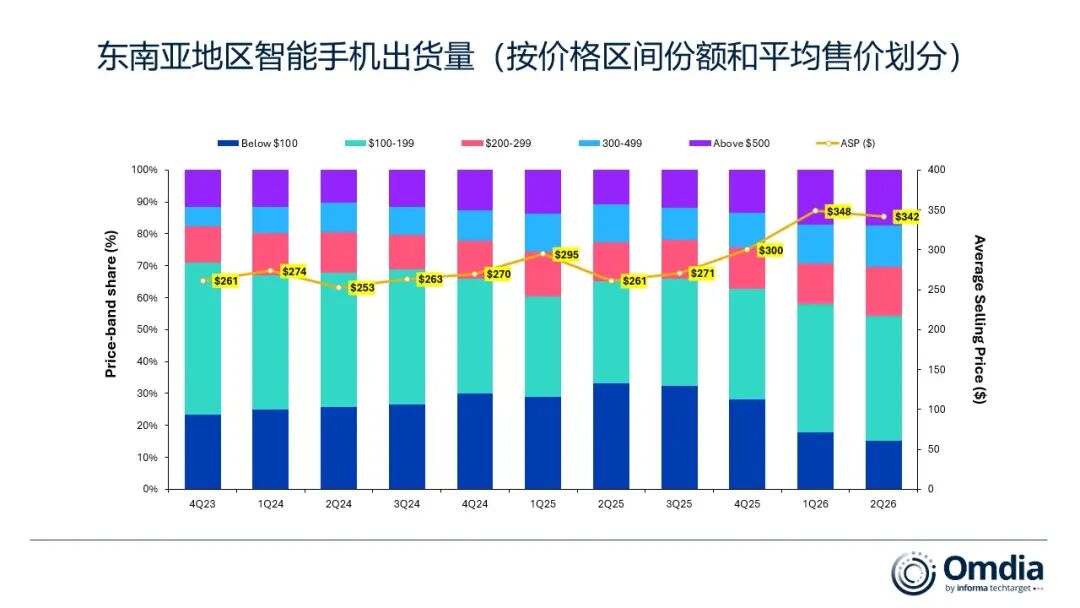
The Zhitong Finance App learned that Omdia's latest research shows that in the second quarter of 2026, Southeast Asia smartphone market shipments fell 23% year on year to 19.3 million units, the lowest quarterly shipment level since 2014. Despite a sharp decline in shipments, the market size performance was relatively more resilient, reaching US$6.6 billion, and the average selling price (ASP) rose 31% year over year to US$342.
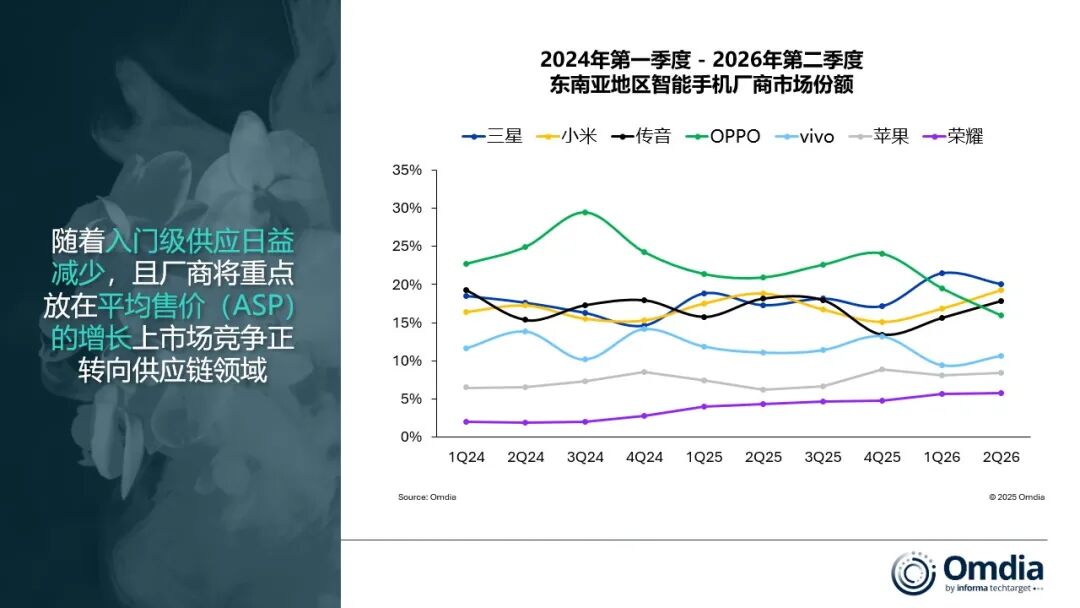
Manufacturers are divided between maintaining shipment volume and average selling price
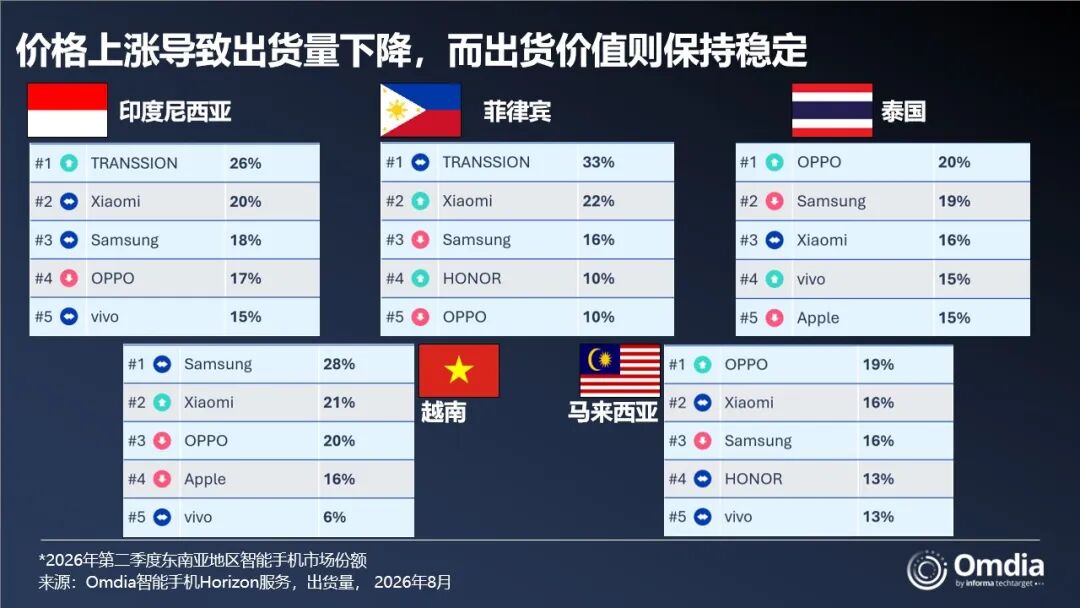
Samsung increased its market share while increasing its price. The price of the Galaxy A07 and A17 both increased after launch, breaking the practice where prices usually gradually drop after the launch of new products. This boosted Samsung's market share in the overall $200-299 price range from 18% in the second quarter of 2025 to 32% in the second quarter of 2026. While competitors have reduced their market layout under $300, Samsung has also achieved a share increase in the broader market below $300.
Xiaomi (01810) ranked the second-highest ASP increase among the top five manufacturers, with a year-on-year increase of 43.5%. This increase not only reflects the increase in the price of existing models, including the Redmi Note 15, but also the higher listing prices of new models such as the 17T and Redmi A7 Pro than the previous generation. Xiaomi's shipments in the $100-199 price range increased 55%.
Voice (688036.SH) remains the vendor most dependent on the entry-level market. Shipments of products under $100 fell 47% in the second quarter of 2026, while shipments of products worth $100 to $199 increased 12%, making this price range its largest price range. The latest models, including the Infinix Hot 70 and Tecno Spark 50 4G, are also significantly higher than the previous generation of products they replaced.
OPPO has almost completely withdrawn from the lowest price range. Shipments of products under $100 fell 96% in the second quarter of 2026. The next price range did not offset this loss, and shipments of $100-199 products also fell 25%, making OPPO the biggest drop in overall shipments among the top five manufacturers.
vivo is increasing the price of entry-level models to over $100 in most markets. Shipments of products under $100 fell 88% in the second quarter of 2026, accounting for only 5% of its total shipments, compared to 32% a year ago.
Most of the decline came from the price range below $100
Omdia senior analyst Sheng Win Chow (Sheng Win Chow) said: “Shipments in a large number of entry-level markets are being absorbed into higher price ranges through the chain effect of moving up the price band. When the price of a model increases, manufacturers usually need to reposition other models in the product portfolio to prevent products from encroaching on each other. However, overall shipments in the price range above $100 still fell by 2%, which indicates that the higher price range did not fully handle the volume being squeezed out. A significant portion of these shipments have actually completely withdrawn from the market rather than moving to a higher price range.”
The $100-199 price range covered the largest portion of the remaining entry-level demand, increasing its share of overall shipments from 32% to 39%. The resilience of this price range is due in large part to products that were previously positioned below $100 but are now entering a higher price range after being repriced.
The decline in discounts has also driven a shift between different price ranges. In the past, shipments of a large number of products under $100 in the Southeast Asian market came from large discounts on models that were originally sold at higher prices. In the second quarter of 2026, this model was reversed: manufacturers not only launched new models at higher prices, but also further increased the prices of existing models after the product was launched, including the Samsung Galaxy A07 and A17 series, and the Xiaomi Redmi Note 15 series.
Southeast Asia's smartphone market is expected to drop 25% in 2026
Omdia Research Manager Le Xuan Chiew (Le Xuan Chiew) said, “The Southeast Asian market is experiencing its worst annual contraction in at least seven years. Omdia expects smartphone shipments in the region to drop 25% year over year to 75.3 million units in 2026. The market's weak trend in the first half of the year is expected to continue into the second half of the year. As equipment prices continue to rise, shipments will be further pressured. Markets where entry-level devices and open market retail channels account for a relatively high share, such as Indonesia and the Philippines, are expected to face a sharper decline.
The pressure on memory costs will increase further in the second half of the year. The memory cost for devices shipped in the first half of 2026 reflects the comprehensive average of previous purchase prices rather than the current market price. This means that current profit margins do not fully reflect the impact of rising memory costs. As low-cost inventories are gradually depleted, manufacturers will fully bear the cost pressure brought about by today's higher memory prices.”