
- PRICING
- LIVE QUOTES
- LEARN
- HELP


EN
BlackBerry Stock And Two AI Safety Plays For A Changing Cybersecurity Market
AI safety has moved from sci fi debate to front page risk, and that shift is forcing investors to rethink how cyber threats and model governance could affect real portfolios. Heightened scrutiny may unsettle some high growth AI stocks, yet it also shines a light on companies helping enterprises stay secure. This article walks through three stocks exposed to the latest AI safety headlines so you can judge where the real risk and potential opportunity may lie.
The three stocks covered below are only a starting sample, and the full screen highlights 51 more cybersecurity and AI safety software providers with equally compelling stories that are not covered here. To identify and analyze the highest conviction ideas in this space, go straight to the Cybersecurity and AI-Safety Software Providers screener.
Yubico (OM:YUBICO)
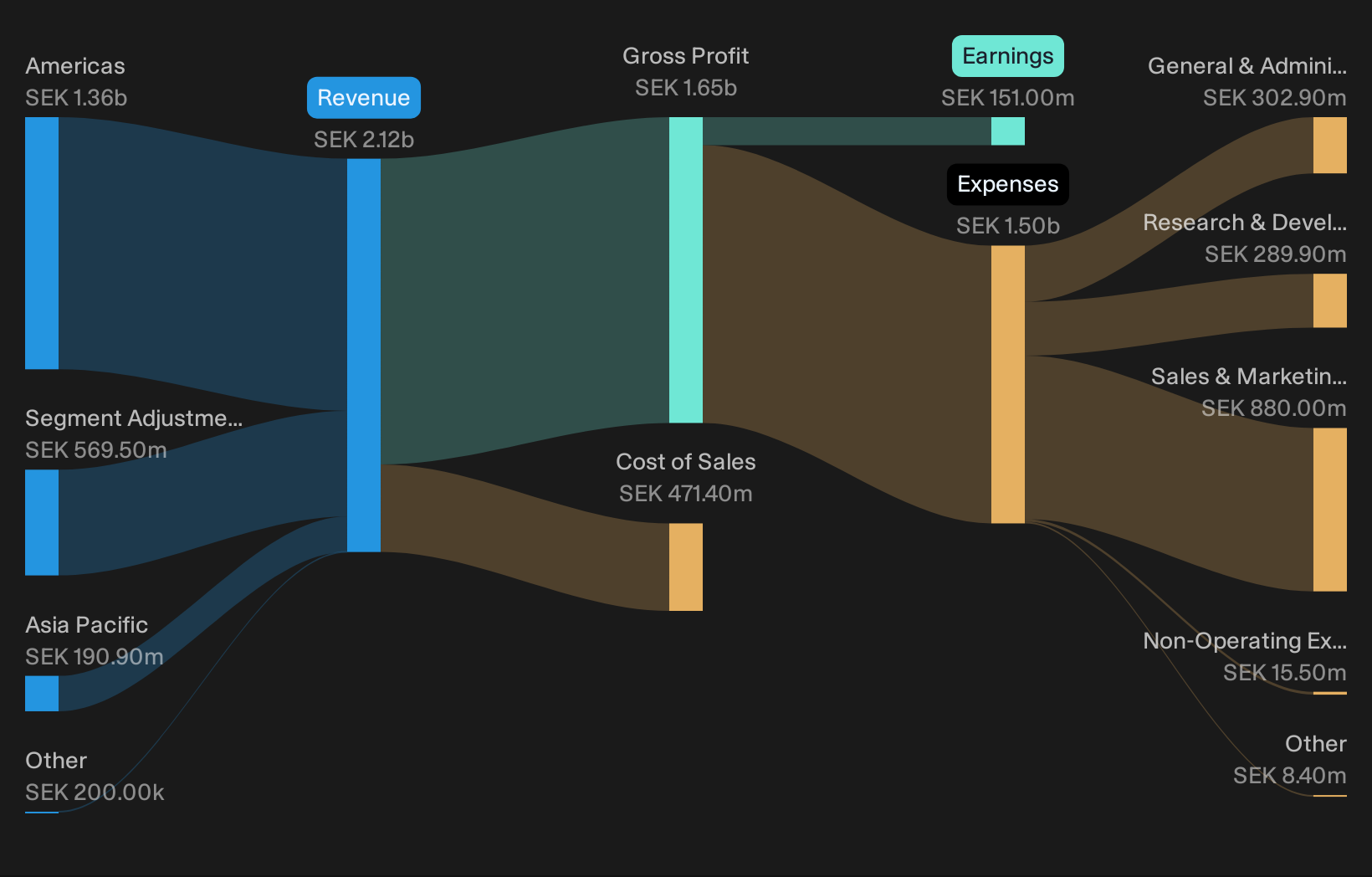
Yubico is a pure play on phishing resistant authentication, supplying YubiKey hardware keys, hardware security modules and authenticator software that sit inside identity and access management, a key defense layer for AI driven cyberattacks. The business currently reports SEK 2.1b in revenue from Security Software & Services, reflecting a focused model built around securing logins for enterprises across sectors like technology, finance, healthcare and government. Yubico has a market cap of about SEK 7.6b, putting it in the mid cap bracket of the cybersecurity universe.
Investors looking at AI safety often focus on model builders and overlook the access layer that keeps those powerful tools from being misused. Yubico is squarely in that access control niche, with hardware backed keys used by large enterprises and high profile AI players to lock down critical accounts. The story is not risk free, because the company still leans on hardware, faces rising competition from software centric and built in passkey options, and carries a funding mix that relies on external borrowing. Yet strong product margins, growing use cases around passkeys and AI workflow security, and recent product and partnership news suggest there is more to this authentication specialist than its security keys alone.
Yubico’s authentication story is widening beyond security keys, yet many investors still treat it as a niche hardware play. Get the full picture with the 1 key reward and 2 important warning signs (1 is major!)
Cellebrite DI (CLBT)
Cellebrite DI provides software that helps law enforcement agencies and enterprises extract, analyze, and manage complex digital evidence, which places it squarely in the cybersecurity and AI-safety workflow as threats become more sophisticated and data heavy. The company reports about US$514 million of revenue from Internet Software & Services and has a global footprint across the Americas, EMEA, and APAC. With a market cap of roughly US$2.8 billion, Cellebrite DI sits in the mid to large cap bracket of listed security focused software companies.
Cellebrite DI may be worth a closer look if you want exposure to the intersection of cybercrime, AI assisted investigations, and recurring software revenue. Its tools help agencies and enterprises handle encrypted devices, massive data sets, and AI driven analytics, all in settings where ethics, compliance, and traceability are under tight scrutiny. At the same time, it is important to weigh the dependence on government contracts, recent guidance cuts tied to slower US federal and European deals, and a balance sheet funded entirely through external borrowing. A key consideration is whether the combination of AI powered forensics, global reach, and improving profitability adequately compensates for those concentration and regulatory risks over the longer term.
Cellebrite DI’s push into AI powered forensics and recurring software revenue often gets judged on contract risk alone. Yet the bigger story may be how its growth profile and exposure stack up against those concerns. Get the full context with the 4 key rewards and 2 important warning signs

BlackBerry (TSX:BB)
BlackBerry has reinvented itself as an enterprise and government cybersecurity software company, with two main engines of revenue. Secure Communications brings in about US$273 million from encrypted messaging, secure file sharing, and critical event management, while QNX contributes roughly US$283 million from safety focused embedded software in vehicles and other devices. Licensing adds a smaller US$25 million, and the whole business is valued by the market at about CA$6.3b.
BlackBerry provides exposure to both sides of the AI safety story. QNX underpins safety critical systems in cars and emerging physical AI applications like robotics. Secure Communications targets governments that are becoming more sensitive to AI driven cyber threats. That combination, along with improving profitability, is what keeps the stock on many shortlists. The catch is that expectations are already high, growth in new physical AI use cases can take time to show up in revenue, and the balance sheet relies on external borrowing. For readers who want to evaluate whether the current price reflects the embedded royalty backlog, physical AI optionality, and funding and valuation risks, the fuller story on BlackBerry may offer additional perspective.
BlackBerry’s safety focused QNX royalties and government secure comms story often get treated in isolation. The real question is how that mix stacks up against debt, pricing and optionality in the full narrative for BlackBerry

Seeking Fresh Alternatives Before They Fly
New themes can break out fast, and momentum often shifts before most investors notice. Scan these fresh stock ideas while they remain under the radar for now.
- Target durable income from companies with robust payouts by reviewing the 411 dividend fortresses before yields change and the strongest options become widely followed.
- Spot early movers in robotics and automation by checking the curated 38 robotics and automation stocks while adoption is building and expectations have not fully caught up.
- Review potential AI infrastructure capacity constraints by assessing the hand picked 55 AI infrastructure stocks before related developments receive broader attention.
This article by Simply Wall St is general in nature. We provide commentary based on historical data and analyst forecasts only using an unbiased methodology and our articles are not intended to be financial advice. It does not constitute a recommendation to buy or sell any stock, and does not take account of your objectives, or your financial situation. We aim to bring you long-term focused analysis driven by fundamental data. Note that our analysis may not factor in the latest price-sensitive company announcements or qualitative material. Simply Wall St has no position in any stocks mentioned.
Have feedback on this article? Concerned about the content? Get in touch with us directly. Alternatively, email editorial-team@simplywallst.com